Use the regional background below as a starting point for exploring the food, rather than expecting one dish to represent every household. Food traditions differ within a country and continue to change through travel, migration, and everyday cooking.
In this story
OverviewTypical foodsIngredientsRegional differencesAlcoholic beveragesPopular short-order dishesEating habitsOverview
Argentine cuisine blends elements from the Indigenous peoples of Argentina who focused on ingredients such as humita, potatoes, cassava, peppers, tomatoes, beans, and yerba mate, and from Spanish cuisine brought during the colonial period. These were enriched by Italian and Spanish immigrants during the 19th and 20th centuries, who incorporated many of their food customs and dishes such as pizza, pasta and Spanish tortillas.
Beef is a large part of the Argentine diet due to its vast production in the country's plains. Argentine annual consumption of beef has averaged 100 kg per capita, approaching 180 kg per capita during the 19th century; consumption averaged 67.7 kg in 2007.
Beyond asado (the Argentine barbecue), no other dish more genuinely matches the national identity. Nevertheless, the country's vast area, and its cultural diversity, have led to a local cuisine of various dishes.
Typical foods
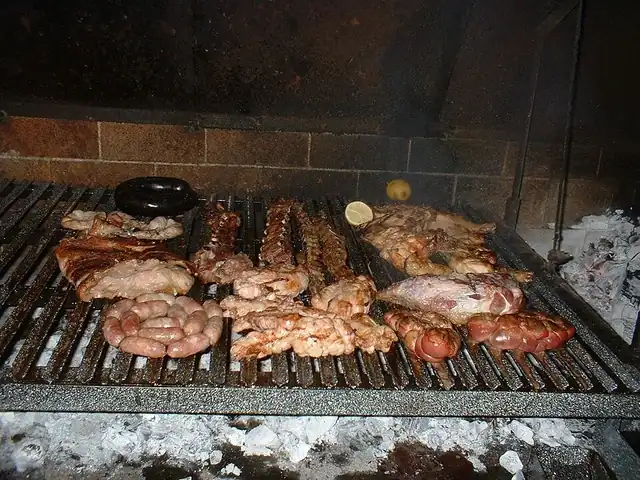
Most regions of Argentina are known for their beef-oriented diet. Grilled meat from the asado (barbecue) is a staple, with steak and beef ribs especially common. The term asado itself refers to long strips of flank-cut beef ribs.
Popular items such as chorizo (pork sausage), morcilla (blood sausage), chinchulines (chitterlings), mollejas (sweetbread), and other parts of the animal are also enjoyed.
In Patagonia, however, lamb and chivito (goat) are eaten more frequently than beef. Whole lambs and goats are traditionally cooked over an open fire in a technique known as asado a la estaca.
The most common condiment for asado is chimichurri, a sauce of herbs, garlic and vinegar. Unlike other preparations, Argentines do not include chilli in their version of chimichurri, but it does include a still-spicy, but milder form of red pepper, ají molido.
Ingredients
Argentine cuisine uses locally-grown cereals, grains, oil seeds, fruits and vegetables, as well as meat.
Meat products have been dominant in the country since the 16th century. The country is regarded as a major beef, pork and poultry producing and consuming country. Certain areas such as those located in the south are usually engaged in activities involving sheep and lamb breeding, and shellfish, crustaceans, molluscs and salmonides fishing.
The breeding activity involving any type of cattle has started a dairy industry that includes products like cow, and sheep, dulce de leche and yogurts. Some of the cheeses from Argentina are reggianito, sardo, provoleta and cremoso. Argentina can also be conceived as a industry engaged in the production of dried fruits, olives, all types of oils and spices.
Regional differences
Argentine cuisine is heavily influenced by its European roots and has regional variations. Asado, dulce de leche, empanadas, and yerba mate are found throughout Argentina. In many parts of the country, food is prepared differently and different kinds of foods are made; this includes to a smaller degree food from pre-Columbian times, as in the Northwest.
Alcoholic beverages
Though wine (vino) has traditionally been the most popular alcoholic beverage in Argentina, beer (cerveza; the Italian birra is frequently used) in recent decades has competed with wine in popularity. Breweries appeared in Argentina at the end of the 1860s, started by Alsatian colonists. The first were nearly all in the downtown of Buenos Aires (el égido de la Ciudad Autónoma de Buenos Aires), and soon Polish brewers began industrial production of beer: San Carlos in the province of Santa Fe, Río Segundo and Córdoba in the province of Córdoba, Quilmes and Llavallol on the outskirts of La Plata (in Buenos Aires Province), San Miguel de Tucumán in the province of Tucumán and on the outskirts of the cities of Mendoza and Salta.
The local consumption of beer has risen dramatically in the last generation: Argentines consumed 233 million litres in 1980 and 1.57 billion in 2007 (40 litres per capita). Outpacing that of wine since 2001, the growing production and consumption of beer have supported the existence of related events, for example, beer festivals called Oktoberfests or "Fiestas de la Cerveza" in locations that have a significant German population (Villa General Belgrano in Córdoba, San Carlos and Esperanza in the province of Santa Fe, etc.). Such celebrations copy, in an Argentine manner, Munich's Oktoberfest, and similarly are tourist attractions. However, the presence of a vigorous population of Celtic lineage, principally of Irish origin, has supported the creation of other celebrations of beer, often for marketing purposes, such as Saint Patrick's Day (Día de San Patricio), patron of Ireland, which is celebrated with abundant libations.
Popular short-order dishes
Common restoranes or restaurantes and rotiserias (grill restaurants) nearly anywhere in Argentina today serve (into the small hours) quickly prepared meals that in the course of the 20th century came to be known as minutas, "short-order dishes". Some of the dishes included in the category of minutas are milanesas, churrascos, bifes (beefsteaks), escalopes, tallarines, ravioles (ravioli), ñoquis (gnocchi), although some are very typical of locations that sell food: "bifes" and "milanesas" are served "a caballo" ("on horseback", with fried egg on top), "milanesa completa" (a milanesa with two fried eggs and French fries), "revuelto Gramajo", "colchón de arvejas" (an omelette made with peas), "suprema de pollo" (chicken supreme, usually breaded as a milanesa), matambres, "lengua a la vinagreta" (pickled tongue), and "sandwiches" (sandwiches de miga) are made with sliced white bread, rather than, say, rolls.
The most common sandwiches are those made of milanesa, baked ham and cheese, pan de miga, toast, pebetes, panchos (hot dogs), choripanes, morcipanes, etc.; from Montevideo comes a different species of sandwich called the chivito, even though it contains no goat meat.
Picadas, which are consumed at home or in bars, cafés, "cafetines" and "bodegones" are also popular; they consist of an ensemble of plates containing cubes of cheese (typically from Mar del Plata or Chubut), pieces of salame, olives in brine, french fries, maníes (peanuts), etc.; picadas are eaten accompanied by an alcoholic beverage ("fernet", beer, wine with soda, to give some common examples).
Eating habits
Breakfast typically is small and consists of coffee (or mate) and pastry. In most parts of Argentina, lunch is the largest meal of the day. Excluding the largest cities, such as Buenos Aires, Rosario or Cordoba, most towns close for lunchtime. This is when most people return home to enjoy a large meal and siesta. Traditional lunches in Argentina are long and well developed. Argentines often have a light evening snack (called a "merienda" – typically a coffee or mate and a pastry) and it is common to not eat dinner until 9 at night, or even later on weekends.
More to savor

Austrian Napkin Dumpling (Serviettenknödel)
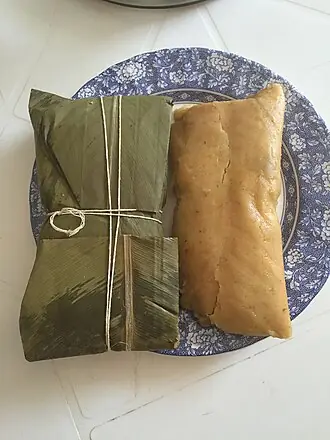
Hallaca (Venezuelan Stuffed Corn Dough)
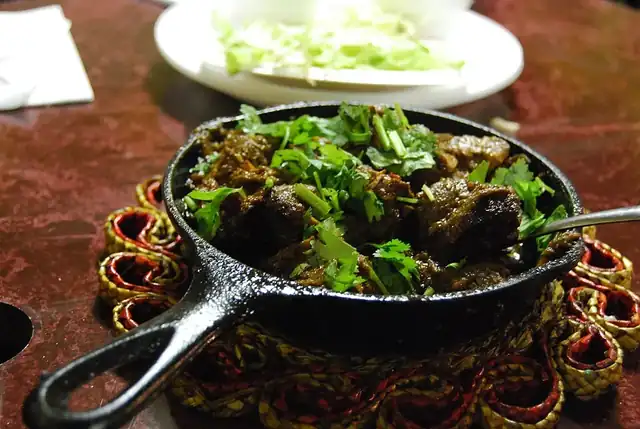
A Taste of Pakistan: Regional Flavors and Food Traditions