The dish is a starting point for exploring a wider food story. The guide below looks more closely at its background and different forms. When you want to cook, visit the recipe collection for ingredient quantities and step-by-step methods.
Overview
Bread is a baked food product made from water, flour, and often yeast. It is a staple food across the world, particularly in Europe and the Middle East. Throughout recorded history and around the world, it has been an important part of many cultures' diets. It is one of the oldest human-made foods, having been of significance since the dawn of agriculture, and plays an essential role in both religious rituals and secular culture.
Bread may be leavened by naturally occurring microbes (e.g. sourdough), chemicals (e.g. baking soda), industrially produced yeast, or high-pressure aeration, which creates the gas bubbles that fluff up bread. Bread may also be unleavened. In many countries, mass-produced bread often contains additives to improve flavor, texture, color, shelf life, nutrition, and ease of production.
Types
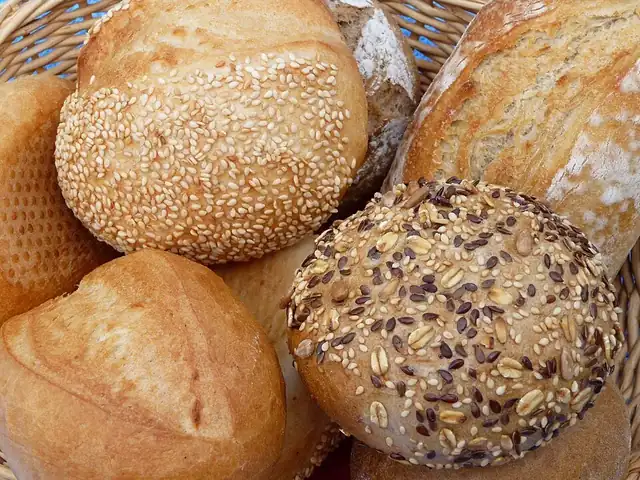
Bread is the staple food of the Middle East, Central Asia, North Africa, Europe, and in European-derived cultures such as those in the Americas, Australia, and Southern Africa. This is in contrast to parts of South and East Asia, where rice or noodles are the staple. Bread is usually made from a wheat-flour dough that is cultured with yeast, allowed to rise, and baked in an oven. Carbon dioxide and ethanol vapors produced during yeast fermentation result in bread's air pockets. Owing to its high levels of gluten (which give the dough sponginess and elasticity), common or bread wheat is the most common grain used for the preparation of bread, which makes the largest single contribution to the world's food supply of any food.
Bread is also made from the flour of other wheat species (including spelt, emmer, einkorn and kamut). Non-wheat cereals including rye, barley, maize (corn), oats, sorghum, millet and rice have been used to make bread, but, with the exception of rye, usually in combination with wheat flour as they have less gluten.
Gluten-free breads are made using flours from a variety of ingredients such as almonds, rice, sorghum, corn, legumes such as beans, and tubers such as cassava. Since these foods lack gluten, dough made from them may not hold its shape as the loaves rise, and their crumb may be dense with little aeration. Additives such as xanthan gum, guar gum, hydroxypropyl methylcellulose (HPMC), corn starch, or eggs are used to compensate for the lack of gluten.
Culinary uses
Bread can be served at many temperatures; once baked, it can subsequently be toasted. It is most commonly eaten with the hands, either by itself or as a carrier for other foods. Bread can be spread with butter, dipped into liquids such as gravy, olive oil, or soup; it can be topped with various sweet and savory spreads, or used to make sandwiches containing meats, cheeses, vegetables, and condiments.
Bread is used as an ingredient in other culinary preparations, such as the use of breadcrumbs to provide crunchy crusts or thicken sauces; toasted cubes of bread, called croutons, are used as a salad topping; seasoned bread is used as stuffing inside roasted turkey; sweet or savoury bread puddings are made with bread and various liquids; egg and milk-soaked bread is fried as French toast; and bread is used as a binding agent in sausages, meatballs and other ground meat products.
Crust and crumb
The mass of bread consists of two primary components: the crust and crumb.
Bread crust is formed from surface dough during the cooking process. It is hardened and browned through the Maillard reaction using the sugars and amino acids due to the intense heat at the bread surface. The crust of most breads is harder, and more complexly and intensely flavored, than the rest. Old wives' tales suggest that eating the bread crust makes a person's hair curlier. Additionally, the crust is rumored to be healthier than the remainder of the bread. Some studies have shown that this is true as the crust has more dietary fiber and antioxidants such as pronyl-lysine.
Bread crumb is the internal porous material consisting of bubbles with elastic walls. As the bread ages (becomes stale), the crumb becomes more firm.
Preparation
Doughs are usually baked, but in some cuisines breads are steamed (e.g., mantou), fried (e.g., puri), or baked on an unoiled frying pan (e.g., tortillas). It may be leavened or unleavened (e.g. matzo). Salt, fat and leavening agents such as yeast and baking soda are common ingredients, though bread may contain other ingredients, such as milk, egg, sugar, spice, fruit (such as raisins), vegetables (such as onion), nuts (such as walnut) or seeds (such as poppy).
Methods of processing dough into bread include the straight dough process, the sourdough process, the Chorleywood bread process and the sponge and dough process.
Bread improvers
Bread improvers and dough conditioners are often used in producing commercial breads to reduce the time needed for rising and to improve texture and volume and to give antistaling effects. The substances used may be oxidising agents to strengthen the dough or reducing agents to develop gluten and reduce mixing time, emulsifiers to strengthen the dough or to provide other properties such as making slicing easier, or enzymes to increase gas production.
Steam
The rapid expansion of steam produced during baking leavens the bread, which is as simple as it is unpredictable. Steam-leavening is unpredictable since the steam is not produced until the bread is baked. Steam leavening happens regardless of the raising agents (baking soda, yeast, baking powder, sour dough, beaten egg white) included in the mix. The leavening agent either contains air bubbles or generates carbon dioxide. The heat vaporises the water from the inner surface of the bubbles within the dough. The steam expands and makes the bread rise. This is the main factor in the rising of bread once it has been put in the oven. CO2 generation, on its own, is too small to account for the rise. Heat kills bacteria or yeast at an early stage, so the CO2 generation is stopped.
More to savor
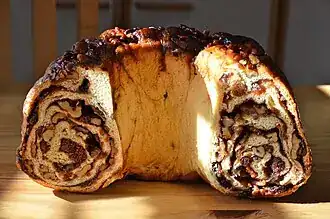
Reindling (Austrian Yeasted Easter Cake)
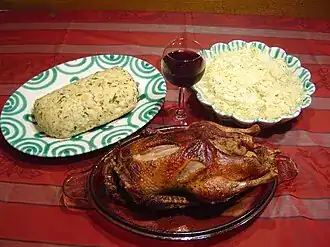
Stuffed Duck Breast with Cabbage and Dumplings
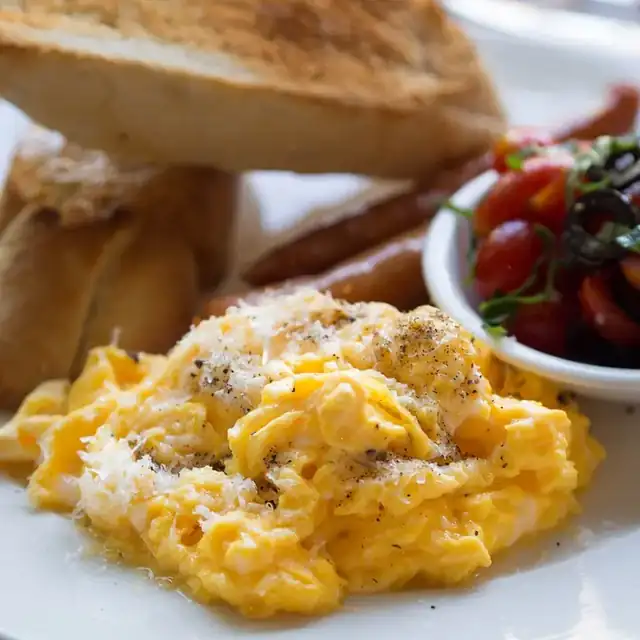
Scrambled Eggs: The Many Textures of a Familiar Breakfast