The dish is a starting point for exploring a wider food story. The guide below looks more closely at its background and different forms. When you want to cook, visit the recipe collection for ingredient quantities and step-by-step methods.
In this story
OverviewMexicoSan Francisco Mission burritoSan DiegoLos AngelesVariations and similar dishesResearchOverview
A burrito or burro is historically a regional name in Mexico for what in other parts of the country is known as a taco (a tortilla filled with food). The term burrito was regional, specifically from Guanajuato, Guerrero, Michoacán, San Luis Potosí, Sonora and Sinaloa, for what is known as a taco in Mexico City and surrounding areas, and codzito in Yucatán and Quintana Roo. Due to the cultural influence of Mexico City, the term taco became the default, and the meaning of terms like burrito and codzito were forgotten, leading many people to create new meanings and folk histories.
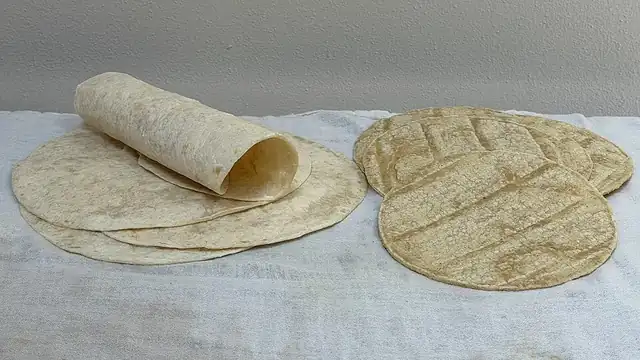
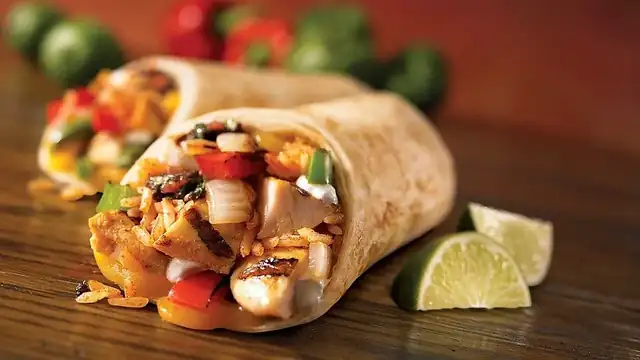
In modern times, it is considered by many as a different dish in Mexican and Tex-Mex cuisine that took form in Ciudad Juárez, consisting of a flour tortilla wrapped into a sealed cylindrical shape around various ingredients. In Central and Southern Mexico, burritos are still considered tacos, and are known as tacos de harina ("wheat flour tacos"). The tortilla is sometimes lightly grilled or steamed to soften it, make it more pliable, and allow it to adhere to itself. Burritos are often eaten by hand, as their tight wrapping keeps the ingredients together. Burritos can also be served "wet", covered in a savory and spicy sauce. Wet burritos are eaten with a fork and knife.
Mexico
Burritos are a traditional food of Ciudad Juárez, a city bordering El Paso, Texas, in the northern Mexican state of Chihuahua, where people buy them at restaurants and roadside stands. Northern Mexican border towns like Villa Ahumada have an established reputation for serving burritos. Authentic Mexican burritos are usually small and thin, with flour tortillas containing only one or two of several ingredients: either some form of meat or fish, potato, rice, beans, asadero cheese, chile rajas, or chile relleno. Other ingredients may include: barbacoa, mole, refried beans and cheese (a "bean and cheese" burrito), or deshebrada (shredded slow-cooked flank steak). The deshebrada burrito has a variation with chile (mild to moderately hot) and one with salsa verde (very hot).
The Mexican burrito may be a northern variation of the traditional taco de Canasta, which is eaten for breakfast, lunch, and dinner.
San Francisco Mission burrito
The origins of the Mission burrito or Mission-style burrito can be traced back to San Francisco, in the Mission District taquerías of the 1960s and 1970s. This type of burrito is produced on a steam table assembly line, and is characterized by a large stuffed flour tortilla wrapped in aluminum foil, and may include fillings such as carne asada (beef), Mexican-style rice, whole beans (not refritos), sour cream and onion.
Febronio Ontiveros claims to have offered the first retail burrito in San Francisco in 1961 at El Faro ("The Lighthouse"), a corner grocery store on Folsom Street. Ontiveros claims credit for inventing the "super burrito", a style which may have led to the early development of the "San Francisco style". This innovative style involves the addition of rice, sour cream and guacamole to the standard burrito of meat, beans, and cheese. The Mission burrito emerged as a regional culinary movement during the 1970s and 1980s. The popularity of San Francisco-style burritos has grown locally at Mission Street taquerias like Taqueria El Farolito, and nationally at chains like Chipotle Mexican Grill, Illegal Pete's, Chevy's Fresh Mex, Freebirds World Burrito, Qdoba, and Barberitos. Chili's had a brief stint with "Fresh Mex" foods and burritos between 2015 and 2017.
San Diego
San Diego–style burritos include "California burritos" and carne asada burritos. The style has been described by food writers as an "austere meal of meat, cheese and salsa", a contrast to the Mission-style burrito, which is typically larger and always contains more ingredients. A significant subgroup of Mexican restaurants in San Diego serves burritos described as "no-frills" and, in contrast to Mission-style burritos, the assembly line is not used.
In the early 1960s, Roberto Robledo opened a tortilleria in San Diego and learned the restaurant business. Robledo began selling small bean burritos (or burrititos) at La Lomita in the late 1960s, and by 1970, he had established the first Roberto's Taco Shop. By 1999, Roberto's restaurants had expanded to a chain of 60 taco shops offering fresh burritos known for their distinctive quality. Hoping to draw on the prestige of Roberto's, new taco shops in San Diego began using the "-bertos" suffix, with names like Alberto's, Filiberto's, Hilberto's, and others.
Los Angeles
Los Angeles also has several unique local burrito varieties. The first is the most traditional and is exemplified by the versions at Mexican-American restaurants such as Al & Bea's, Lupe's #2, and Burrito King. These restaurants have often been in existence for decades, and they offer a distinctly Americanized menu compared with the typical taqueria. The burrito of L.A. itself can take multiple forms, but is almost always dominated by some combination of: refried beans, meat (often stewed beef or chili), and cheese (usually cheddar), with rice and other ingredients typical of Mission burritos offered as add-ons, if at all.
Variations and similar dishes
A wet burrito is covered with a red chili sauce similar to a red enchilada sauce, with melted shredded cheese on top. It is usually eaten from a plate using a knife and fork, rather than eaten with the hands. This variety is sometimes called "smothered", "enchilada-style", mojado (Spanish for "wet"), or suizo ("Swiss"; used in Spanish to indicate dishes topped with cheese or cream).
A burrito bowl is not technically a burrito, despite its name, as unlike a traditional burrito, its ingredients are not wrapped. It consists of burrito-style fillings, typically arranged in a bowl, often with a base of rice. In 2017, a Meal, Ready-to-Eat version of a burrito bowl was introduced. It should not to be confused with a taco salad, which has a foundation of lettuce and is typically served inside a fried tortilla shell (tostada).
Research
Taco Bell research chef Anne Albertine experimented with grilling burritos to enhance portability. This grilling technique allowed large burritos to remain sealed without spilling their contents. This is a well-known cooking technique used by some San Francisco taquerias and Northern Mexican burrito stands. Traditionally, grilled burritos are cooked on a comal (griddle).
Bean burritos, which are high in protein and low in saturated fat, have been touted for their health benefits. Black bean burritos are also a good source of dietary fiber and phytochemicals.
More to savor
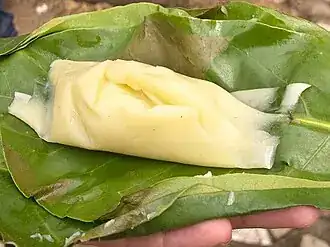
Agidi (Nigerian Cornstarch Swallow)
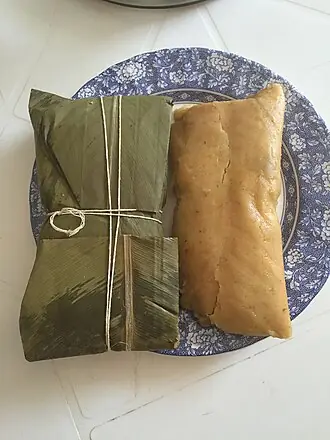
Hallaca (Venezuelan Stuffed Corn Dough)
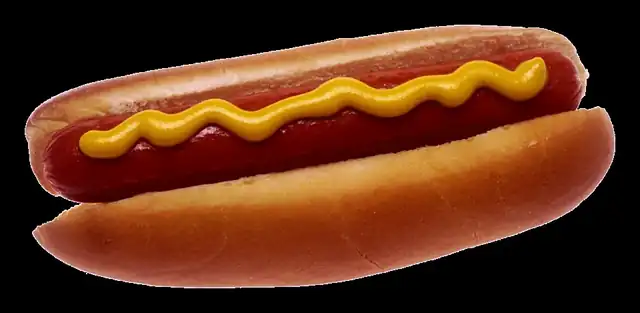
Hot Dogs: A Sausage, a Bun, and a Food Story