This longer reference provides the background behind the topic. Read it alongside the recipe collection when you want to connect an ingredient or food idea with a dish to prepare.
Overview
Chocolate is a food made from roasted and ground cocoa beans. It can be a liquid, solid, or paste. It is eaten on its own and used to flavor other foods.
Cocoa beans are the processed seeds of the cacao tree (Theobroma cacao). They are usually fermented to develop the flavor, then dried, cleaned, and roasted. The shell is removed to reveal nibs, which are ground to chocolate liquor (unadulterated chocolate in rough form.) The liquor can be further processed into cocoa butter and cocoa powder, or shaped and sold as unsweetened baking chocolate. By adding sugar, sweetened chocolates are produced, which can be sold simply as dark chocolate, or, with the addition of milk, can be made into milk chocolate. Making chocolate with only cocoa butter and milk produces white chocolate.
Chocolate is one of the most popular food types and flavors in the world, and many foodstuffs include chocolate, particularly desserts, including ice creams, cakes, mousse, and cookies. Many candies are filled with or coated with sweetened chocolate. Chocolate bars, either made of solid chocolate or other ingredients coated in chocolate, are eaten as snacks. Gifts of chocolate molded into different shapes (such as eggs, hearts, and coins) are traditional on certain holidays, including Christmas, Easter, Valentine's Day, Hanukkah and Eid al-Fitr. Chocolate is also used in cold and hot beverages, such as chocolate milk, hot chocolate and chocolate liqueur.
The cacao tree was first used as a source for food in what is today Ecuador at least 5,300 years ago. Mesoamerican civilizations widely consumed cacao beverages, and in the 16th century, one of these beverages, chocolate, was introduced to Europe. Until the 19th century, chocolate was a drink consumed by societal elite. In the wake of technological advances chocolate became a mass-consumed solid food. Cocoa beans for most chocolate are grown in West African countries, particularly Ivory Coast and Ghana, which contribute about 60% of the world's cocoa supply.
Types
Several types of chocolate can be distinguished. Pure, unsweetened chocolate, often called "baking chocolate", contains primarily non-fat cocoa solids and cocoa butter in varying proportions. Much of the chocolate consumed today is in the form of sweet chocolate, which combines chocolate with sugar.
Eating chocolate
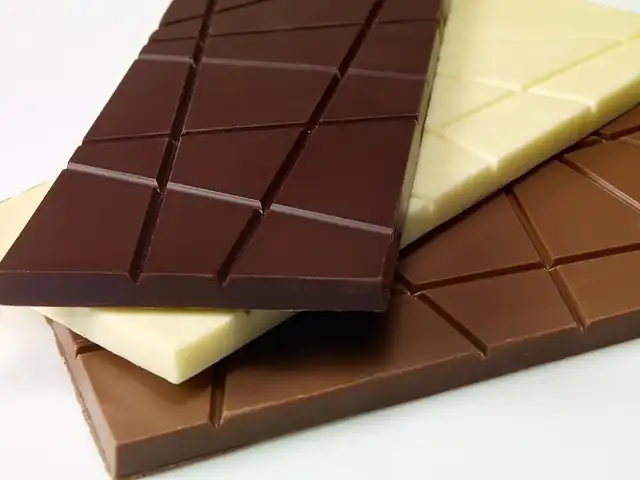
The traditional types of chocolate are dark, milk and white. All of them contain cocoa butter, which is the ingredient defining the physical properties of chocolate (consistency and melting temperature). Plain (or dark) chocolate, as its name suggests, is a form of chocolate that is similar to pure cocoa liquor, although is usually made with a slightly higher proportion of cocoa butter. It is simply defined by its cocoa percentage. In milk chocolate, the non-fat cocoa solids are partly or mostly replaced by milk solids. In white chocolate, they are all replaced by milk solids, hence its ivory color.
Other forms of eating chocolate exist, these include raw chocolate (made with unroasted beans) and ruby chocolate. An additional popular form of eating chocolate, gianduja, is made by incorporating nut paste (typically hazelnut) to the chocolate paste.
Other types
Other types of chocolate are used in baking and confectionery. These include baking chocolate (often unsweetened), couverture chocolate (used for coating), compound chocolate (a lower-cost alternative) and modeling chocolate. Modeling chocolate is a chocolate paste made by melting chocolate and combining it with corn syrup, glucose syrup, or golden syrup.
Usage and consumption
Chocolate is sold in chocolate bars, which come in dark chocolate, milk chocolate and white chocolate varieties. Some bars that are mostly chocolate have other ingredients blended into the chocolate, such as nuts, raisins, or crisped rice. Chocolate is used as an ingredient in a huge variety of bars, which typically contain various confectionary ingredients (e.g., nougat, wafers, caramel, nuts) which are coated in chocolate.
Chocolate is used as a flavoring product in many desserts, such as chocolate cakes, chocolate brownies, chocolate mousse and chocolate chip cookies. Numerous types of candy and snacks contain chocolate, either as a filling (e.g., M&M's) or as a coating (e.g., chocolate-coated raisins or chocolate-coated peanuts).
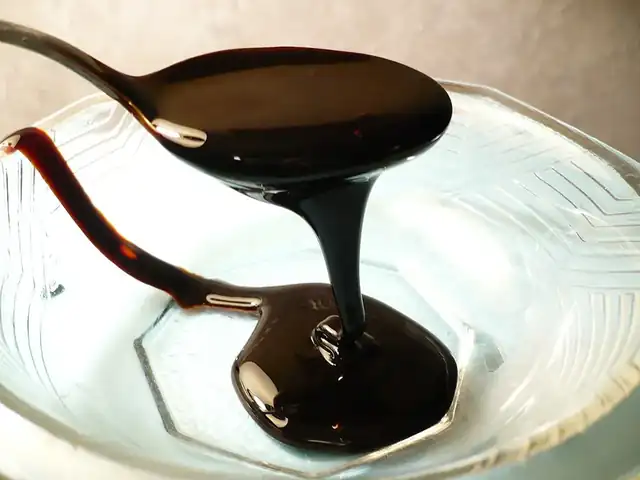
Some non-alcoholic beverages contain chocolate, such as chocolate milk, hot chocolate, chocolate milkshakes and tejate. Some alcoholic liqueurs are flavored with chocolate, such as chocolate liqueur and crème de cacao. Chocolate is a popular flavor of ice cream and pudding, and chocolate sauce is a commonly added as a topping on ice cream sundaes. The caffè mocha is an espresso beverage containing chocolate.
Eating experience
The experience of eating chocolate varies with the ingredients used. More sugary chocolates have a flavor that is more immediately apparent, while chocolates with higher cocoa percentages have flavors that take longer to be perceived but stay on the palate for longer. These chocolates with more cocoa are increasingly bitter.
Flavors
Mint chocolate (or chocolate mint) is an individual flavor of chocolate, made by adding a mint flavoring, such as peppermint, spearmint, or crème de menthe, to chocolate. Mint chocolate can be found in a wide variety of confectionery items, such as candy, mints, cookies, mint chocolate chip ice cream, hot chocolate, and others. It is also marketed in a non-edible format in cosmetics with a distinctive mint fragrance. The chocolate component can be milk chocolate, regular dark chocolate, or white chocolate; due to this, mint chocolate has no one specific flavour, and so each chocolate-plus-flavor combination can be unique. The U.S. National Confectioners Association lists February 19 as "Chocolate Mint Day".
More to savor

Chicken Vindaloo

Spaghetti alla Puttanesca
A Closer Look at Yogurt: From Ingredient to Meal