What we eat is only part of the story of a meal. The setting, the way food is served, and the habits around the table can be just as revealing. The guide below follows the subject in more detail.
Overview
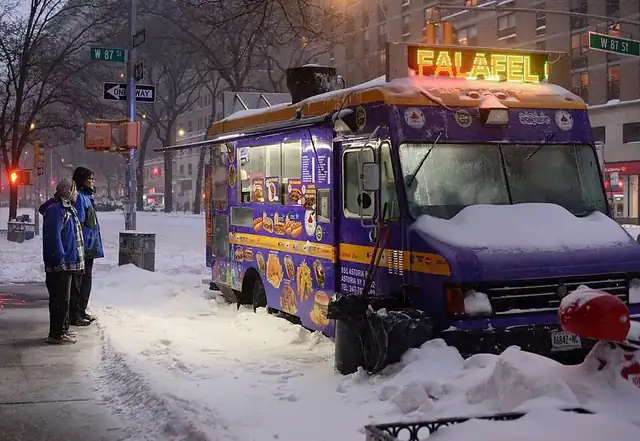
A food truck is a large motorized vehicle (such as a van or multi-stop truck) or trailer equipped to store, transport, cook, prepare, serve and/or sell food.
Some food trucks, such as ice cream trucks, sell frozen or prepackaged food, but many have on-board kitchens and prepare food from scratch, or they reheat food that was previously prepared in a brick and mortar commercial kitchen. Sandwiches, hamburgers, hot dogs, chicken, tacos, pizza, french fries and other typical fast food and finger food staples are common food truck fare, though since the pop-up restaurant phenomenon of the 2010s, food trucks specializing in a wide variety of gourmet, specialty, global, regional, and fusion cuisines have seen growing popularity. Food trucks often also sell or fully specialize in beverages such as soft drink, juice, coffee, tea, and water, as well as treats such as ice cream, pastries, and fried dough.
Historical predecessors of food trucks were horse-drawn chuckwagons and lunch wagons of the 19th century. By the early-to-mid-20th century, trucks and vans were being used both as mobile canteens in the military and as "roach coaches" that traveled to worksites and primarily catered to blue-collar workers. Into the 21st century, economic and cultural shifts surrounding the foodservice industry led to a considerable rise in popularity among customers and food truck operation as a career. Though food trucks primarily developed in the United States, United Kingdom, and France, they have become increasingly popular and more available in other parts of Europe and the Americas, as well as Asia and Oceania.
Food trucks, along with food booths and food carts, are major components of the street food industry that serve an estimated 2.5 billion people daily.
United States
In the United States, the Texas chuckwagon is a precursor to the American food truck. In the later 19th century, herding cattle from the Southwest to markets in the North and East kept cowhands on the trail for months at a time. In 1866, the "father of the Texas Panhandle", cattle rancher Charles Goodnight, fitted a sturdy old United States Army wagon with interior shelving and drawers, and stocked it with kitchenware, food, and medical supplies. Food consisted of dried beans, coffee, cornmeal, greasy cloth-wrapped bacon, salt pork, dried or salted beef, and other easy-to-preserve foodstuffs. The wagon was also stocked with a water barrel and a sling to kindle wood to heat and cook food.
Another early relative of the modern food truck is the "lunch wagon", horse-drawn street cars whose night version was known as the "night owl", as conceived by food vendor Walter Scott in 1872 as a "kitchen on wheels". Scott cut windows in a small covered wagon, parked it in front of a newspaper office in Providence, Rhode Island, and sold sandwiches, pies, and coffee to pressmen and journalists. By the 1880s, former lunch counter worker Thomas H. Buckley was manufacturing lunch wagons in Worcester, Massachusetts. He introduced various models, like the Owl and the White House Cafe, with features that included sinks, refrigerators, cooking stoves, colored windows, and other ornamentation.
In 1936 the Food Code spread its regulatory umbrella to include food trucks as a result of their introduction to society.
Later versions of the food truck were mobile canteens, which were created in the late 1950s. These mobile canteens were authorized by the U.S. Army and operated on stateside Army bases.
Gourmet trucks
In 2011, USA Today noted that food trucks selling pricier food were gaining popularity across the United States, contrary to a common perception that food trucks are typically run-down and found at construction sites. In 2009, New York magazine noted that the food truck had "largely transcended its roach-coach classification and is now a respectable venue for aspiring chefs to launch careers." These gourmet trucks' menus run the gamut of ethnic and fusion cuisine. Often focusing on limited but creative dishes at reasonable prices, they offer customers a chance to experience food they otherwise may not. Finding a niche seems to be a path to success for most trucks. While one truck may specialize in outlandish burgers, another may serve only lobster rolls.
Food truck rallies
Food truck rallies and food truck parks are also growing in popularity in the United States, wherein multiple food trucks gather in one location, usually in cooperation with each other, with the goal of attracting business through the variety offered. On August 31, 2013, Tampa, Florida hosted the world's largest food truck rally, with 99 trucks attending. The Tampa Rally broke its own record by bringing together 121 food trucks in 2014. The Chicago Food Truck Festival hosts over 40 trucks each year with 60,000 guests participating over two days in Chicago. Food truck parks, offering permanent locations, are found in urban and suburban areas across the US.
Food safety concerns
Food trucks have unique health risks compared to regular restaurants when it comes to food safety and the prevention of foodborne illness. Most food trucks do not have access to adequate clean and hot water necessary to wash hands or to rinse off vegetables, as required by most health codes or regulations.
In June 2017, The Boston Globe reviewed the 2016 city health records and found that food trucks had been cited for violations 200 times, with half of the violations being minor in nature and the other half being serious violations. When compared to fixed location restaurants, the city closed nine of the 96 licensed food trucks in 2016 and closed only two out of 100 restaurants. A majority of the serious violations were related to the lack of water and hand washing.
Brazil
In Brazil, food trucks started with trucks that served food during carnival time and after soccer games, sporting events, and concerts. However, when trucks began to serve gourmet food (with higher prices), food trucks were no longer associated with popular food, and it became trendy to eat street food from food trucks. Nowadays they are all commonly found across Brazil, at practically any place where there is potential demand for regular meals or snacks.
Canada
In Canada, food trucks, also known as cantines (French for cafeteria) in Quebec, are present across the country, serving a wide variety of cuisines.
More to savor
Coconut Chicken
Reindling (Austrian Yeasted Easter Cake)

Hummus: The Dip That Invites You to Share