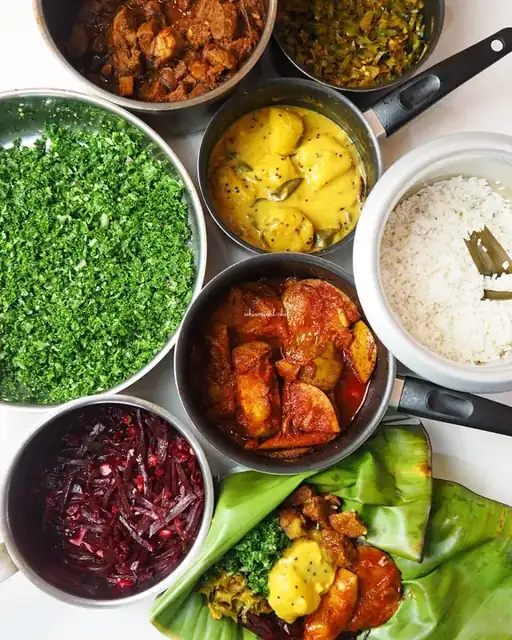
Use the regional background below as a starting point for exploring the food, rather than expecting one dish to represent every household. Food traditions differ within a country and continue to change through travel, migration, and everyday cooking.
In this story
OverviewIngredientsMeatsFish and seafoodMain dishesSauces and condimentsTypes of breadsOverview
Algerian cuisine is influenced by Algeria's interactions and exchanges with other cultures and nations over the centuries. It is based on both land and sea products. Conquests or demographic movement towards the Algerian territory were two of the main factors of exchanges between the different peoples and cultures, introducing multiple flavors and influences, reflecting the country's history and position at the crossroads of the Mediterranean. Algerian cuisine arises from a mix of Arab, Berber, Turkish and European roots.
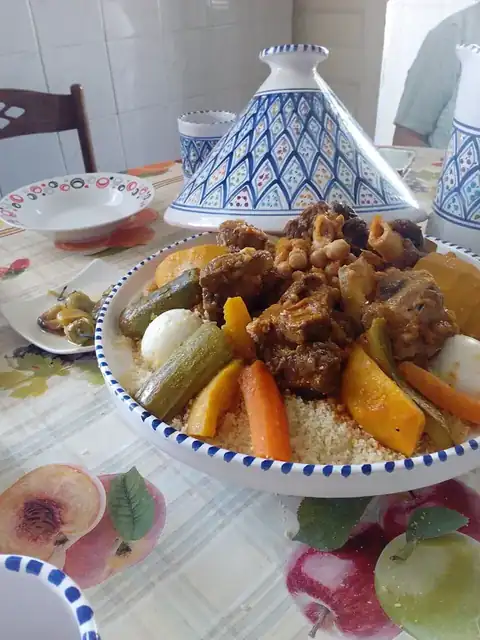
Algerian cuisine offers a variety of dishes depending on the region and the season, but vegetables and cereals remain at its core. Most Algerian dishes are centered around breads, meats (lamb, beef or poultry), olive oil, vegetables, and fresh herbs. Vegetables are often used for salads, soups, tajines, couscous, and sauce-based dishes. Of all the Algerian traditional dishes available, the most famous one is Algerian couscous, recognized as a national dish.
Pork consumption is forbidden to Muslims in Algeria, in accordance with Islamic dietary laws.
Ingredients
Algeria, like other Maghreb countries, produces a large range of Mediterranean fruits and vegetables and even some tropical ones. Lamb is commonly consumed. Mediterranean seafood and fish are also eaten.
Meats
Algerians consume a significant amount of meat, and it is found in almost every dish. Mutton is the most eaten meat in the country.
Poultry and beef are also used; more uncommon types of meat such as game birds and venison are considered delicacies. In the south, dromedary (camel meat) is also eaten.
Merguez is a type of sausage originating from the Berber people.
Fish and seafood
Sardines, hake, shrimp, octopus, tuna and cod are the main items of seafood commonly eaten in Algerian cuisine, mostly in stews or fried.
Main dishes
A common and one of the most favorite dishes of Algerian cuisine is couscous. The semolina is traditionally made from wheat but can also be made with barley. The grains can also be fermented to make el Hammoun couscous. The dish can be prepared in many ways, generally with a sauce with beef or lamb and zucchini, carrots, chickpeas and green bean, chicken, lentils and black-eyed pea. Couscous can also be consumed in a masfouf (or thameqfoult in Kabyle), a dry version with no sauce and vegetables such as broad beans, peas or also with raisins and dates, traditionally along with fermented milk.
Several pasta dishes can be found in the traditional Algerian cuisine: rechta, chakhchoukha, berkoukes, tikourbabine (also called asban), Aftir oukessoul tlitli or trida. These traditional pasta dishes are prepared in a red stew, with the exception of rechta which is generally made in a white stew in Algeria, with meat and vegetables.
Vegetarian dishes in Algeria are also a main part of the diet with karantita (chickpeas flan), tbikha (vegetable stew), shakshouka (sort of ratatouille, often cooked with eggs), zaalouka (ratatouille of eggplants and tomatoes mainly, served hot or cold). These dishes are often consumed with bread.
Tajine or djouez are traditional dishes prepared in a stew or cooked in a similar way, originally in an earthen pot. They can be vegetarian, but are generally made of a meat (either lamb or chicken) and vegetables. Particular tajines made in a red sauce are called chtitha (for example, chtitha djaj is a chicken dish cooked in a red sauce with chickpeas). Other well-known dishes include koubeb (chicken cooked in a white sauce with cinnamon and chickpeas and served with thick fries and parsley), zviti, and marqa bel a'assel (a speciality from Tlemcen).
Some additional dishes include:
Bourek—fried spring rolls with various stuffing, including meat, tuna, potato, and cheese. A popular variant, the bourek annabi, from Annaba, is bigger and stuffed with mashed potatoes, ground beef, mushrooms, cheese, eggs and parsley.
Mhadjeb—flatbread stuffed with onions and tomato sauce.
Sauces and condiments
Algerian cuisine is characterized by its use of flavorful spices and herbs, and a variety of sauces play an important role in many dishes. Two popular Algerian sauces are harissa and dersa.
Harissa is a spicy chili paste that is made from dried chili peppers, garlic, olive oil, and various spices such as caraway and coriander. It is often used as a condiment to add heat and flavor to stews, soups, and grilled meats. Harissa can also be used as a marinade for meat or seafood.
Dersa is a milder sauce that is made from garlic, lemon juice, olive oil, and a variety of herbs such as parsley, cilantro, and mint. It is often used as a dipping sauce for bread, vegetables, or grilled meats. Dersa can also be used as a marinade or dressing for salads.
Zaalouk: a traditional dip used in Algeria made from eggplant, tomatoes, garlic, and spices, typically served as an appetizer or side dish.
Chermoula, a marinade made from garlic, cilantro, lemon juice, and spices, commonly used to flavor seafood and meat dishes.
Toum: a garlic sauce made from garlic, lemon juice, and olive oil, similar to aioli, often served with grilled meats or as a dip.
Shakshuka sauce: a spicy tomato sauce made with onions, peppers, and a variety of spices, often used in the popular egg dish of the same name.
Types of breads
Khubz as-dâr—wheat flour, water, salt and yeast. Traditionally flat and round, a few centimeters thick, made at home and commonly baked in a gas oven or communal oven.
Khubz at-tajîn or matlû—wheat semolina, yeast, water and salt. Flattened pan-bread (French: galette), baked in a previously heated earthenware or cast-iron plate on a fire. Variations are made by the quality of the leavening agent, by adding barley or sorghum, bran, or by making it corn-based.
Khubz-ftir, raqâq, rfîs or tarîd—well-kneaded, unleavened dough, baked for half a minute on a convex sheet of brass or iron, balanced on stones over a fire. This is a preferred method for those living nomadic lives due to easy transportation of the pan and the small amount of fuel necessary.
Batbout is a small bread resembling Greek pita bread, but thicker (similar to matlû). It is eaten with stuffing inside.
French baguettes—white, leavened wheat flour. Bought at bakery or street vendor, but never made at home due to access to mills powered by electricity. Power shortages prevent consumption of this bread, and often Algerians turn to home-made breads that are milled by women's hands.
More to savor

Chicken Vindaloo
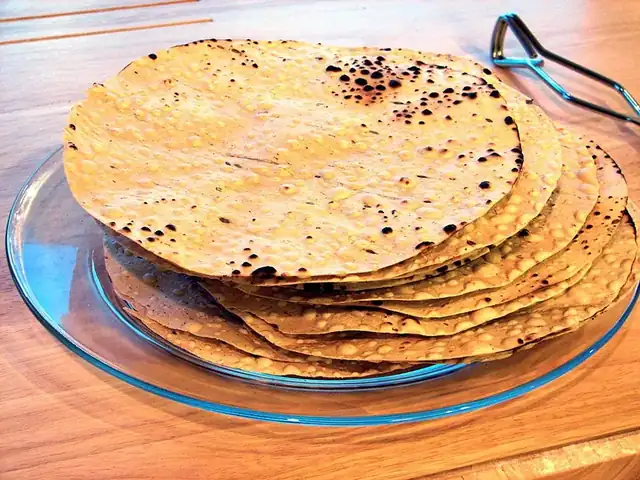
Papadam (Black Gram Flatbread)
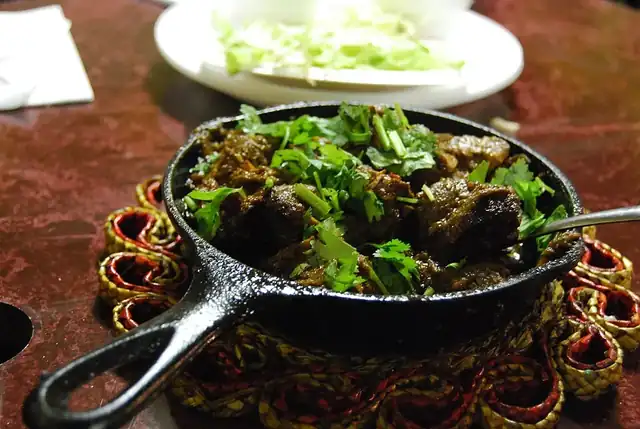
A Taste of Pakistan: Regional Flavors and Food Traditions