Use the regional background below as a starting point for exploring the food, rather than expecting one dish to represent every household. Food traditions differ within a country and continue to change through travel, migration, and everyday cooking.
Overview
Sri Lankan cuisine is known for its particular combinations of herbs, spices, fish, vegetables, rices, and fruits. The cuisine is highly centred around many varieties of rice, as well as coconut which is a ubiquitous plant throughout the country. Seafood also plays a significant role in the cuisine, be it fresh fish or preserved fish. As a country that was a hub in the historic oceanic silk road, contact with foreign traders brought new food items and cultural influences in addition to the local traditions of the country's ethnic groups, all of which have helped shape Sri Lankan cuisine. Influences from Indian (particularly South Indian), Indonesian and Dutch cuisines are most evident with Sri Lankan cuisine sharing close ties to other neighbouring South and Southeast Asian cuisines.
Sri Lanka is historically famous for its cinnamon. The 'true cinnamon' tree, or Cinnamomum verum, used to be botanically named Cinnamomum zeylanicum to reflect its Sri Lankan origins. This is a widely utilised spice in Sri Lanka, and has a more delicate, sweet taste in comparison to Cinnamomum cassia, which is more common in some other Southeast Asian cuisines. Contrasting the local cuisine with those of neighbouring regions, Sri Lankan cuisine is characterised by unique spice blends with heavy use of Sri Lankan cinnamon and black pepper, as well as by the use of ingredients such as Maldives fish, goraka (Garcinia cambogia), pandan leaf, lemongrass, and jaggery made from kithul palm syrup. Sri Lanka is also a consumer of many varieties of red rice, some of which are considered heirloom rices in the country.
Tea is also an important beverage throughout the country, and Sri Lanka is known for producing some of the world's finest tea.
Regions
In areas located on the island's coasts, seafood is a standard feature of the local dishes. Tamil cuisine, especially in Jaffna, shares many similarities with South Indian cuisine. Kandyan Sinhalese cooking is based on local ingredients, including hill vegetables and fruits.
Common ingredients
Herbs: pandan leaf (rampe), curry leaf (karapincha), shallot, goraka, lemongrass, tamarind, garlic, ginger, lime, cayenne pepper, tabasco pepper
Fish: Maldives fish, dried fish, mackerel, tuna, shark, sprats, fermented preserved fish
Fruits: bananas, mangoes, pineapple, soursop, guava, avocado, orange
Grains: white rice (some common varieties are Samba, Kekulu, and Suwandel), red rice (some common varieties are Kekulu, Pachchaperumal, Kaluheenati, and Madathawalu), finger millet, hog millet, olu haal (water lily seed)
Meats: chicken, beef, pork, mutton
Oils: coconut oil, sesame oil, cow ghee, buffalo ghee, mustard oil
Spices: cinnamon, black pepper, fennel, cardamom, cloves, fenugreek, nutmeg, mace, cumin, coriander, turmeric
Sweeteners: kithul jaggery, coconut jaggery, palmyrah jaggery
Vegetables and greens: gotukola, green papaya, snake beans, bitter melon, snake gourd, luffa, pumpkin, winged bean, moringa
Yams, roots and tubers: lotus root, purple yam, tapioca, kohila (Lasia spinosa), Arrowleaf elephant's ear
Other: Coconut milk and grated coconut are ubiquitous in the cuisine, and are freshly prepared almost every day in most households. Maldives fish is heavily used in vegetable dishes to add an umami flavour.
Rice and curry
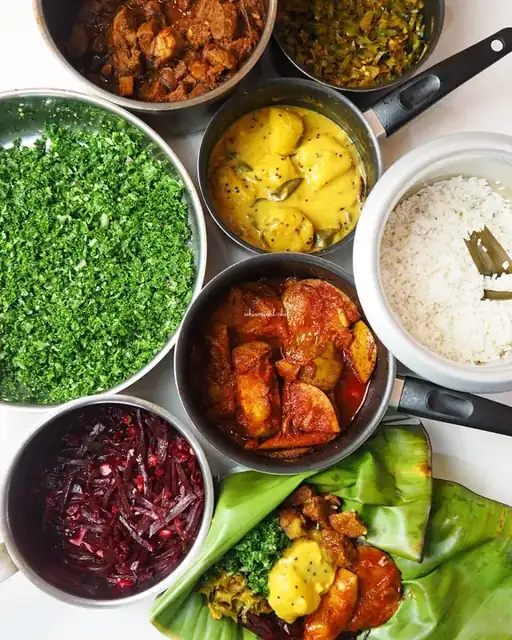
The central feature of Sri Lankan cuisine is boiled or steamed rice, served with a curry of fish or meat, along with other curries made with vegetables, lentils, or fruits.
Dishes are accompanied by pickled fruits or vegetables, chutneys, and sambols. Coconut sambol is especially common, a paste of ground coconut mixed with chilli peppers, dried Maldives fish, and lime juice.
Kiribath
Kiribath or paal soru (lit. 'milk rice') is rice cooked in salted coconut milk until the grains turn soft and porridge-like. Generally eaten for breakfast, kiribath is also prepared on special occasions such as birthdays, New Years' and religious festivals. It is usually served with lunu miris, a relish made with red onions and chillies. There is also a method of cooking kiribath with mung beans. During Aluth Avurudu/Puthandu, the Sinhalese/Tamil New Year, kiribath is served with sweets such as kavum, kokis, mung kavum, od iba, and others.
Sweets
A common dessert in Sri Lanka is kevum, an oil cake made with rice flour and treacle and deep-fried to a golden brown. There are many variations of kevum. Moong kevum is a variant in which mung bean flour is made into a paste and shaped like diamonds before frying. Other types of kevum include , konda kevum, athirasa, and handi kevum.
A simple home dessert is buffalo curd, often served with kithul treacle.
Many sweets are served with kiribath milk rice during the Sinhalese and Tamil New Years.
Other sweets include:Cakes and pastries: Aluwa – Diamond-shaped rice-flour pastries
Bolo fiado – A Portuguese-style layer cake
Bibikkan – A rich, cake-like sweet made from grated coconut, coconut treacle, and wheat flour. It is a specialty of coastal areas.
Kokis – A savoury crispy biscuit-like dish made from rice flour and coconut milk.
Pushnambu/wandu appa – A rich, cake-like sweet made from coconut treacle and wheat flour. Cinnamon or cardamom and sweet cumin is often added among the Christian population of Sri Lanka.
Seenakku – A glutinous rice cake often served with grated coconut.Treacle-flavoured sweets: Undu walalu (undu wal) or pani walalu – A sweet from the Mathale area, prepared using urad bean flour and kithul treacle.
Aggala – Rice balls flavoured with treacle.
Weli thalapa – Made from rice flour and coconut treacle.
Aasmi – Made with rice flour and the juice of a leaf called dawul kurundu (okra juice can be used as a substitute), deep-fried and topped with pink-coloured treacle.Puddings and toffees: Kalu dodol – A solid toffee-, jelly-like confection made by lengthy reduction of coconut milk, thickened with rice flour and sweetened with jaggery.
Watalappam – A steamed pudding made with coconut milk, eggs, and jaggery. First introduced by Malay immigrants, watalappam has become a common Sri Lankan dessert.Other sweets:''
Thala guli – Made from ground sesame, desiccated coconut, jaggery, and salt.
Kiri aluwa or milk toffee – Made with sweetened condensed milk or sugar-thickened pure cow's milk. Cardamom or sweet cumin and cashews are added for more taste.
Beverages
Beverages commonly served in Sri Lanka include:
Faluda – a mixture of syrup, ice cream, jelly pieces and basil seeds, served cold
Fruit juice – including lime and passionfruit juice
King coconut water
Tea
Toddy – a mildly alcoholic drink made from palm tree sap
Arrack – an alcoholic spirit made from the fermented sap of the coconut flower.
Wood apple juice
Kirala juice
More to savor

Chicken Vindaloo
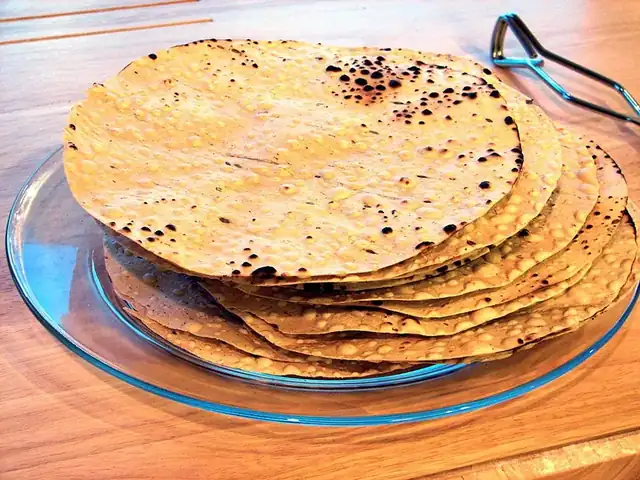
Papadam (Black Gram Flatbread)
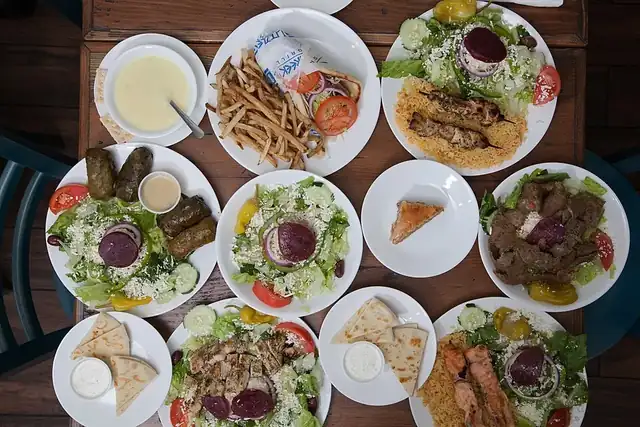
At the Greek Table: Food, Place and Everyday Meals