This longer reference provides the background behind the topic. Read it alongside the recipe collection when you want to connect an ingredient or food idea with a dish to prepare.
Overview
The avocado, alligator pear or avocado pear (Persea americana) is an evergreen tree in the laurel family (Lauraceae). It is native to the Americas, with archaeological evidence of early human avocado use dating back thousands of years across various regions of Central and South America. It was prized for its large and unusually oily fruit. The native range of avocado (Persea americana) extends from Mexico to Peru, encompassing much of Central America and parts of northern and western South America.
Its fruit is botanically a large berry containing a single large seed. Sequencing of its genome showed that the evolution of avocados was shaped by polyploidy events and that commercial varieties have a hybrid origin. Avocado trees are partly self-pollinating, and are often propagated through grafting to maintain consistent fruit output. Avocados are currently cultivated in the tropical and Mediterranean climates of many countries. In 2024, Mexico was the world's leading producer of avocados, supplying 25% of the global harvest of 11.2 million tonnes.
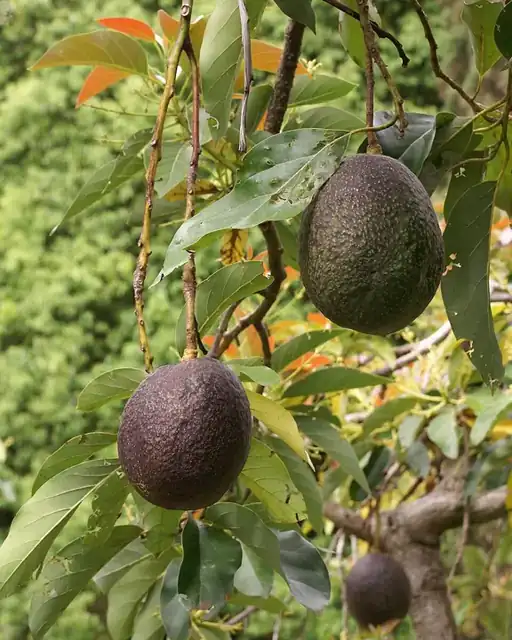
The fruit of domestic varieties have smooth, buttery, golden-green flesh when ripe. Depending on the cultivar, avocados have green, brown, purplish, or black skin, and may be pear-shaped, egg-shaped, or spherical. For commercial purposes, the fruits are picked while unripe and ripened after harvesting. The nutrient density and high fat content of avocado flesh are advantages for various cuisines, including vegetarian eating styles.
In major production regions like Mexico and California, the water demands of avocado farms place strain on local resources. Avocado production is implicated in other externalities, including deforestation and human rights concerns associated with the partial control of their production in Mexico by organized crime. Global warming is expected to result in significant changes to the suitable growing zones for avocados, and place additional pressures on the locales in which they are produced due to heat waves and drought.
Description
Persea americana is a tree that grows to 9 - 20 m with a trunk diameter between 0.3 - 0.6 m. The leaves are 8 - 25 cm long and alternately arranged.
Fruit
The avocado fruit is climacteric, and is defined botanically as a single-seeded berry with an imperceptible endocarp covering the seed; it is not a drupe. The pear-shaped fruit is usually 7 - 20 cm long, weighs between 100 and 1000 g, and has a large central seed, 5 - 6.4 cm long. Early wild avocados prior to domestication had much smaller seeds around 2.1-2.2 cm in diameter, likely corresponding to smaller fruit size.
Various cultivars with larger, fleshier fruits and a thinner exocarp have been developed by selective breeding.
Regional names
In Central American, Caribbean Spanish-speaking countries, and Spain, it is known by the Spanish name aguacate, while Argentina, Chile, Perú and Uruguay use a Quechua-derived word palta. In Portuguese, it is abacate. The Nahuatl āhuacatl can be compounded with other words, as in ahuacamolli, meaning avocado soup or sauce, from which the Spanish word guacamole derives.
In Trinidad and Tobago, it is known as zaboca, which is derived from the French Creole, 'l'avocat'.
In the United Kingdom the term avocado pear, applied when avocados first became commonly available in the 1960s, is sometimes used. The clipped form, avo, originating as a diminutive in Australian English, has since become a common colloquialism in South Africa and the United Kingdom.
It is known as "butter fruit" in parts of India and Hong Kong.
Production
In 2024, world production of avocados was 11.2 million tonnes, led by Mexico with 25% of the total (table). Other significant producers were Colombia, Dominican Republic, Peru, and Indonesia.
Culinary
The fruit of horticultural cultivars has a markedly higher fat content than most other fruit, mostly monounsaturated fat, and as such serves as an important staple in the diet of consumers who have limited access to other fatty foods (high-fat meats and fish, dairy products). Having a high smoke point, avocado oil is expensive compared to common salad and cooking oils, and is mostly used for salads or dips.
A ripe avocado yields to gentle pressure when held in the palm of the hand and squeezed. The flesh is prone to enzymatic browning, quickly turning brown after exposure to air. To prevent this, lime or lemon juice can be added to avocados after peeling.
The fruit is not sweet, but distinctly and subtly flavored, with smooth texture. It is used in both savory and sweet dishes, though in many countries not for both. The avocado is common in vegetarian cuisine as a substitute for meats in sandwiches and salads because of its high fat content.
Generally, avocado is served raw, though some cultivars, including the common 'Hass', can be cooked for a short time without becoming bitter. The flesh of some avocados may be rendered inedible by heat. Prolonged cooking induces this chemical reaction in all cultivars.
It is used as the base for the Mexican dip known as guacamole, as well as a spread on corn tortillas or toast, served with spices. Avocado is a primary ingredient in avocado soup. Avocado slices are frequently added to hamburgers and tortas and is a key ingredient in California rolls and other makizushi ("maki", or rolled sushi).
Tea
Avocado plants can be used to make tea from either the leaves or seeds.
More to savor

Chicken Vindaloo
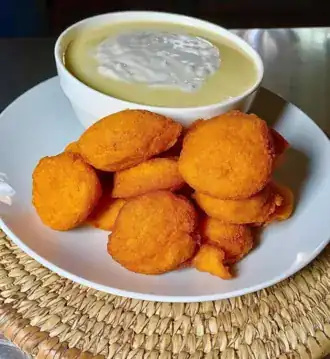
Koko da Kosai (Fermented Corn Porridge and Bean Fritters)
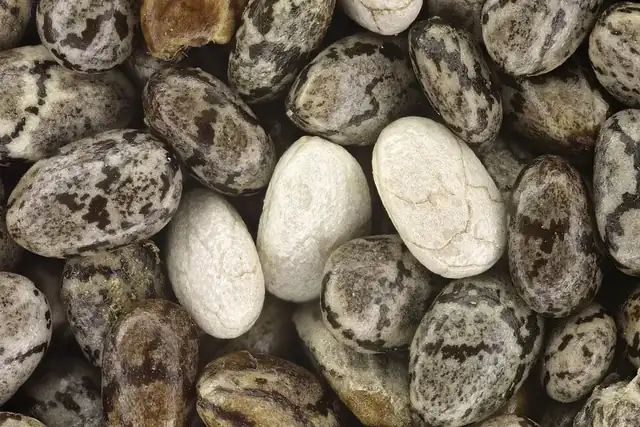
A Closer Look at Chia seed: From Ingredient to Meal