This longer reference provides the background behind the topic. Read it alongside the recipe collection when you want to connect an ingredient or food idea with a dish to prepare.
Overview
A bean is the seed of plants in many genera of the legume family (Fabaceae) used as a vegetable for human consumption or animal feed. The seeds are sold fresh or preserved through drying (a pulse). Beans have been cultivated since the seventh millennium BCE in Thailand, and since the second millennium BCE in Europe and in Peru. Most beans, with the exception of peas, are summer crops. As legumes, the plants fix nitrogen and form seeds with a high protein content. They are produced on a scale of millions of tons annually in many countries, with India as the largest producer.
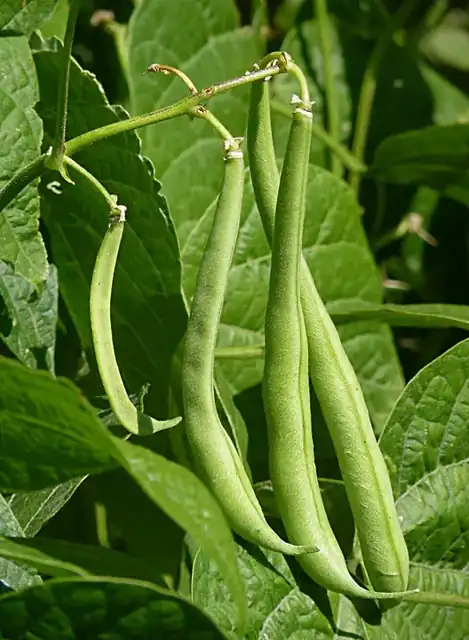
The common bean, Phaseolus vulgaris, is the most consumed bean species in the world and is native to the Americas. It was domesticated in Mexico, Central America and the southern Andes region some ago. It has extensive varieties.
Dried beans are traditionally soaked and boiled, and used in traditional dishes throughout the world including salads, soups, and stews such as chili con carne. Some are processed into tofu; others are fermented to form tempeh. Guar beans are used for their gum. The unripe seedpods of some varieties are also eaten whole as green beans or edamame (immature soybean). Some types are sprouted to form beansprouts.
Many fully ripened beans contain toxins like phytohaemagglutinin and require cooking to make them safe to eat. Many species contain indigestible oligosaccharides that produce flatulence. Beans have traditionally been seen as a food of the poor.
Taxonomic range
Beans are legumes, but from many different genera, native to different regions.
Conservation of cultivars
The biodiversity of bean cultivars is threatened by modern plant breeding, which selects a small number of the most productive varieties. Efforts are being made to conserve the germplasm of older varieties in different countries. As of 2023, the Norwegian Svalbard Global Seed Vault holds more than 40,000 accessions of Phaseolus bean species.
Agronomy
Many beans are summer crops that need warm temperatures to grow, with peas as an exception. Legumes are capable of nitrogen fixation and hence need less fertiliser than most plants. Maturity is typically 55–60 days from planting to harvest. As the pods mature, they turn yellow and dry up, and the beans inside change from green to their mature colour. Many beans are vines needing external support, such as "bean cages" or poles. Native Americans customarily grew them along with corn and squash, the tall stalks acting as support for the beans.
More recently, the commercial "bush bean" which does not require support and produces all its pods simultaneously has been developed.
Production
The production data for legumes are published by FAO in three categories:
Pulses dry: all mature and dry seeds of leguminous plants except soybeans and groundnuts.
Oil crops: soybeans and groundnuts.
Fresh vegetable: immature green fresh fruits of leguminous plants.
The following is a summary of FAO data.
The world leader in production of dry beans (Phaseolus spp), is India, followed by Myanmar (Burma) and Brazil. In Africa, the most important producer is Tanzania.
Source: UN Food and Agriculture Organization (FAO)
Culinary
Beans can be cooked in a wide variety of casseroles, curries, salads, soups, and stews. They can be served whole or mashed alongside meat or toast, or included in an omelette or a flatbread wrap. Other options are to include them in a bake with a cheese sauce, a Mexican-style chili con carne, or to use them as a meat substitute in a burger or in falafels. The French cassoulet is a slow-cooked stew with haricot beans, sausage, pork, mutton, and preserved goose. Soybeans can be processed into bean curd (tofu) or fermented into a cake (tempeh); these can be eaten fried or roasted like meat, or included in stir-fries, curries, and soups. Most dry beans contain 21–25% protein by weight; dry soybeans are 36.5% protein by weight.
Other
Guar beans are used for their gum, a galactomannan polysaccharide. It is used to thicken and stabilise foods and other products.
Toxins
Some kinds of raw beans contain a harmful, flavourless toxin: the lectin phytohaemagglutinin, which must be destroyed by cooking. Red kidney beans are particularly toxic, but other types also pose risks of food poisoning. Even small quantities (4 or 5 raw beans) may cause severe stomachache, vomiting, and diarrhoea. This risk does not apply to canned beans because they have already been cooked. A recommended method is to boil the beans for at least ten minutes; under-cooked beans may be more toxic than raw beans.
Beans need to be cooked thoroughly to destroy toxins; slow cooking is unsafe as it makes the beans soft without necessarily destroying the toxins. A case of poisoning by butter beans used to make falafel was reported; the beans were used instead of traditional broad beans or chickpeas, soaked and ground without boiling, made into patties, and shallow fried.
Bean poisoning is not well known in the medical community, and many cases may be misdiagnosed or never reported; figures appear not to be available. In the case of the United Kingdom National Poisons Information Service, available only to health professionals, the dangers of beans other than red beans were not flagged As of 2008.
Fermentation is used in some parts of Africa to make beans more digestible by removing toxins.
More to savor

Chicken Vindaloo

Koko da Kosai (Fermented Corn Porridge and Bean Fritters)
Getting to Know Cocoa bean: A Food Lover’s Guide