The dish is a starting point for exploring a wider food story. The guide below looks more closely at its background and different forms. When you want to cook, visit the recipe collection for ingredient quantities and step-by-step methods.
Overview
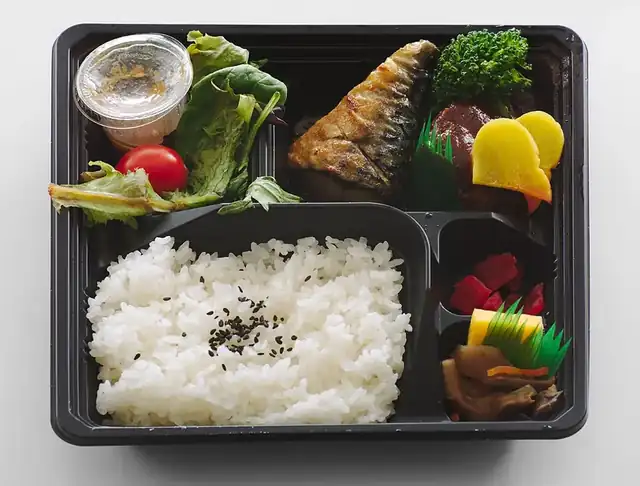
A bento is a single-portion take-out or home-packed meal of Japanese origin, often for lunch, typically including rice and packaged in a box with a lid (often a segmented box with different parts of the meal placed in different sections).
A traditional bento typically includes rice or noodles with fish or some other meat, often with pickled and cooked vegetables in a box. Containers range from mass-produced disposable containers to hand-crafted lacquerware. Dividers are often used to separate ingredients or dishes, especially those with strong flavors, to avoid them affecting the taste of the rest of the meal. A typical divider is green plastic 'sushi grass', known as baran in Japan, which also works to slow the growth of bacteria.
Bento are readily available in many places throughout Japan, including convenience stores, bento shops, railway stations, and department stores. However, Japanese homemakers often spend time and energy on carefully prepared bento for their spouses, children, or themselves. Outside Japan, the term bento box may be used (e.g., on English menus for Japanese restaurants). Bento can be elaborately arranged in styles called kyaraben ("character bento", typically decorated to look like popular characters from anime, manga, or video games) or oekakiben ("picture bento", decorated to look like people, animals, buildings and monuments, or items such as flowers and plants). Contests are often held where bento arrangers compete for the most aesthetically attractive arrangements.
Culture
In Japan, it is common for mothers to make bento for their children to take to school. Because making bento can take a while, some mothers will prepare the ingredients the night before, and then assemble and pack everything the following morning before their children go to school. It is often a social expectation of mothers to provide bento for their children, to create both a nutritionally balanced and aesthetically pleasing meal. This activity is expected of the mother and emphasized by society at large, and is common in nursery school institutions.
The traditional bento that is eaten at school or at work is most often prepared by the mother or the wife. However, bento can also be bought at konbini (convenience stores) or from street vendors who appear on street corners at lunchtime. For those in a hurry who spend their lunch time aboard Shinkansen bullet trains, ekiben are available in train stations.
Osechi, an assortment of foods eaten around the Japanese New Year, is typically arranged in a multi-tiered jūbako box, similarly to bento.
The slang term hayaben (早弁), literally "early bento", refers to eating a bento before lunch and having another lunch afterward. Additionally, Noriben (のり弁) is used metaphorically to refer to government documents that have been blacked out and censored.
By ingredients
Hinomaru bentō (日の丸弁当), named and patterned after the flag of Japan (Hinomaru), is the name for a bento consisting of plain white rice with an umeboshi in the centre. Pure Hinomaru bento only consists of rice and an umeboshi to flavor the rice, without any other side dishes. The metal bento boxes once popular in Japan were often corroded by the acid from the umeboshi, eventually making a hole in the middle of the lid.
Formally known as Nori bentō(海苔弁当) and often abbreviated as Noriben (海苔弁), is a bento with nori dipped in soy sauce covering cooked rice and usually with fried fish, chikuwa and so on. The Nori bento ranks first in the annual sales ranking by bento category at Hotto Motto, one of Japan’s top bento chains.
Karaage bentō is a bento mostly with chicken karaage as the main dish. The Karaage bento ranks second in the annual sales ranking by bento category at Hotto Motto.
Sake bentō (鮭弁当) is a simple bento with a slice of broiled salmon as the main dish.
Tori bento (鳥弁当) consists of pieces of chicken cooked in sauce served over rice. It is a popular bento in Gunma Prefecture.
By style or container
Kamameshi bentō (釜飯弁当) are cooked and served in clay pots and sold at train stations in Nagano Prefecture. After eating, the pot becomes a souvenir item.
Kyaraben (キャラ弁) are bento with the contents arranged to look like popular characters from anime, manga, or video games.
Makunouchi bentō (幕の内弁当) is a classic style of bento with rice, umeboshi, a slice of broiled salmon, and a rolled egg.
Shōkadō bentō (松花堂弁当) is a traditional black-lacquered bento box. It inspired IBM's ThinkPad design.
Scholarship
Many scholars have written about the bento since the late 20th century. The foundation of their approach is based on the idea that food can carry many different meanings.
In the 1970s, Chie Nakane used ekiben as a metaphor for group organization in Japan. By comparing this variant of bento to groups in Japan, she considered how different organizations in Japanese society often include identical components so as not to depend on any other groups for their success. In 1984, Ŏ-ryŏng Yi used bento to present tendencies towards reductionism in Japanese culture; due to it being Japanese food, as it naturally lends itself to being tightly packed. Roland Barthes, on the other hand, used a symbolic approach to describe the lack of a centrepiece in Japanese food. He described the distinct contents of a bento box as a multitude of fragments or ornaments that are combined to beautify each other.
Joseph Jay Tobin in 1992 discussed how the meticulous assembly of individual bento boxes has been aided by the reinterpretation of Western goods, practices, and ideas through a process he classified as domestication.
Taiwan
The bento made its way to Taiwan in the first half of the 20th century during the Japanese colonial period and remains popular to the present day. The Japanese name was borrowed into Taiwanese (piān-tong) and Hakka (phien-tông). A modern Taiwanese bento always includes protein, such as a crispy fried chicken leg or a piece of grilled mackerel and marinated pork chop, as well as side dishes. Taiwan Railway Bento is a well known bento dish manufactured and distributed by the Taiwan Railway Corporation at major railway stations and in train cars. It is estimated that, with five million boxed meals sold per year, annual revenue from bento distribution amounts to 370 million NTD (approx. 10 million USD).
Korea
In Korea, similar packed lunch boxes are called dosirak, and they may be homemade or store-bought. They are similar to Chinese and Japanese variations. Dosirak is usually made with a few different vegetable and meat side dishes, often including a type of kimchi.
More to savor

South Indian Millet Swallow (Mudde)

Koko da Kosai (Fermented Corn Porridge and Bean Fritters)

Lunchboxes: The Small Container That Carries a Meal