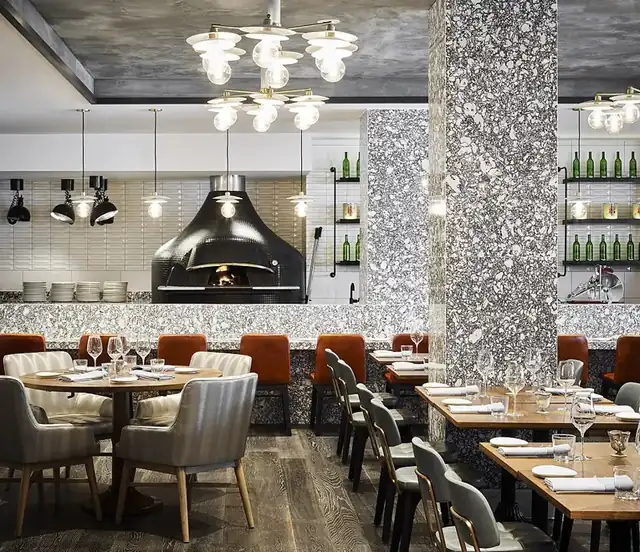
What we eat is only part of the story of a meal. The setting, the way food is served, and the habits around the table can be just as revealing. The guide below follows the subject in more detail.
In this story
OverviewModern formatTypes of restaurantsRestaurant staffChef's tableFranceUnited StatesOverview
A restaurant is a business that prepares and serves food and beverages to customers. Meals are generally served and eaten on the premises, but many restaurants also offer take-out and food delivery services. Restaurants vary greatly in appearance and offerings, featuring a wide variety of cuisines and service models — ranging from inexpensive fast-food restaurants and cafeterias to mid-priced family restaurants to high-priced luxury establishments.
Modern format
The earliest modern-format "restaurants" to use that word in Paris were the establishments which served bouillon, a broth made of meat and egg which was said to restore health and vigour. The first restaurant of this kind was opened in 1765 or 1766 by Mathurin Roze de Chantoiseau on rue des Poulies, now part of the Rue de Louvre. The name of the owner is sometimes given as Boulanger. Unlike earlier eating places, it was elegantly decorated, and besides meat broth offered a menu of several other "restorative" dishes, including macaroni. Chantoiseau and other chefs took the title "traiteurs-restaurateurs". While not the first establishment where one could order food, or even soups, it is thought to be the first to offer a menu of available choices.
In the Western world, the concept of a restaurant as a public venue where waiting staff serve patrons food from a fixed menu is a relatively recent one, dating from the late 18th century.
Types of restaurants
In the 1980s and 1990s, the restaurant industry was revolutionized by entrepreneurs, including Terence Conran, Alan Yau, and Oliver Peyton. Today restaurants are classified or distinguished in many different ways. The primary factor is usually the food itself e.g. vegetarianism, seafood, or steak. The origin of the cuisine may be also used to categorize restaurants e.g. Italian, Korean, Chinese, Japanese, Indian, French, Mexican, or Thai. The style of offering has become an important distinguishing factor in the restaurant industry e.g. tapas, sushi, buffet, or yum cha. Beyond this, restaurants may differentiate themselves on factors including speed of service e.g. fast food.
Theme restaurants and automated restaurant have become big players in the restaurant industry and may include fine dining, casual dining, contemporary casual, family style, fast casual, coffeehouse, concession stands, food trucks, pop-up restaurants, and ghost restaurants.
Restaurants range from inexpensive and informal lunching or dining places catering to people working nearby, with modest food served in simple settings at low prices, to expensive establishments serving refined food and fine wines in a formal setting. In the former case, customers usually wear casual clothing. In the latter case, depending on culture and local traditions, customers might wear semi-casual, semi-formal or formal wear. Typically, at mid- to high-priced restaurants, customers sit at tables, their orders are taken by a waiter, who brings the food when it is ready. After eating, the customers then pay the bill.
Restaurant staff
A restaurant's proprietor is called a restaurateur, this derives from the French verb restaurer, meaning "to restore". Professional cooks are called chefs, with there being various finer distinctions (e.g. sous-chef, chef de partie). Most restaurants (other than fast food restaurants and cafeterias) will have various waiting staff to serve food, beverages and alcoholic drinks, including busboys who remove used dishes and cutlery. In finer restaurants, this may include a host or hostess, a maître d'hôtel to welcome customers and seat them, and a sommelier or wine waiter to help patrons select wines. A new route to becoming a restaurateur, rather than working one's way up through the stages, is to operate a food truck. Once a sufficient following has been obtained, a permanent restaurant site can be opened.
This trend has become common in the UK and the US.
Chef's table
A chef's table is a table located in the kitchen of a restaurant, reserved for VIPs and special guests. Patrons may be served a themed tasting menu prepared and served by the head chef. Restaurants can require a minimum party and charge a higher flat fee.
France
France has a long tradition with public eateries and modern restaurant culture emerged there. In the early 19th century, traiteurs and restaurateurs became known simply as "restaurateurs". The use of the term "restaurant" for the establishment itself only became common in the 19th century.
According to the legend, the first mention to a restaurant dates back to 1765 in Paris. It was located on Rue des Poulies, now Rue du Louvre, and use to serve dishes known as "restaurants". The place was run by a man named Mr. Boulanger. However, according to the Larousse Gastronomique, La Grande Taverne de Londres which opened in 1782 is considered as the first Parisian restaurant.
The first restaurant guide, called Almanach des Gourmands, written by Grimod de La Reyniére, was published in 1804. During the French Restoration period, the most celebrated restaurant was the Rocher de Cancale, frequented by the characters of Balzac. In the middle of the century, Balzac's characters moved to the Café Anglais, which in 1867 also hosted the famous Three Emperors Dinner hosted by Napoleon III in honor of Tsar Alexander II, Kaiser Wilhelm I and Otto von Bismarck during the Exposition Universelle in 1867
United States
In the United States, it was not until the late 18th century that establishments that provided meals without also providing lodging began to appear in major metropolitan areas in the form of coffee and oyster houses. The actual term "restaurant" did not enter into the common parlance until the following century. Prior to being referred to as "restaurants" these eating establishments assumed regional names such as "eating house" in New York City, "restorator" in Boston, or "victualling house" in other areas. Restaurants were typically located in populous urban areas during the 19th century and grew both in number and sophistication in the mid-century due to a more affluent middle class and to urbanization. The highest concentration of these restaurants were in the West, followed by industrial cities on the Eastern Seaboard.
When Prohibition went into effect in 1920, restaurants offering fine dining had a hard time making ends meet because they had depended on profits from selling wine and alcoholic beverages. Replacing them were establishments offering simpler, more casual experiences such as cafeterias, roadside restaurants, and diners. When Prohibition ended in the 1930s, luxury restaurants slowly started to appear again as the economy recovered from the Great Depression.
More to savor
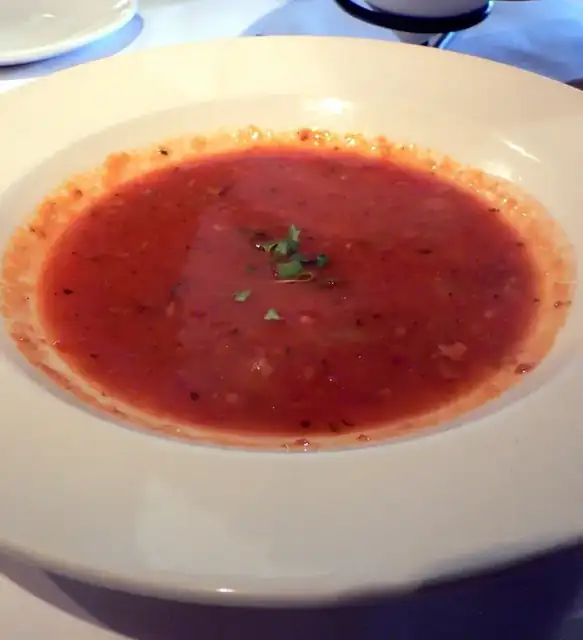
Manhattan Clam Chowder I
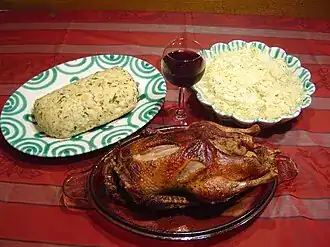
Stuffed Duck Breast with Cabbage and Dumplings
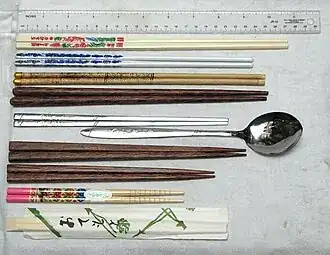
Chopsticks: Two Simple Sticks, Many Dining Traditions