The dish is a starting point for exploring a wider food story. The guide below looks more closely at its background and different forms. When you want to cook, visit the recipe collection for ingredient quantities and step-by-step methods.
Overview
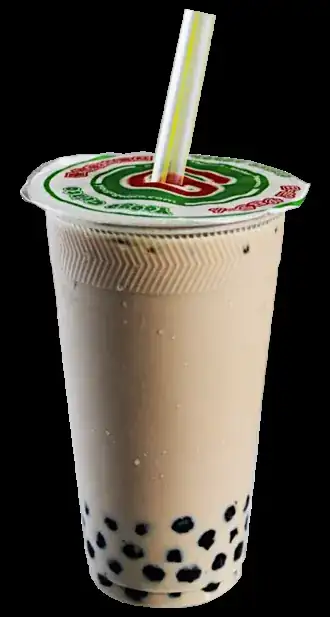
Bubble tea (also known as pearl milk tea, bubble milk tea, tapioca milk tea, boba tea, or boba) is a tea-based drink most often containing chewy tapioca pearls, milk, and flavoring. It originated in Taiwan in the 1980s and spread to other countries where there is a large East Asian diaspora population.
Bubble tea is most commonly made with tapioca pearls (also known as "boba" or "balls"), but it can be made with other toppings as well, such as grass jelly, aloe vera, red bean, and popping boba. It has many varieties and flavors, but the two most popular varieties are pearl black milk tea and pearl green milk tea ("pearl" for the tapioca balls at the bottom). Some of the largest global bubble tea chains include Chatime, CoCo Fresh Tea & Juice, Gong Cha, and Xing Fu Tang.
Two Taiwanese tea rooms, Chun Shui Tang in Taichung, and Hanlin Tea Room in Tainan, claim the invention of bubble tea in 1987 and 1986 respectively; litigation between them resulted in a 2019 ruling that bubble tea was non-patentable. Introduced to the United States in the 1990s, where it is more commonly called boba, the drink gained popularity in the 2010 and became a symbol of Asian American cultural identity, including the terms "boba life" and "boba liberal".
Description
Bubble teas fall under two categories: teas without milk and milk teas. Both varieties come with a choice of black, green, or oolong tea as the base. Milk teas usually include powdered or fresh milk, but may also use condensed milk, almond milk, soy milk, or coconut milk.
The oldest known bubble tea drink consisted of a mixture of hot Taiwanese black tea, tapioca balls , condensed milk, and syrup or honey. The tapioca pearls that give bubble tea its name were originally made from the starch of the cassava. The term "pearls" quickly replaced former terms. The alternative name "boba" , common in the United States but rare in Asia, originates from
a nickname for Hong Kong actress Amy Yip. Bubble tea is most commonly served cold.
Drink
Bubble tea comes in many variations, which usually consist of black tea, green tea, oolong tea, and sometimes white tea. Another variation, yuenyeung, (named after the Mandarin duck) originated in Hong Kong and consists of black tea, coffee, and milk.
Other varieties of the drink include blended tea drinks. These variations are often either blended using ice cream or are smoothies that contain both tea and fruit.
There are many popular flavors of bubble tea, such as taro, mango, coffee, and coconut. Flavoring ingredients such as a syrup or powder determine the flavor and usually the color of the bubble tea, while other ingredients such as tea, milk, and boba are the basis. Milkless teas commonly use fruit as their base, with popular options including fruit teas made from fresh fruit, fruit syrup, or fruit powder, often combined with a tea. Common flavors include mango, lychee, winter melon, and lemon.
Toppings
Tapioca pearls (boba) are the most common ingredient, although there are other ways to make the chewy spheres found in bubble tea. The pearls vary in color according to the ingredients mixed in with the tapioca. Most pearls are black from brown sugar.
Jelly comes in different shapes: small cubes, stars, or rectangular strips, and flavors such as coconut jelly, konjac, lychee, grass jelly, mango, coffee, and green tea. Azuki bean or mung bean paste, typical toppings for Taiwanese shaved ice desserts, give bubble tea an added subtle flavor as well as texture. Aloe, egg pudding (custard), and sago also can be found in many bubble tea shops. Popping boba, or spheres that have fruit juices or syrups inside them, are another popular bubble tea topping. Flavors include mango, strawberry, coconut, kiwi, and honey melon.
Some shops offer milk or cheese foam on top of the drink, giving the drink a consistency similar to that of whipped cream and a saltier flavor profile. One shop described the effect of the cheese foam as "neutraliz[ing] the bitterness of the tea...and as you drink it you taste the returning sweetness of the tea."
Ice and sugar level
Bubble tea shops often give customers the option of choosing the amount of ice or sugar in their drink. Ice levels are usually specified (e.g., no ice, less ice, normal ice, more ice), and sugar levels in 25% increments (e.g., 0%, 25%, 50%, 75%, 100%), though these options vary by shop as there is no standardized recipe. Some shops also offer hot bubble tea as an alternative to the standard cold preparation.
"Boozy Boba"
In recent years, alcoholic variations of bubble tea, sometimes referred to as “boozy boba,” have emerged in bars and specialty beverage shops. These drinks typically combine traditional bubble tea ingredients such as milk tea or fruit tea with alcoholic spirits, including vodka, rum, or soju. Boozy boba has gained popularity among adult consumers and reflects the ongoing adaptation of bubble tea within global beverage trends. There is even a sparkling vodka seltzer with four different fruit flavors called "Boozy Boba."
Preparation Method
The tea can be made in batches during the day or the night before. Brewing different types of teas takes different amounts of time and temperature. For instance, green tea requires brewing at a lower temperature, typically between 176 – 185 F with a brewing time of 8–10 minutes to extract its optimal flavour. In contrast, black tea needs to be made with hotter water, usually around 203 – 212 F with a brewing of around 15–20 minutes to bring out its sweetness. A tea warmer dispenser allows the tea to remain heated for up to eight hours.
Pearls (boba) are made from tapioca starch. Most bubble tea stores buy packaged tapioca pearls in an uncooked state. When the boba is uncooked and in the package, it is uncolored and hard. The boba does not turn chewy and dark until they are cooked and sugar is added to bring out its taste. Uncooked tapioca pearls in their package can be stored for around 9 to 12 months. Once cooked, they can be stored in a sealed container in the refrigerator. Despite this, most bubble tea stores will not sell their boba after 24 hours because it will start to harden and lose its chewiness.
More to savor
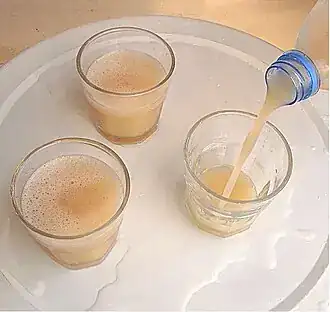
Gambian Baobab Juice (Bouye)
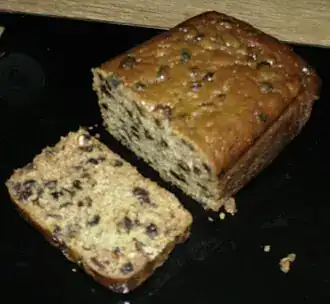
Welsh Fruit Bread (Bara Brith) I
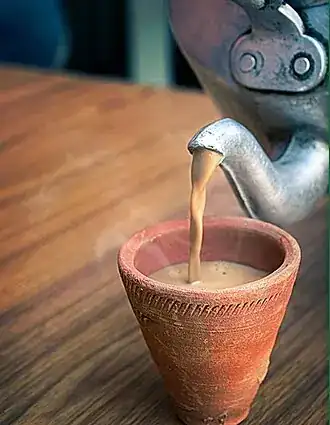
Masala Chai: The Spiced Tea That Makes a Cup a Ritual