This longer reference provides the background behind the topic. Read it alongside the recipe collection when you want to connect an ingredient or food idea with a dish to prepare.
Overview
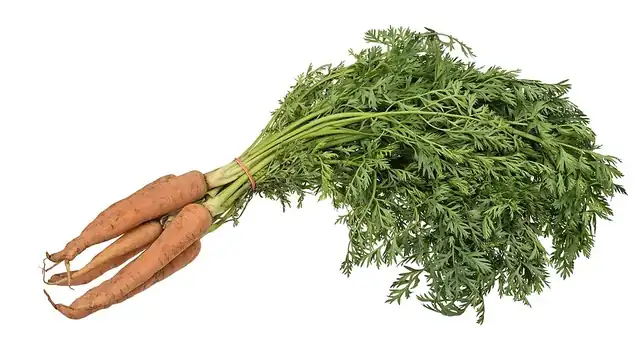
The carrot (Daucus carota subsp. sativus) is a root vegetable in the umbellifer family Apiaceae. Carrots are typically orange in colour due to their beta-carotene content, which makes them a rich source of vitamin A. Heirloom variants may be white, yellow, red, purple, or black. They are biennial plants.
The vegetable is a domesticated form of the wild carrot, native to Europe and Southwestern Asia. The domesticated plant probably originated in Iran where it was cultivated for its leaves and seeds. In 2022, world production of carrots (combined with turnips) topped 42 million tonnes, with China producing 44% of the total.
During the Second World War, a myth that carrots help people see in the dark was spread as propaganda to explain British pilots' ability to fight in the dark; the real explanation was the introduction of radar.
Description
Daucus carota is a biennial plant. In the first year, energy is stored in the taproot to enable the plant to flower in its second year.
Soon after germination, carrot seedlings show a distinct demarcation between taproot and stem: the stem is thicker and lacks lateral roots. At the upper end of the stem is the seed leaf. The first true leaf appears about 10–15 days after germination. Subsequent leaves are alternate (with a single leaf attached to a node), spirally arranged, and pinnately compound, with leaf bases sheathing the stem. As the plant grows, the bases of the seed leaves, near the taproot, are pushed apart. The stem, located just above the ground, is compressed and the internodes are not distinct. When the seed stalk elongates for flowering, the tip of the stem narrows and becomes pointed, and the stem extends upward to become a highly branched inflorescence up to 60 – 200 cm tall.
Most of the taproot consists of a pulpy outer cortex (phloem) and an inner core (xylem). High-quality carrots have a large proportion of cortex compared to core. Although a carrot completely lacking xylem is not possible, some cultivars have small and deeply pigmented cores; the taproot can appear to lack a core when the colour of the cortex and core are similar in intensity. Taproots are typically long and conical, although cylindrical and nearly spherical cultivars are available. The root diameter can range from 1 cm to as much as 10 cm at the widest part. The root length ranges from 5 to 50 cm, although most are between 10 and 25 cm.
Chemistry
Polyacetylenes can be found in Apiaceae vegetables like carrots where they show cytotoxic activities. Falcarinol and falcarindiol (cis-heptadeca-1,9-diene-4,6-diyne-3,8-diol) are such compounds. This latter compound shows antifungal activity towards Mycocentrospora acerina and Cladosporium cladosporioides. Falcarindiol is the main compound responsible for bitterness in carrots.
Other compounds include pyrrolidine present in the leaves and 6-hydroxymellein.
Propagation
Carrots are grown from seed and can take up to four months (120 days) to mature, but most cultivars mature within 70 to 80 days under the right conditions. They grow best in full sun but tolerate some shade. The optimum temperature is 16 to 21 C. The ideal soil is deep, loose and well-drained, sandy or loamy, with a pH of 6.3 to 6.8.
Fertilizer should be applied according to soil type because the crop requires low levels of nitrogen, moderate phosphate and high potash. Rich or rocky soils should be avoided, as these will cause the roots to become hairy and/or misshapen. Irrigation is applied when needed to keep the soil moist. After sprouting, the crop is eventually thinned to a spacing of 3 to 4 in and weeded to prevent competition beneath the soil.
Cultivars
Carrot cultivars can be grouped into two broad classes: "Eastern" carrots and "Western" carrots. A number of novelty cultivars have been bred for particular characteristics.
"Eastern" (a European and American continent reference) carrots were domesticated in Persia (probably in the lands of modern-day Iran and Afghanistan within West Asia) during the 10th century, or possibly earlier. Specimens of the Eastern carrot that survive to the present day are commonly purple or yellow, and often have branched roots. The purple colour common in these carrots comes from anthocyanin pigments.
Production
In 2024, world production of carrots (combined with turnips) was 45 million tonnes, led by China with 42% of the total. Uzbekistan, Russia, and the United States were the only other countries producing over 1 million tonnes annually (table).
Culinary
Carrots can be eaten in a variety of ways. Only 3 percent of the β-carotene in raw carrots is released during digestion: this can be improved to 39% by pulping, cooking and adding cooking oil. Alternatively they may be chopped and boiled, fried or steamed, and cooked in soups and stews, as well as baby and pet foods. A well-known dish is carrots julienne. Together with onion and celery, carrots are one of the primary vegetables used in a mirepoix to make broths.
The greens are edible as a leaf vegetable, but are rarely eaten by humans; some sources suggest that the greens contain toxic alkaloids. When used for this purpose, they are harvested young in high-density plantings, before significant root development, and typically used stir-fried, or in salads. Some people are allergic to carrots. In a 2010 study on the prevalence of food allergies in Europe, 3.6 percent of young adults showed some degree of sensitivity to carrots. Because the major carrot allergen, the protein Dauc c 1.0104, is cross-reactive with homologues in birch pollen (Bet v 1) and mugwort pollen (Art v 1), most carrot allergy sufferers are also allergic to pollen from these plants.
In India, carrots are used in a variety of ways, as salads or as vegetables added to spicy rice or dal dishes. A popular variation in north India is the gajar ka halwa carrot dessert, which has carrots grated and cooked in milk until the whole mixture is solid, after which nuts and butter are added. Carrot salads are usually made with grated carrots with a seasoning of mustard seeds and green chillies popped in hot oil. Carrots can also be cut into thin strips and added to rice, can form part of a dish of mixed roast vegetables, or can be blended with tamarind to make chutney.
More to savor

Chicken Vindaloo
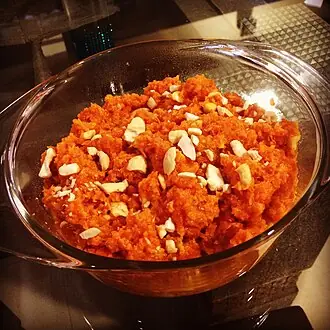
Gajjar Halwa (Carrot Pudding)
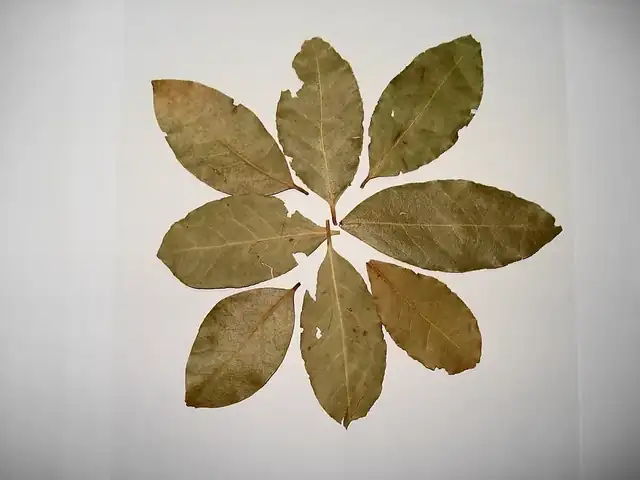
Bay leaf at the Table: The Food Behind the Name