This longer reference provides the background behind the topic. Read it alongside the recipe collection when you want to connect an ingredient or food idea with a dish to prepare.
Overview
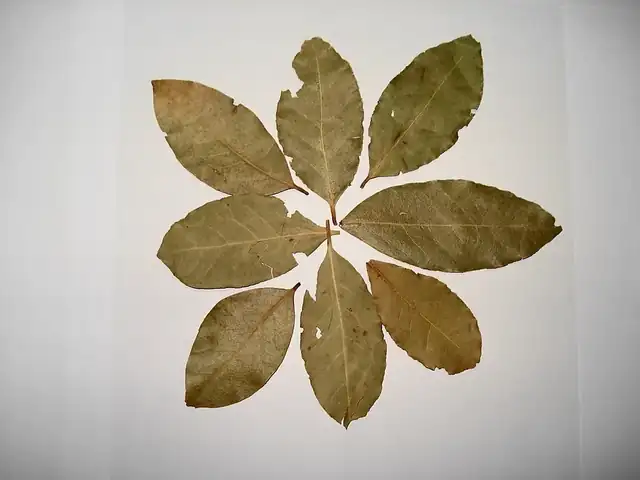
The bay leaf is an aromatic leaf commonly used as a herb in cooking. It can be used whole, either dried or fresh, in which case it is removed from the dish before consumption, or less commonly used in ground form.
Bay leaves come from various plants and are used for their distinctive flavour and fragrance. The most common source is the bay laurel (Laurus nobilis). Other types include California bay laurel (Umbellularia californica), Indian bay leaf (Cinnamomum tamala), Indonesian bay leaf (Syzygium polyanthum), West Indian bay (Pimenta racemosa), and Mexican bay leaf (Litsea glaucescens). Bay leaves contain essential oils, such as eucalyptol, terpenes, and methyleugenol, which contribute to their taste and aroma.
Bay leaves are used in cuisines including Indian, Filipino, European, and Caribbean. They are typically used in soups, stews, meat, seafood, and vegetable dishes. The leaves should be removed from the cooked food before eating as they can be abrasive in the digestive tract.
Bay leaves are used as an insect repellent in pantries and as an active ingredient in killing jars for entomology. In Eastern Orthodoxy liturgy, they are used to symbolize Jesus' destruction of Hades and freeing of the dead.
Sources
Bay leaves come from several plants, such as:
Bay laurel (Laurus nobilis, Lauraceae). Fresh or dried bay leaves are used in cooking for their distinctive flavour and fragrance. The leaves should be removed from the cooked food before eating (see safety section below). The leaves are often used to flavour soups, stews, braises and pâtés in many countries. The fresh leaves are very mild and do not develop their full flavour until several weeks after picking and drying.
California bay leaf. The leaf of the California bay tree (Umbellularia californica, Lauraceae), also known as California laurel, Oregon myrtle, and pepperwood, is similar to the Mediterranean bay laurel but contains the toxin umbellulone, which can cause methemoglobinemia.
Taste and aroma
If eaten whole, Laurus nobilis bay leaves are pungent and have a sharp, bitter taste. As with many spices and flavourings, the fragrance of the bay leaf is more noticeable than its taste. When the leaf is dried, the aroma is herbal, slightly floral, and somewhat similar to oregano and thyme. Myrcene, a component of many essential oils used in perfumery, can be extracted from this bay leaf. They also contain eugenol.
Food writer J. Kenji Lopez-Alt advises boiling bay leaves in a pot of water then tasting the water at five minutes and at an hour to be able to more accurately determine their flavour.
Culinary
Bay leaf is typically used in cooking to flavor broths, grains, soups, stews and stocks. It is typically removed before serving.
In Indian cuisine, bay laurel leaves are sometimes used in place of Indian bay leaf, although they have a different flavour. They are most often used in rice dishes like biryani and as an ingredient in garam masala. Bay leaves are called tezpattā (तेज़पत्ता, in Hindi), Tejpātā (তেজপাতা) in Bengali, তেজ পাত in Assamese and usually rendered into English as Tej Patta.
In the Philippines, dried bay laurel leaves are used in several Filipino dishes, such as menudo, beef pares, and adobo. Bay leaves were used for flavouring by the ancient Greeks. They are a fixture in the cooking of many European cuisines (particularly those of the Mediterranean), as well as in the Americas. They are used in soups, stews, brines, meat, seafood, vegetable dishes, and sauces. The leaves also flavour many classic French and Italian dishes. The leaves are most often used whole (sometimes in a bouquet garni) and removed before serving (they can be abrasive in the digestive tract). Thai and Laotian cuisine employ bay leaf (ใบกระวาน, bai kra wān) in a few Arab-influenced dishes, notably massaman curry.
Other
Bay leaves can also be used scattered in a pantry to repel meal moths, flies, and cockroaches. Mediouni-Ben Jemaa and Tersim 2011 find the essential oil to be usable as an insect repellent.
Bay leaves have been used in entomology as the active ingredient in killing jars. The crushed, fresh, young leaves are put into the jar under a layer of paper. The vapors they release kill insects slowly but effectively and keep the specimens relaxed and easy to mount. The leaves discourage the growth of molds. They are not effective for killing large beetles and similar specimens, but insects that have been killed in a cyanide killing jar can be transferred to a laurel jar to await mounting. There is confusion in the literature about whether Laurus nobilis is a source of cyanide to any practical extent, but there is no evidence that cyanide is relevant to its value in killing jars.
It certainly is rich in various essential oil components that could incapacitate insects in high concentrations; such compounds include 1,8-cineole, alpha-terpinyl acetate, and methyl eugenol. It also is unclear to what extent the alleged effect of cyanide released by the crushed leaves has been mis-attributed to Laurus nobilis in confusion with the unrelated Prunus laurocerasus, the so-called cherry laurel, which certainly does contain dangerous concentrations of cyanogenic glycosides together with the enzymes to generate the hydrogen cyanide from the glycosides if the leaf is physically damaged.
Safety
Some members of the laurel family, as well as the unrelated but visually similar mountain laurel and cherry laurel, have leaves that are poisonous to humans and livestock. While these plants are not sold anywhere for culinary use, their visual similarity to bay leaves has led to the oft-repeated belief that bay leaves should be removed from food after cooking because they are poisonous. This is not true; bay leaves may be eaten without toxic effect. However, they remain unpleasantly stiff even after thorough cooking, and if swallowed whole or in large pieces they may pose a risk of harming the digestive tract or causing choking. Thus, most recipes that use bay leaves will recommend their removal after the cooking process has finished.
Canadian food and drug regulations
The Canadian government requires that ground bay leaves contain no more than 4.5% total ash material, with a maximum of 0.5% of which is insoluble in hydrochloric acid. To be considered dried, they must contain 7% moisture or less. The oil content cannot be less than 1 millilitre per 100 grams of the spice.
More to savor
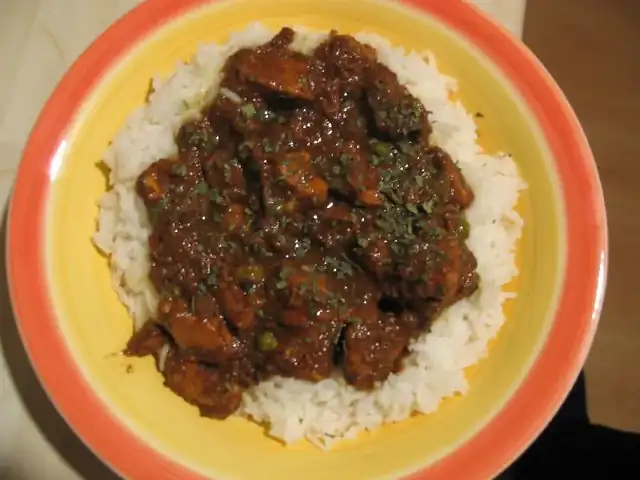
Chicken Vindaloo
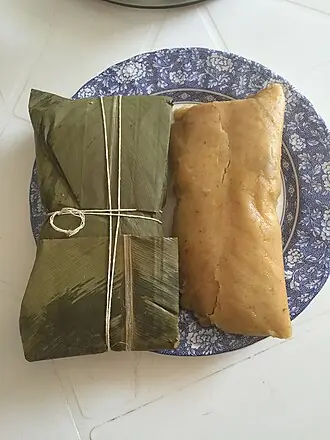
Hallaca (Venezuelan Stuffed Corn Dough)
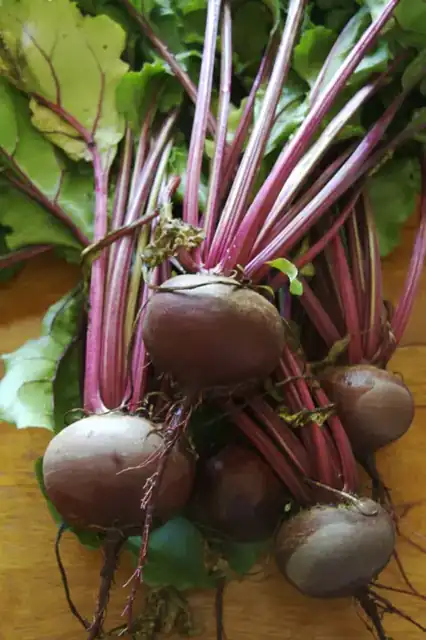
Beetroot at the Table: The Food Behind the Name