The dish is a starting point for exploring a wider food story. The guide below looks more closely at its background and different forms. When you want to cook, visit the recipe collection for ingredient quantities and step-by-step methods.
Overview
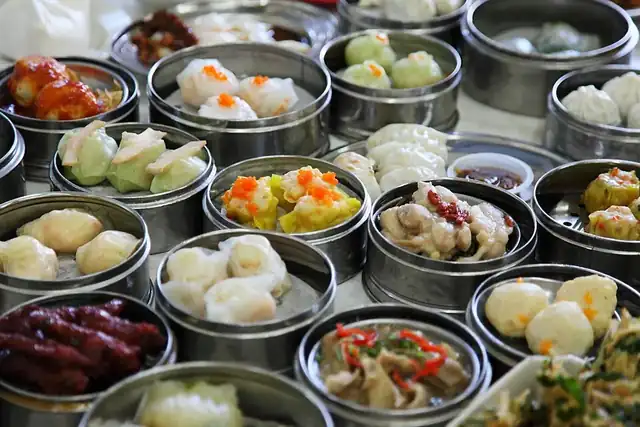
Dim sum is a large range of small Chinese dishes that are traditionally eaten in restaurants for brunch. Most modern dim sum dishes are commonly associated with Cantonese cuisine, although dim sum dishes also exist in a few other Chinese cuisines. In the tenth century, when the city of Canton (Guangzhou) began to experience an increase in commercial travel, many frequented teahouses for small-portion meals with tea called "yum cha" (brunch). "Yum cha" includes two related concepts. The first is "jat zung loeng gin" , which translates literally as "one cup, two pieces". This refers to the custom of serving teahouse customers two delicately made food items, savory or sweet, to complement their tea.
The second is dim sum, which translates literally to "touch the heart", the term used to designate the small food items that accompanied the tea.
Teahouse owners gradually added various snacks called dim sum to their offerings. The practice of having tea with dim sum eventually evolved into the modern "yum cha". Cantonese dim sum culture developed rapidly during the latter half of the nineteenth century in Guangzhou. Cantonese dim sum was originally based on local foods. As dim sum continued to develop, chefs introduced influences and traditions from other regions of China. Cantonese dim sum has a very broad range of flavors, textures, cooking styles, and ingredients and can be classified into regular items, seasonal offerings, weekly specials, banquet dishes, holiday dishes, house signature dishes, and travel-friendly items, as well as breakfast and lunch foods and late-night snacks.
Cuisine
There are at least two thousand types of dim sum in total across China, and over one thousand available in Guangdong alone. Dim sum are usually eaten as breakfast or brunch. Cantonese dim sum has a very broad range of flavors, textures, cooking styles, and ingredients, and can be classified into regular items, seasonal offerings, weekly specials, banquet dishes, holiday dishes, house signature dishes, travel-friendly, as well as breakfast or lunch foods and late night snacks.
The subtropical climate of the southeast quadrant of Guangdong partly influences dim sum's portion size. It can cause a decrease in appetite, so that people prefer eating scaled-down meals throughout the day rather than the customary three large meals. Teahouses in Guangzhou served "three teas and two meals," which included lunch and dinner, and breakfast, afternoon, and evening teas with dim sum.
Many dim sum dishes are made of seafood, chopped meats, or vegetables wrapped in dough or thin wrappings and steamed, deep-fried, or pan-fried. A traditional dim sum brunch includes various types of steamed buns, such as cha siu bao (a steamed bun filled with barbecue pork), rice or wheat dumplings, and rice noodle rolls that contain a range of ingredients, including beef, chicken, pork, prawns, and vegetarian options. Many dim sum restaurants also offer plates of steamed green vegetables, stuffed eggplant, stuffed green peppers, roasted meats, congee and other soups. Dessert dim sum is also available and can be ordered at any time since there is not a set sequence for the meal.
Dishes
Dim sum restaurants typically have a wide variety of dishes, usually several dozen.
Tea
Tea is considered to be very important, so much so that it is considered just as important as the food itself. Teas served during dim sum include:
Chrysanthemum tea: instead of tea leaves, it is a flower-based tisane (herbal tea) made from flowers of the species Chrysanthemum morifolium or Chrysanthemum indicum, which are the most popular in East Asia. To prepare the tea, chrysanthemum flowers (usually dried) are steeped in hot water (usually 90 to 95 °C after cooling from a boil) in a teapot, cup, or glass. A common mix with pu-erh is called guk pou from its component teas.
Modern dim sum
In addition to traditional dim sum, some chefs also create and prepare new fusion-based dim sum dishes. Modern versions of buns include pork belly steamed buns with cucumber, green onion, cilantro, and ginger hoisin sauce, cocoa mushroom buns, and chili lamb buns. Dumplings include snow pea shoot and shrimp dumplings, and chili crab with fried garlic, siu mai with pork, shrimp, scallop, and caviar, dumplings stuffed with shrimp and peanut, dumplings with South Australian scallop, garoupa (grouper), caviar, gold leaf, and egg white, and bone marrow or beef short ribs in potstickers. Pastry puff dishes include Australian Wagyu beef puff, Assam curry chicken puff, and pumpkin puffs. Toast dishes include Hong Kong–style French toast with condensed milk and peanut butter and prawn toast.
Additional examples are spring rolls filled with goat and duck skin and duck hearts cooked over a wood-fired grill and served with sesame-horseradish sauce.
Modern service styles
Traditionally, dim sum was served from rolling carts pushed through dining rooms, allowing customers to select dishes visually as servers circulated among tables. This style remains common in many Cantonese restaurants, particularly during daytime service hours associated with yum cha. However, many modern establishments have shifted toward menu-based ordering systems, in which dishes are prepared to order rather than selected from carts. This change has been attributed to factors including labor costs, efficiency, and a desire to ensure consistent food quality and temperature.
In contemporary urban centers such as Hong Kong and major international cities, dim sum service has also evolved to include upscale dining formats, extended evening hours, and fusion interpretations that incorporate nontraditional ingredients or presentation styles. Despite these changes, the communal nature of sharing multiple small dishes alongside tea remains a defining characteristic of the cuisine.
Fast food
Dim sum can often be purchased from grocery stores in major cities. They can be cooked easily by steaming, frying, or microwaving. Major grocery stores in Hong Kong, Vietnam, the Philippines, Singapore, Taiwan, China, Indonesia, Malaysia, Brunei, Thailand, Australia, the United States and Canada stock a variety of frozen or fresh dim sum. These include dumplings, shumai'', pork buns, and others.
In Hong Kong and other cities in Asia, dim sum can be purchased from convenience stores, coffee shops and other eateries. Halal-certified dim sum that uses chicken instead of pork is very popular in Hong Kong, Malaysia, Indonesia and Brunei.
More to savor
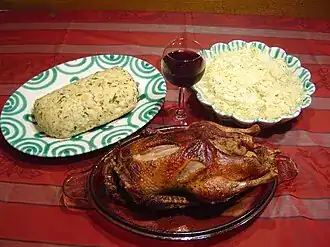
Stuffed Duck Breast with Cabbage and Dumplings
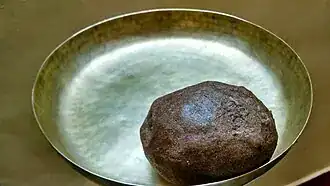
South Indian Millet Swallow (Mudde)
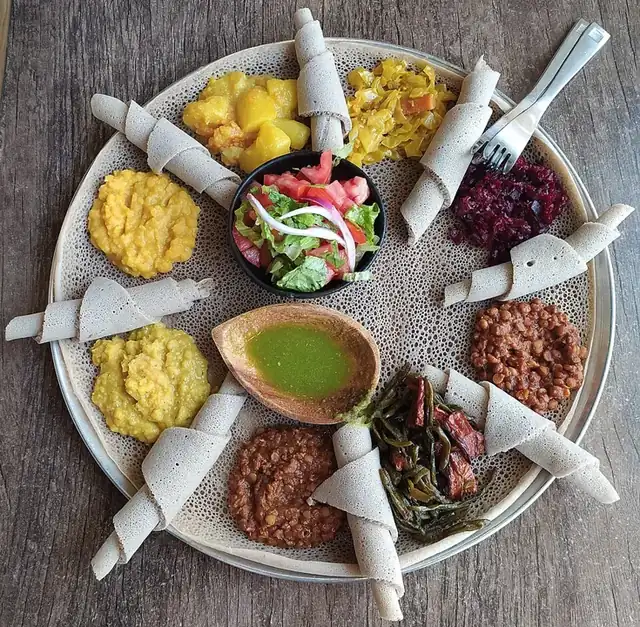
A Taste of Ethiopia: The Foods That Bring a Meal Together