Use the regional background below as a starting point for exploring the food, rather than expecting one dish to represent every household. Food traditions differ within a country and continue to change through travel, migration, and everyday cooking.
Overview
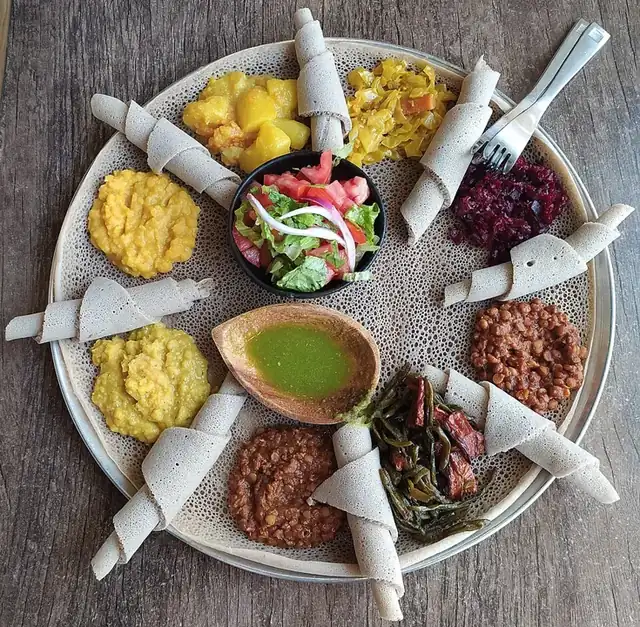
Ethiopian cuisine (የኢትዮጵያ ምግብ, Ye-Ītyōṗṗyā məgəb) characteristically consists of vegetable and often very spicy meat dishes. This is usually in the form of wat, a thick stew, served on top of injera (እንጀራ), a large sourdough flatbread, which is about 50 cm in diameter and made out of fermented teff flour. Ethiopians usually eat with their right hands, using pieces of injera to pick up bites of entrées and side dishes.
The Ethiopian Orthodox Tewahedo Church prescribes a number of fasting periods known as tsom (ጾም, ṣōm), including all Wednesdays and Fridays and the whole Lenten season (including fifteen days outside Lent proper). Per Oriental Orthodox tradition, the faithful may not consume any kind of animal products (including dairy products and eggs) during fasts; therefore, Ethiopian cuisine contains many dishes that are vegan.
Overview
A typical dish consists of injera accompanied by a spicy stew, which frequently includes beef, lamb, vegetables and various types of legumes (such as lentils), and is traditionally consumed on the mesob basket. The cuisines of the South Ethiopia Regional State, South West Ethiopia Peoples' Region, Central Ethiopia Regional State, and the Sidama region also make use of the false banana plant (enset; እንሰት, ïnset), a type of ensete. The plant is pulverized and fermented to make various foods, including a bread-like food called kocho (ቆጮ, qoćo), which is eaten with kitfo. The root of this plant may be powdered and prepared as a hot drink called bulla (ቡላ, būlā), which is often given to those who are tired or ill. Another typical Gurage preparation is coffee with butter (kebbeh). Kita herb bread is also baked.
Quanta (or quwanta), is an air-dried beef jerky with traditional spices; it is eaten on its own as a snack, or as an ingredient in stews and other dishes.
Due in part to the brief Italian occupation, pasta is popular and frequently available throughout Ethiopia, including rural areas. Coffee is also a large part of Ethiopian culture and cuisine. After every meal, a coffee ceremony is enacted and coffee is served.
Traditional ingredients
Berbere, a combination of powdered chili pepper and other spices (cardamom, fenugreek, coriander, cloves, ginger, nutmeg, cumin and allspice) is an important ingredient used to add flavor to many varied dishes like chicken stews and baked fish dishes. Also essential is niter kibbeh, a clarified butter infused with ginger, garlic, and several spices.
Mitmita (ሚጥሚጣ) is a powdered seasoning mix used in Ethiopian cuisine. It is orange-red in color and contains ground birdseye chili peppers (piri-piri), cardamom seed, cloves and salt. It occasionally contains other spices including cinnamon, cumin and ginger.
In their adherence to strict fasting, Ethiopian cooks have developed a rich array of cooking oil sources—besides sesame and safflower—for use as a substitute for animal fats which are forbidden during fasting periods. Ethiopian cuisine also uses nug (also spelled noog, also known as "niger seed").
Amhara dishes
The Amharas' cuisine features a wide variety of dishes and beverages, often centered around injera, a sourdough flatbread made from teff flour. The cuisine is known for its use of spices, rich stews, and traditional cooking methods.
Dishes
Injera – a sourdough flatbread made from teff flour, serving as the base for most meals and used to scoop stews and dishes.
Doro wot – a spicy chicken stew with boiled eggs, flavored with berbere spice mix and niter kibbeh (spiced clarified butter).
Tibs – sautéed meat (beef or lamb) cooked with onions, tomatoes, and spices, often served sizzling hot.
Siga wot – a rich and spicy beef stew made with berbere and slow-cooked until tender.
Anebabero – layered thick injera soaked in a butter and spiced berbere mixture.
Fir-fir – shredded injera or bread mixed with spicy stew or wot, often served as a hearty breakfast.
Asa goulash – a fish stew cooked with onions, tomatoes, and berbere, often served with injera or bread.
Oromo dishes
The Oromos' cuisine consists of various vegetable or meat side dishes and entrées. As part of a long-established custom, practice, or belief, people do not eat pork in Oromia.
Anchotte – a common dish in the western part of Oromia
Baduu – liquid remaining after milk has been curdled and strained (cheese)
Chororsaa – a common dish in the western part of Oromia
Chukkoo – also known as micira; a sweet flavor of whole grain, seasoned with butter and spices
Dadhii – a drink made from honey
Dokkee – a common dish throughout Oromia state
Farsho – beer-like beverage, made from barley
Maarqaa – porridge-like substance made from wheat, milk, chili and spices
Itto – comprises all sorts of vegetables (tomato, potato, ginger, garlic), meat (lamb)
Chechebsaa – shredded biddena stir-fried with chili powder and cheese
Qince – similar to marqaa but made from shredded grains as opposed to flour
Qoocco – also known as kocho, it is not the Gurage type of kocho but a different kind; a common dish in the western part of Oromia
Qorso (akayi) – snack made by roasting barley seeds
Ukkaamssa (affaanyii) – stewed ground beef with spices, minced onion, garlic, green chili pepper, and clarified butter.
Dishes
Injera – a sourdough flatbread made from teff flour, serving as the base for most meals and used to scoop stews and dishes.
Doro wot – a spicy chicken stew with boiled eggs, flavored with berbere spice mix and niter kibbeh (spiced clarified butter).
Tibs – sautéed meat (beef or lamb) cooked with onions, tomatoes, and spices, often served sizzling hot.
Siga wot – a rich and spicy beef stew made with berbere and slow-cooked until tender.
Anebabero – layered thick injera soaked in a butter and spiced berbere mixture.
Fir-fir – shredded injera or bread mixed with spicy stew or wot, often served as a hearty breakfast.
Asa goulash – a fish stew cooked with onions, tomatoes, and berbere, often served with injera or bread.
More to savor
Injera (Ethiopian Teff Flatbread)
Ratatouille I
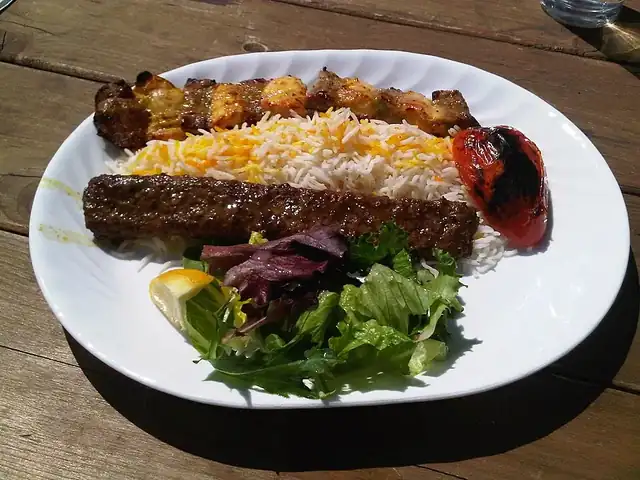
A Taste of Iran: Exploring a Varied Culinary Tradition