The dish is a starting point for exploring a wider food story. The guide below looks more closely at its background and different forms. When you want to cook, visit the recipe collection for ingredient quantities and step-by-step methods.
Overview
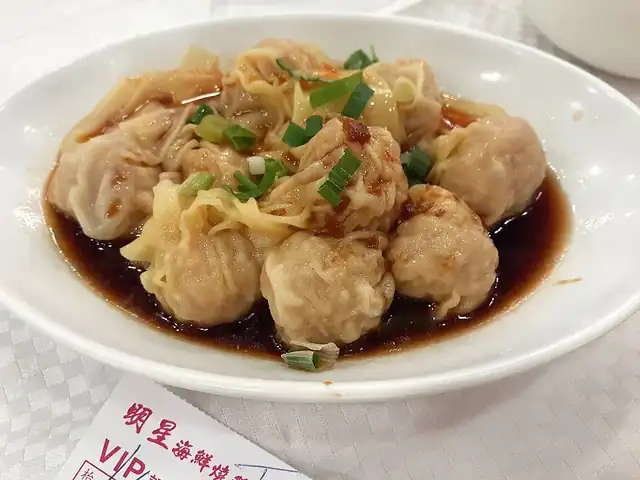
Dumplings are a broad class of dishes that consist of pieces of cooked dough (made from a variety of starchy sources), often wrapped around a filling. The dough can be based on bread, wheat or other flours, or potatoes, and it may be filled with meat, fish, tofu, cheese, vegetables, or a combination. Dumplings may be prepared using a variety of cooking methods and are found in many world cuisines.
One of the earliest mentions of dumplings comes from the Chinese scholar Shu Xi who mentions them in a poem around 300 CE. In addition, archaeologically preserved dumplings have been found in Turfan, Xinjiang, China dating back over 1,000 years.
Definition
The precise definition of a dumpling is controversial, varying across individuals and cultures. The term emerged in English by the 17th century, where it referred to a small lump of dough cooked by simmering or steaming. The definition has since grown to include filled dumplings, where the dough encloses a sweet or savory filling. Dumplings can be cooked in a variety of ways, including boiling, simmering, and steaming, and occasionally baking or frying; however, some definitions rule out baking and frying in order to exclude items like fritters and other pastries that are generally not regarded as dumplings by most individuals.
African
Banku and kenkey are West African preparations defined as dumplings in that they are steamed starchy balls of dough. Both are formed from fermented cornmeal. Banku is boiled and requires continuous kneading, while kenkey is partly boiled then finished by steaming in corn or banana leaves.
Tihlo, prepared from roasted barley flour, originated in the Tigray Region of Ethiopia and is now very popular in Amhara as well and spreading further south.
Souskluitjies, melkkos, and dombolo are dumplings found in South Africa. Souskluitjies are a steamed sweet dumpling, sometimes made with plain flour and sometimes with the addition of dried fruits or other flavors. They are often served with a syrup flavored with cinnamon or a custard sauce. Dombolo, also called ujeqe or steam bread, is made from steamed dough and is often consumed with different kinds of side dishes such as chicken stew, beef stew, oxtail stew, lamb stew, or tripe.
Kaimati and matobosha are dumplings found in Kenya which are mostly consumed as part of breakfast. They are also commonly served at parties and in fast-food kiosks.
Caribbean and Latin America
Empanadas, whose stuffing, manufacture and types are numerous and varied, differ from traditional dumplings in that they are deep fried, steamed, or baked, and excess dough is not cut off.
Bajan
In Barbados, dumplings differ from those in other Caribbean islands in that they are slightly sweetened. The dumplings may either be of the flour or cornmeal variety. The dough is flavoured with spices, cinnamon and nutmeg. Dumplings are often boiled in Bajan soup. When found in stew-like dishes, the dumplings are steamed along with ground provision, salted meat, plantain and other ingredients, and then served with gravy.
Brazilian
In Brazil, there are a variety of dumplings. Pastéis are made of a thin dough that can be stuffed with a variety of fillings, such as condimented ground beef, chicken, shrimp, mixed vegetables, cheese, or even sweets, and they are typically fried or baked. Empadinha is made of muffin-shaped dough stuffed primarily with chicken, cheese or seafood. Coxinhas are prepared from a thick dough stuffed with chicken (akin to a chicken corn dog). Bolinhas, which literally translates to 'little balls', can have meat (bolinhas de carne) or cheese (bolinhas de queijo) inside.
All of these dumplings can vary from their original forms with optional additions like olives, onions, or spices. They are commonly served at parties. In some parts of Brazil like Rio, dumplings can be found in fast-food kiosks ('open restaurants'), in the city, or in parks.
Swedish
In Swedish cuisine, potato dumplings of originally German origin have several regional names, mainly depending on the type of flour used. When the potato is mixed with wheat flour, which is more common in southern Sweden, it is called kroppkaka. In Blekinge and parts of the island of Öland, it is traditionally made from grated raw potato, which makes it greyish in colour, while on Gotland and in Småland it is predominantly made from mashed boiled potato, and is thus whiter in colour. The kroppkaka is usually filled with diced, smoked bacon and chopped, raw onion, and is often spiced with allspice.
When the potato is mixed with barley flour, which is traditional in northern Sweden, it is known as palt in Lapland, Västerbotten and Norrbotten, and as kams in Jämtland, Ångermanland and Medelpad. Originally, palt was eaten all over Sweden and was made from barley or rye flour alone, but during the 19th century, when potato was added and wheat became more common and inexpensive, the northern recipes retained the original name, while kroppkaka, which had always been the name used on Öland for the flour dumpling, became the name for the variant in southern Sweden.
Palt and kams is usually filled with diced, unsmoked bacon. However, sometimes fried bacon is served on the side of unfilled palt or kams, which then is known as flatpalt or flatkams, as the lack of filling makes it flatter. The most well-known palt variant is the Pitepalt from Piteå. In Dalarna, where the dish is known as klabbe, it is still made without potatoes and is never filled. Klabbe is instead served with diced bacon on the side.
A variant of palt is blodpalt, where pig, beef or reindeer blood is mixed into the dough. Other palt variants are leverpalt, with minced liver added to the dough, and njurpalt, with diced kidney mixed into the bacon filling. Blodpalt also existed across the country originally, and has been found in Iron Age graves in Halland.
The filled kroppkaka, palt or kams ball – as well as the flatter, unfilled flatpalt, flatkams and klabbe – is dropped into boiling salted water and cooked until it floats. It is traditionally served warm with melted butter and lingonberry jam, although in some parts of southern Sweden the melted butter is replaced by half cream (a mix of milk and cream) or a warm milk sauce, and in parts of northern Sweden the butter is replaced by a warm milk sauce spiced with messmör. Leftover kroppkaka is often served halved and fried.
More to savor
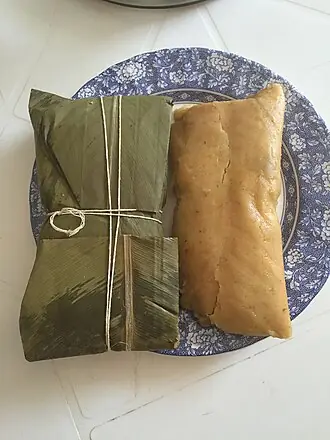
Hallaca (Venezuelan Stuffed Corn Dough)
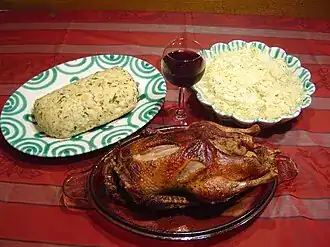
Stuffed Duck Breast with Cabbage and Dumplings
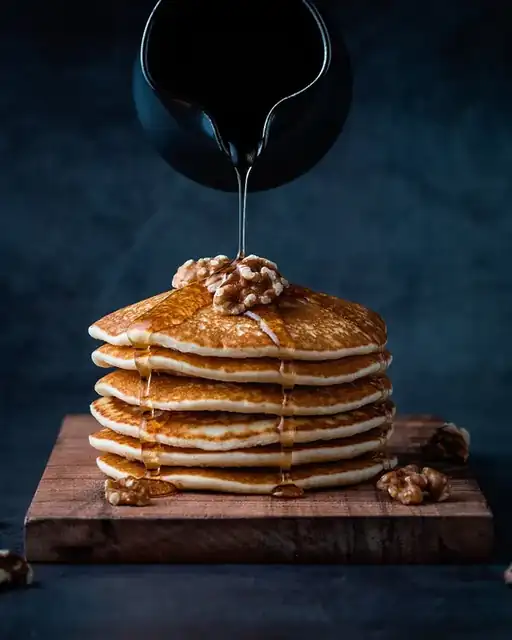
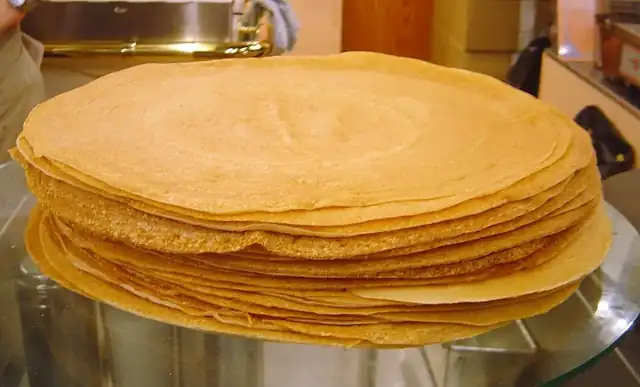
Pancakes Around the Table: One Idea, Many Delicious Forms