The dish is a starting point for exploring a wider food story. The guide below looks more closely at its background and different forms. When you want to cook, visit the recipe collection for ingredient quantities and step-by-step methods.
Overview
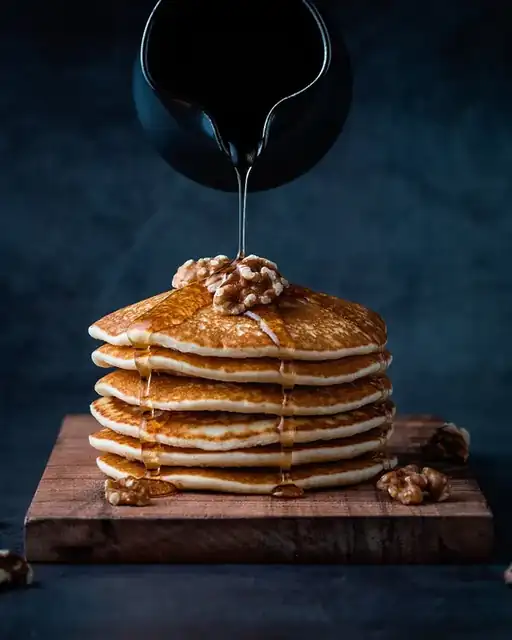
A pancake, also known as a hotcake, griddlecake, or flapjack, is a flat type of batter bread like cake, often thin and round, prepared from a starch-based batter that may contain eggs, milk, and butter, and then cooked on a hot surface such as a griddle or frying pan. Archaeological evidence suggests that pancakes were probably eaten in prehistoric societies.
The pancake's shape and structure varies worldwide. In England, pancakes are often unleavened and are thin. In Scotland and North America, a leavening agent is used (typically baking powder) creating a thick fluffy pancake. A crêpe is a thin pancake of Breton origin cooked on one or both sides in a special pan or crepe maker to achieve a lacelike network of fine bubbles. A variation originating from southeast Europe is palatschinke, a thin moist pancake fried on both sides and filled with jam, cream cheese, chocolate, or ground walnuts, but many other fillings—sweet or savoury—can also be used.
Commercially prepared pancake mixes are available in some countries. Like waffles, commercially prepared frozen pancakes are available from companies like Eggo. When buttermilk is used in place of or in addition to milk, the pancake develops a tart flavor and becomes known as a buttermilk pancake, which is common in Scotland, Ireland and the US. Buckwheat flour can be used in a pancake batter, making for a type of buckwheat pancake, a category that includes blini, kaletez, ploye, and memil-buchimgae. When potato is used as a major portion of the batter, the result is a potato pancake.
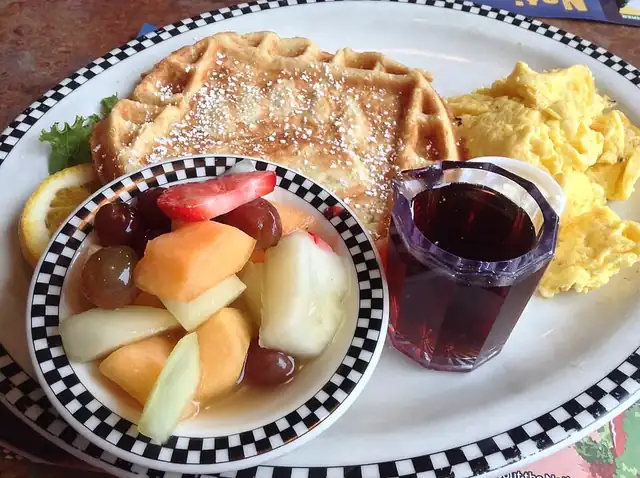
Pancakes may be served at any time of the day or year with a variety of toppings or fillings, but they have developed associations with particular times and toppings in different regions. In North America, they are typically considered a breakfast food and serve a similar function to waffles. In Britain and the Commonwealth, they are associated with Shrove Tuesday, commonly known as "Pancake Day", when, historically, perishable ingredients had to be used up before the fasting period of Lent.
Horn of Africa
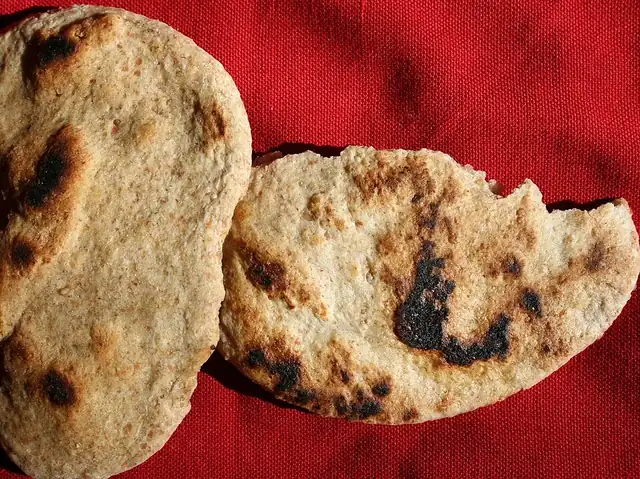
Pancakes in the Horn of Africa (Djibouti, Eritrea, Ethiopia and Somalia) are known as injera (sometimes transliterated as enjera, budenaa (Oromo), or canjeero (Somali)). Injera is a yeast-risen flatbread with a unique, slightly spongy texture. Traditionally, it is made out of teff flour and is a national dish in Ethiopia and Eritrea. Canjeero, also known as lahooh, laxoox, or lahoh, is a similar kind of flatbread eaten in Somalia and Yemen.
In Eritrea and Ethiopia, injera are usually served with one or more stews known as wat or with salads (especially, for instance, during periods of Ethiopian Orthodox fasting) or with other injera (injera firfir). The right hand is used to tear small pieces from the injera to use to pick up and eat the stews or salads. The injera under these stews soaks up juices and flavours and, after the stews and salads are finished, is also consumed. Injera thus acts simultaneously as food, eating utensil, and plate. When the "tablecloth" formed by the injera is finished, the meal is over.
Lahoh is a pancake-like bread originating in Somalia, Djibouti and Yemen. It is often eaten along with honey, ghee and tea. During lunch, lahoh is sometimes consumed with curry, soup or stew.
Kenya
In Kenya, pancakes are eaten for breakfast as an alternative to bread. They are served plain with the sugar already added to the batter to sweeten them. Kenyan pancakes are similar to English pancakes and French crepes.
South Africa
A "pancake" in South Africa is a crêpe. In Afrikaans, it is known as a pannekoek (plural pannekoeke) and, traditionally, is prepared on gas stoves and eaten on wet and cold days. Pannekoeke are usually served with cinnamon-flavoured sugar (and, sometimes, lemon juice) that is either allowed to dissolve into and soften them or, if their crispy texture is to be retained, eaten immediately. They are a staple at Dutch Reformed Church fêtes.
Plaatkoekies ("flapjacks", or lit. "plate cookies") are American-style "silver dollar" pancakes.
Uganda
In Uganda, Kabalagala are banana pancakes made from very ripe ndizi bananas and cassava flour. The pancakes are locally made with bananas (one of the staple foods of the country) and usually served as a breakfast or as a snack option. The steamed version is called Ebwanga.
China
Chinese pancakes may be either savoury or sweet, and are generally made with dough rather than batter. The dough mostly consists of water, flour, and vegetable oil. The dish can be served as a side, usually alongside duck, or as a snack, topped with scallions along with hot and sour sauce.
Japan
In Japan, okonomiyaki are made from flour, egg, cabbage and a choice of ingredients. Oyaki are pancakes often stuffed with anko, eggplant, or nozawana. Dorayaki are a sort of sandwich made from Western-style pancakes and anko. Sweet crepes are also very popular.
The Japanese have also created a soufflé-style cooked-in rings-pancake, which is taller and fluffier than the American pancakes it is inspired by, and found in Singapore, Toronto, Australia, and the United Kingdom.
In Okinawa Prefecture, pancakes include Hirajacii (ヒラヤチー). Hirajacii is a thin, very simple Okinawan pancake-like dish similar to buchimgae. The ingredients consist of eggs, flour, salt, black pepper and green onions, fried with a little oil in a pan. It is basically "a savory Okinawan crepe with leeks", and is sometimes called "Okinawan style okonomiyaki". The name means "fry flat" in the Okinawan language. People usually cook the dish at home, so there are few specialty shops in Okinawa serving Hirajacii.
More to savor
French Onion Soup
Hallaca (Venezuelan Stuffed Corn Dough)
Breakfast Around the Table: Many Ways to Start the Day