This longer reference provides the background behind the topic. Read it alongside the recipe collection when you want to connect an ingredient or food idea with a dish to prepare.
Overview
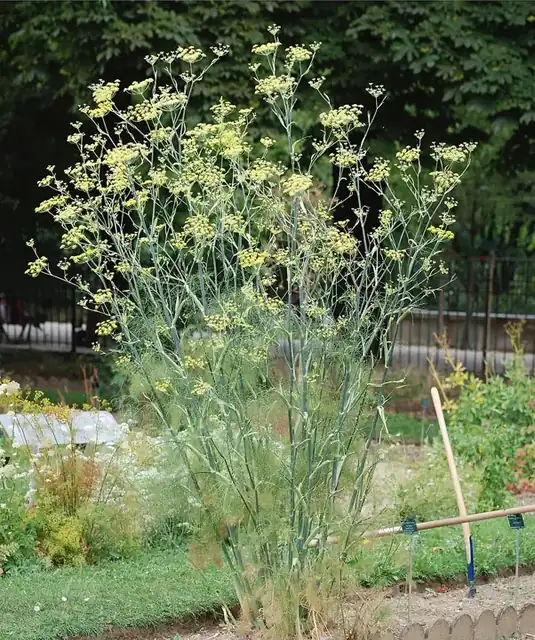
Fennel (Foeniculum vulgare) is a flowering plant species in the carrot family. It is a hardy, perennial herb with yellow flowers and feathery leaves. It is indigenous to the shores of the Mediterranean but has become widely naturalized in many parts of the world, especially on dry soils near the sea coast and on riverbanks.
It is a highly flavorful herb used in cooking and, along with the similar-tasting anise, is one of the primary ingredients of absinthe. Florence fennel or finocchio is a selection with a swollen, bulb-like stem base (sometimes called bulb fennel) that is used as a vegetable.
Description
Foeniculum vulgare is a perennial herb. The stem is hollow, erect, and glaucous green, and it can grow up to 2.1 m tall. The leaves grow up to 40 cm long; they are finely dissected, with the ultimate segments filiform (threadlike), about 0.5 mm wide. Its leaves are similar to those of dill, but thinner.
The flowers are produced in terminal compound umbels 5–17.5 cm wide, each umbel section having 20–50 tiny yellow flowers on short pedicels. The fruit is a dry schizocarp from 4–10 mm long, half as wide or less, and grooved.
Chemistry
The aromatic character of fennel fruits derives from volatile oils imparting mixed aromas, including trans-anethole and estragole (resembling licorice), fenchone (mint and camphor), limonene, 1-octen-3-ol (mushroom). Other phytochemicals found in fennel fruits include polyphenols, such as rosmarinic acid and luteolin, among others in minor content.
Similar species
Some plants in the Apiaceae family are poisonous and often difficult to identify.
Dill, coriander, ajwain, and caraway are similar-looking herbs but shorter-growing than fennel, reaching only 40 - 60 cm. Dill has thread-like, feathery leaves and yellow flowers; coriander and caraway have white flowers and finely divided leaves (though not as fine as dill or fennel) and are also shorter-lived (being annual or biennial plants). The superficial similarity in appearance between these seeds may have led to a sharing of names and etymology, as in the case of meridian fennel, a term for caraway.
Giant fennel (Ferula communis) is a large, coarse plant with a pungent aroma, which grows wild in the Mediterranean region and is only occasionally grown in gardens elsewhere. Other Ferula species are also called giant fennel, but are not culinary herbs.
In North America, fennel may be found growing in the same habitat and alongside natives osha (Ligusticum porteri) and Lomatium species, useful medicinal relatives in the parsley family.
Most Lomatium species have yellow flowers like fennel, but some are white-flowered and resemble poison hemlock. Lomatium is an important historical food plant of Native Americans known as 'biscuit root'. Most Lomatium spp. have finely divided, hairlike leaves; their roots have a delicate rice-like odor, unlike the musty odor of hemlock. Lomatium species prefer dry, rocky soils devoid of organic material.
Production
As grouped by the United Nations Food and Agriculture Organization, production data for fennel are combined with similar spices – anise, star anise, and coriander. In 2014, India produced 60% of the world output of fennel, with China and Bulgaria as leading secondary producers.
Culinary
The bulb, foliage, and fruits of the fennel plant are used in many of the culinary traditions of the world. The small flowers of wild fennel (known as fennel "pollen") are the most potent form of fennel, but also the most expensive. Dried fennel fruit is an aromatic, anise-flavored spice, brown or green when fresh, slowly turning a dull grey as the fruit ages. For cooking, green fruits are optimal. The leaves are delicately flavored and similar in shape to dill. The bulb is a crisp vegetable that can be sautéed, stewed, braised, grilled, roasted or eaten raw. Tender young leaves are used for garnishes, as a salad, to add flavor to salads, to flavor sauces to be served with puddings, and in soups and fish sauce.
Both the inflated leaf bases and the tender young shoots can be eaten like celery.
Fennel fruits are sometimes confused with those of anise, which are similar in taste and appearance, though smaller. Fennel is also a flavoring in some natural toothpastes. The fruits are used in cookery and sweet desserts.
Many cultures in South Asia, Afghanistan, and West Asia use fennel fruits in cooking. In many parts of India, fennel fruits; called saunf, are consumed raw or roasted as mukhwas; an after-meal digestive and breath freshener or candied as comfit. In Iraq, fennel seeds are used as an ingredient in nigella-flavored breads. It is one of the most important spices in Kashmiri cuisine and Gujarati cooking. In Indian cuisine, whole fennel seeds and fennel powder are used as a spice in various sweet and savory dishes. It is an essential ingredient in the Assamese/Bengali/Oriya spice mixture panch phoron and in Chinese five-spice powders. Fennel seeds are also often used as an ingredient in paan, a breath freshener most popularly consumed in India.
In China, fennel stem and leaves are often ingredients in the stuffings of jiaozi, baozi, or pies, as well in cold dishes as a green vegetable. Fennel fruits are present in well-known mixed spices such as the five-spice powder or thirteen-spice powder.
Fennel leaves are used in some parts of India as leafy green vegetables either by themselves or mixed with other vegetables, cooked to be served and consumed as part of a meal. In Syria and Lebanon, the young leaves are used to make a special kind of egg omelette (along with onions and flour) called ijjeh.
Other uses
Fennel was prized by the ancient Greeks and Romans, who used it as medicine, food, and insect repellent. Fennel tea was believed to give courage to warriors before battle. Emperor Charlemagne required the cultivation of fennel on all imperial farms.
Florence fennel is one of the three main herbs used in the preparation of absinthe, an alcoholic mixture which originated as a medicinal elixir in Europe and became, by the late 19th century, a popular alcoholic drink in France and other countries. Fennel fruit is a common and traditional spice in flavored Scandinavian brännvin (a loosely defined group of distilled spirits, which include akvavit). Fennel is also featured in the 16th-century Chinese Materia Medica for its use in traditional medicine.
A 2016 study found F. vulgare essential oil to have insecticidal properties.
More to savor

Chicken Vindaloo
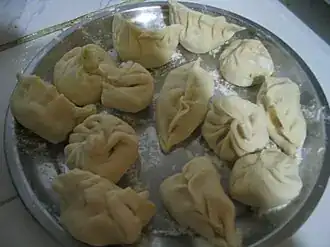
Tibetan Meat Momos
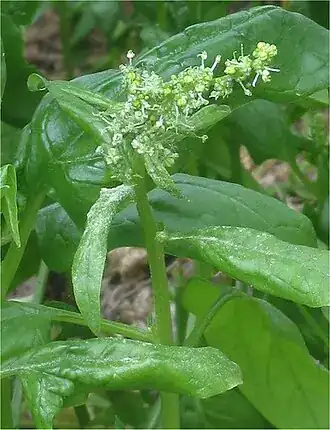
Spinach at the Table: The Food Behind the Name