Use the regional background below as a starting point for exploring the food, rather than expecting one dish to represent every household. Food traditions differ within a country and continue to change through travel, migration, and everyday cooking.
Overview
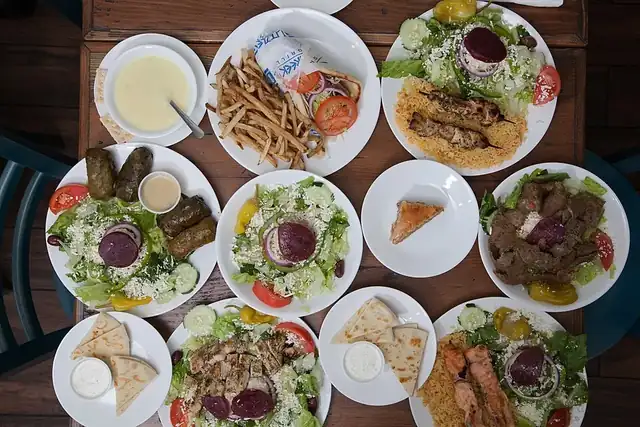
Greek cuisine is the cuisine of Greece and the Greek diaspora. In common with many other cuisines of the Mediterranean, it is founded on the triad of wheat, olive oil, and wine. It uses vegetables, olive oil, grains, fish, and meat, including pork, poultry, veal and beef, lamb, rabbit, and goat. Other important ingredients include pasta (such as hilopites), cheeses, herbs, lemon juice, olives and olive oil, and yogurt. Bread made of wheat is ubiquitous; other grains, notably barley, are also used, especially for paximathia. Common dessert ingredients include nuts, honey, fruits, sesame, and filo pastries. It continues traditions from Ancient Greek and Byzantine cuisine, while incorporating Middle Eastern, Balkan, and Italian influences.
Typical dishes
Typical home-cooked meals include seasonal vegetables stewed with olive oil, herbs, and tomato sauce known as lathera. Vegetables used in these dishes include green beans, peas, okra, cauliflower, spinach, leeks, and others.
Many food items are wrapped in filo pastry, either in bite-size triangles or in large sheets: kotopita (chicken pie), spanakopita (spinach and cheese pie), hortopita (greens pie), kimadopita (ground meat pie) also known as kreatopita (meat pie), kolokythopita (zucchini pie), and others. They have countless variations of pitas (savory pies).
Apart from the Greek dishes found throughout Greece, there are also many regional dishes.
North-Western and Central Greece (Epirus, Thessaly, and Roumeli/Central Greece) have a strong tradition of filo-based dishes, including special regional pitas.
Greek cuisine uses seeds and nuts in everything from pastry to main dishes.
A typical Greek-style breakfast, and brunch, consists of Greek coffee, frappé coffee, mountain tea, hot milk, fruit juice, rusks, bread, butter, honey, jam, fresh fruits, koulouri (sesame bread ring, a type of simit), Greek strained yogurt, bougatsa, tiropita, spanakopita, boiled eggs, fried eggs, omelette, strapatsada, piroski, croissant, tsoureki. A popular breakfast meal is bougatsa, available mainly from bougatsadika shops that sell bougatsa, pies, pastries, and beverages. Traditional Greek breakfast was also provided in special dairy shops called galaktopoleia (milk shops) have dairy products, milk, butter, yogurt, sweets, honey, beverages, whereas today very few galaktopoleia shops exist.
The list of Greek dishes includes dishes found in all of Greece as well as some regional ones.
Salads
In Greek cuisine, appetizers are also salads. Selected salads are:
Horiatiki salad, village's salad, a salad with pieces of tomatoes, cucumbers, onion, feta cheese (usually served as a slice on top of the other ingredients), and olives, dressed with oregano and olive oil.
Horta salad, greens salad, boiled Greek edible greens dressed with olive oil and fresh lemon juice. The greens used may be antidia (endives), vlita (amaranth greens), myronia (wild chervil), radikia (chicory), seskoula (chard), armyrithra, glistrida, styfnos, zoxos, or asparagus.
Dakos, or ntakos, traditional Cretan salad and appetizer.
Pikantiki (also known as politiki), made with white cabbage and purple cabbage finely chopped, pickled Florina peppers, carrot, celery, parsley, finely chopped garlic, lemon juice, white vinegar, olive oil, salt.
Lahanosalata, cabbage salad, thinly chopped cabbage with salt, olive oil and lemon or vinegar juice.
Kaparosalata, caper salad.
Ampelofasoula, cowpea salad.
Kounoupidi (cauliflower), salad with boiled cauliflower.
Patatosalata, potato salad with boiled potato.
Patzarosalata, beet salad with boiled beet.
Brokolo (broccoli), salad with boiled broccoli.
Aggouro-ntomata, cucumber with tomato.
Soups
Selected soups are:
Fasolada, a soup of dry white beans, olive oil, and vegetables.
Fakes, lentil soup.
Hortosoupa (greens soup), vegetable soup that comes in numerous versions.
Avgolemono, made with whisked eggs and lemon juice that are combined in a broth. It is also a sauce.
Youvarlakia, soup from balls of ground meat, rice, finished with avgolemono (the creamy egg and lemon sauce), cooked in a pot.
Kotosoupa (chicken soup), made from chicken broth, tender chicken cuts, various root vegetables, and rice.
Kremidosoupa (onion soup),
Kreatosoupa (meat soup),
Kakavia, soup made from fish, onions, potatoes, olive oil, and vegetables.
Kokkinisto kritharaki, also known as manestra soup, made from orzo, onion, tomato sauce, olive oil.
Magiritsa, thick soup made with lamb offal (intestines, heart, and liver), dill, avgolemono sauce (egg and lemon beaten together), onion and rice, often traditionally eaten on Greek Easter Sunday.
Ntomatosoupa (tomato soup), with Greek ingredients.
Dishes
Selected dishes are:
Agkinares, cardoon has various recipes.
Fasolakia, green beans that are simmered in olive oil with other vegetable ingredients, belongs to ladera which literally translates to "oily", vegetable dishes cooked in olive oil.
Arakas (pea), belongs to ladera dishes, with the dish "Arakas me Agkinares".
Bamies (okra), belongs to ladera dishes.
Briam, also known as tourlou, belongs to ladera dishes, typically made from eggplants, zucchini, onions, potatoes, tomatoes, garlic, parsley.
Gemista or Yemista, "filled with" in Greek, baked stuffed bell peppers and tomatoes with rice or ground beef or both, onions, mint, parsley and olive oil.
Lahanodolmades, baked stuffed light green cabbage rolls with rice or ground beef or both, onions, mint, parsley, avgolemono sauce.
Lahanorizo, rice and cabbage, onions, fresh herbs, and the optional addition of tomato sauce.
Prasorizo (leek and rice), made from rice, chopped sweet leeks, olive oil, garlic, dill.
Spanakorizo (spinach and rice),
Apaki, cured pork meat. Left to marinate in vinegar for two or three days, the meat is then smoked with aromatic herbs and various spices. Apaki can be cooked on its own or added to other dishes.
Stifado (stew), casserole cooked with baby onions, tomatoes, wine or vinegar, olive oil, bay leaf, black pepper, meat such as pork, goat, rabbit, wild hare, beef, snails, tripe or octopus.
Desserts and pastries
Selected desserts and pastries (sweet and savory) are:
Amygdalopita (almond pie), almond cake made with ground almonds, flour, butter, eggs and pastry cream.
Amygdalota,a traditional sweet which has several versions made from almonds, sugar and flower water.
Amygdalota Axladakia, from the island of Syros.
Akanés, from Serres.
Armenonville, from Thessaloniki.
Ashure, also known as varvara.
Avgato, a spoon sweet of plum from the island of Skopelos.
Akoumia, a traditional dessert type of loukouma (donut) that is prepared on the island of Symi.
Baklava,
Babas, rum baba.
Gianniotikos Balkavas, type of Baklava from Ioannina.
Giaourtopita (yogurt pie), yogurt cake with syrup.
Drinks and beverages
Selected drinks and beverages are:
Greek mountain tea
Greek coffee,
Frappé coffee, invented in Thessaloniki in 1957.
Freddo cappuccino,
Esspreso freddo, iced coffee combines espresso and ice merely serve coffee over ice blends the two ingredients until the coffee is slightly chilled.
Salepi,
Ouzo,
Retsina,
Tsipouro,
Tsikoudia,
Gin,
Liqueur,
More to savor
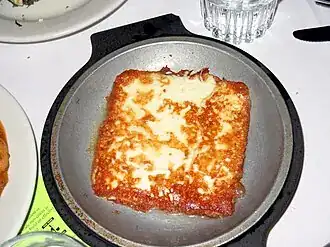
Pan-Fried White Brined Cheese (Saganaki)

Chicken Vindaloo
At the Polish Table: The Food Behind a Shared Meal