What we eat is only part of the story of a meal. The setting, the way food is served, and the habits around the table can be just as revealing. The guide below follows the subject in more detail.
Overview
Lunch is a meal typically consumed around the middle of the day, following breakfast and preceding dinner. It varies in form, size, and significance across cultures and historical periods. In some societies, lunch constitutes the main meal of the day and may consist of multiple courses, while in others it is lighter and more utilitarian in nature.
The foods consumed at lunch follow local dietary customs, and may range from simple items such as sandwiches or salads to more elaborate meals that include rice, noodles, or soups. Regional and cultural practices are further influenced by factors such as religion, geography, and economic context.
Modern
With the growth of industrialisation in the 19th century, male workers began to work long shifts at the factory, severely disrupting the age-old eating habits of rural life. Initially, workers were sent home for a quick dinner provided by their wives, but as the workplace was moved further from home, working men took to giving themselves something portable to eat during a break in the middle of the day.
The lunch meal slowly became institutionalized in England when workers with long and fixed-hour jobs at the factory were eventually given an hour off work to eat lunch and thus gain strength for the afternoon shift. Stalls and later chop houses near the factories began to provide mass-produced food for the working class, and the meal soon became an established part of the daily routine, remaining so to this day.
In many countries and regions, lunch is the dinner or main meal. Prescribed lunchtimes allow workers to return to their homes to eat with their families. Consequently, businesses close during lunchtime when lunch is the customary main meal of the day. Lunch also becomes dinner on special days, such as holidays or events, including, for example, Christmas dinner and harvest dinners like Thanksgiving; on these special days, dinner is usually served in the early afternoon. The main meal on Sunday, whether at a restaurant or home, is called "Sunday dinner", and for Christians is served after morning church services.
Asia
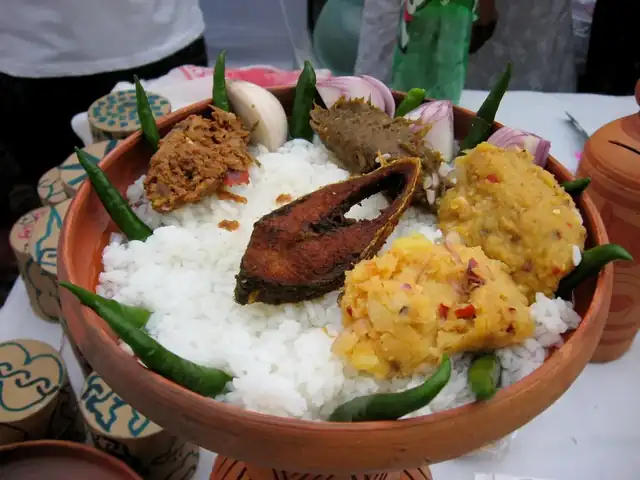
A traditional Bengali lunch is a seven-course meal. Bengali cuisine is a culinary style originating in Bengal, a region in the eastern part of the Indian subcontinent, which is now divided between Bangladesh and Indian states of West Bengal, Tripura, Assam's Barak Valley. The first course is shukto, which is a mix of vegetables cooked with few spices and topped with a coconut sauce. The second course consists of rice, dal, and a vegetable curry. The third course consists of rice and fish curry. The fourth course is that of rice and meat curry (generally chevon, mutton, chicken or lamb). The fifth course contains sweet preparations like rasgulla, pantua, rajbhog, sandesh, etc. The sixth course consists of payesh or mishti doi (sweet yogurt).
The seventh course is that of paan, which acts as a mouth freshener.
In Japan, lunch often consists of rice or noodle dishes such as ramen, soba and udon bowls. Many Japanese people will also take a boxed lunch, known as a bentō, to class or to work with them. Sushi, donburi and teishoku are also common. Additionally, other Japanese lunch options include quick and convenient foods like onigiri (rice balls), sandwiches, and instant noodles, catering to busy individuals.
Australia
In Australia, a light meal eaten in the period between 10:30am and noon is considered morning tea. An actual lunch will be eaten between noon and 2:00pm. While usually consisting of fruit or a cereal product, a typical Australian brunch may include other foods as well such as burgers, sandwiches, other light food items, and hot dishes. Sometimes, a meal during the late afternoon is referred to as "afternoon tea", a meal in which food portions are usually significantly smaller than at lunch, sometimes consisting of nothing more than coffee or other beverages.
Western
Lunch in Denmark, referred to as frokost, is a light meal. It often includes rye bread with different toppings such as liver pâté, herring, and cheese. Smørrebrød is a Danish lunch delicacy that is typically used for business meetings or special events.
In Finland, lunch is a full hot meal, served as one course, sometimes with small salads and desserts. Dishes are diverse, ranging from meat or fish courses to soups that are heavy enough to constitute a meal.
In France, the midday meal is taken between noon and 2:00p.m.
Central
In Hungary, lunch is traditionally the main meal of the day, following a leves (soup).
In Poland, the main meal of the day (called obiad) is traditionally eaten between 1:00pm and 5:00pm, and consists of a soup and a main dish. Most Poles equate the English word "lunch" with "obiad" because it is the second of the three main meals of the day; śniadanie (breakfast), obiad (lunch/dinner) and kolacja (dinner/supper). There is another meal eaten by some called drugie śniadanie, which means "second breakfast". Drugie śniadanie is eaten around 10:00am and is a light snack, usually consisting of sandwiches, salad, or a thin soup.
In Romania, lunch (prânz in Romanian) is the main hot meal of the day. Lunch normally consists of two dishes: usually, the first course is a soup and the second course, the main course, often consists of meat accompanied by potato, rice or pasta (garnitură). Traditionally, people used to bake and eat desserts, but nowadays it is less common. On Sundays, the lunch is more consistent and is usually accompanied by an appetiser or salad.
Eastern
In Russia, the midday meal is taken in the afternoon. lunch is typically the biggest meal and consists of a first course, usually a soup, and a second course that would be meat and a garnish. Tea is the standard beverage.
In Bosnia and Herzegovina, lunch is the day's main meal. It is traditionally a substantial hot meal, sometimes with additional courses like soup and dessert. It is usually a savoury dish, consisting of protein (such as meat), starchy foods (such as potatoes), and a vegetable or salad. It is normally eaten around 2:00pm.
In Bulgaria, lunch is normally eaten between noon and 2:00pm. In the capital of Sofia, people usually order takeaway because lunch breaks are too short to go in place. In other areas, Bulgarians often have salad as the first meal and a dish from the national cuisine as the second one.
More to savor

South Indian Millet Swallow (Mudde)
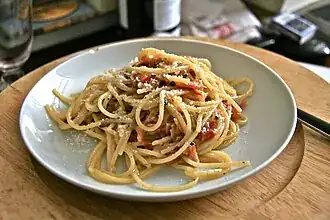
Spaghetti alla Carbonara

At the Danish Table: From Local Produce to Food Tradition