Use the regional background below as a starting point for exploring the food, rather than expecting one dish to represent every household. Food traditions differ within a country and continue to change through travel, migration, and everyday cooking.
In this story
OverviewNew Danish cuisineMain mealsMain dishesTraditional main course dishesTraditional feastsStreet and fast foodOverview
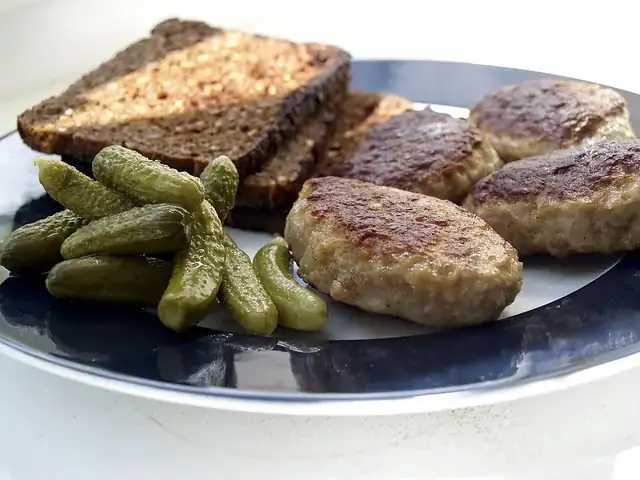
Danish cuisine originated from the peasant population's own local produce and was enhanced by cooking techniques developed in the late 19th century and the wider availability of goods during and after the Industrial Revolution. Open sandwiches, known as smørrebrød, which in their basic form are the usual fare for lunch, can be considered a national speciality when prepared and garnished with a variety of ingredients. Hot meals are typically prepared with meat or fish. Substantial meat and fish dishes includes flæskesteg (roast pork with crackling) and kogt torsk (poached cod) with mustard sauce and trimmings. Ground meats (pork, veal or beef) became widespread during the industrial revolution and traditional dishes that are still popular include frikadeller (meat balls), karbonader (breaded pork patties) and medisterpølse (fried sausage).
Denmark is known for its Carlsberg and Tuborg beers and for its akvavit and bitters, but amongst the Danes themselves imported wine has gained steadily in popularity since the 1960s.
Cooking in Denmark has always been inspired by foreign and continental practises and the use of imported tropical spices like cinnamon, cardamom, nutmeg and black pepper can be traced to the Danish cuisine of the Middle Ages and some even to the Vikings.
New Danish cuisine
Danish cuisine has also taken advantage of the possibilities inherent in traditional recipes, building on the use of local products and techniques that have not been fully exploited. Local products such as rapeseed, oats, cheeses and older varieties of fruits are being rediscovered and prepared in new ways both by restaurants and at home, as interest in locally sourced organic foods continues to grow. The Nordic Council's agricultural and food ministers have supported these developments in the form of a manifesto designed to encourage the use of natural products from the Nordic countries in the food production industry, while promoting the "purity, freshness, simplicity and ethics" associated with the region's cuisine.
In 2010, 2011, 2012, and 2014 the Copenhagen restaurant Noma (short for nordisk mad – Nordic food) was named the world's best restaurant by the magazine Restaurant.
In 2012, the Danish chef and food activist Claus Meyer had his own show about Nordic cuisine on BBC Lifestyle. His recent book Almanak contains 365 new cuisine recipes, one for each day of the year.
Main meals
Most Danes have three regular meals a day, usually consisting of a cold breakfast with coffee or tea, a cold lunch at work and a hot dinner at home with the family. Some also have a snack in the middle of the afternoon or in the late evening. Meat, especially pork, is by far the most common ingredient of hot meals. It is usually accompanied by potatoes and sometimes by another vegetable such as carrots or lettuce. Most hot meals consist of only one course: starters are fairly rare but desserts such as ice cream or fruit are a little more frequent. Beer and wine are fairly common drinks at mealtimes but so are soft drinks, plain water and, to a lesser extent, milk and coffee. Many families follow the old traditions.
Mothers and fathers cook together and teach their children how to cook. Meals form an important part of family life, allowing for socializing and contributing to the sense of the wellbeing and coziness known as hygge.
Main dishes
Fish, seafood and meat are prominent parts of any traditional Danish dish.
With a very long coastline and large number of smaller islands, Denmark has a long tradition of fishing and seafood takes a natural part of the Danish food tradition.
The most commonly eaten fish and seafood are:
Traditional main course dishes
Many traditional dishes have been abandoned in Denmark in the last 4-5 decades, especially dishes requiring long preparations but also organ meat dishes. Fast preparations, pre-cooked meals and foreign inspired cooking from around the world, has increasingly found its way into the kitchens of the common Danish family. Traditional Danish main course dishes includes:
Boller i karry (dumplings in curry). Pork meatballs in curry sauce, served with rice.
Gammeldags kylling (old-fashioned chicken). Pot-roast whole chicken stuffed with parsley and served with boiled potatoes, thick brown sauce, cucumber pickle and rhubarb compote.
Traditional feasts
Danish culture has a number of annual recurring traditional feasts. Most of them are rooted in both the Norse pagan tradition and the Christian culture, including the most widely celebrated feast of Christmas, known as Jul in Denmark. Christmas and Easter are the most prominent feasts in Danish culture, both in terms of religious and traditional importance but also food wise. A number of smaller feasts such as Fastelavn (Carnival), Pinse (Pentecost) and Mortensaften (St. Martin's Day), are also of some importance regarding food while other traditional celebrations such as Grundlovsdag, May Day and Sankthans (St. John's Eve) are not coupled to the Danish food culture in any special way.
The celebration of New Year's Eve is perhaps on par with both Christmas and Easter in modern times and is also coupled with some strong food traditions. Poached cod served with mustard sauce, boiled potatoes and horseradish is traditionally enjoyed as the main course on this evening, known as nytårstorsk (New Year's Cod), with champagne and kransekage served later in the night. Slices of boiled ham served with stewed kale is another traditional dish for this particular evening. In recent decades, the traditional menus has given way to contemporary gourmet servings in many places, even though the champagne and the kransekage remains very popular.
Street and fast food
Street food has made an enormous impact on the way Danes eat in the 2010s, but street food has been part of Danish dining culture for many years.
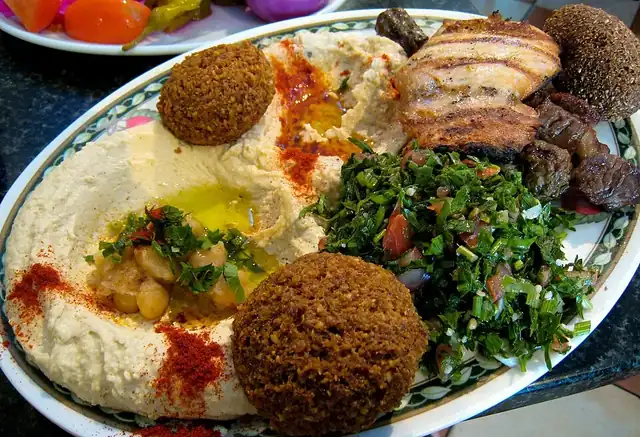
The most common quick food restaurant is the "burger bar" or "grill bar", offering hamburgers, hot dogs and a wide variety of other fast food staples. Pizzerias are equally popular and can be found in every town in the country, large or small. Other commonly found fast foods include Turkish and Middle East food specialties such as falafel, shish-kebab and spit-roasted meat (most often shawarma) with salad in pita bread, or wrapped in durum wheat based flatbread. International chains Burger King, McDonald's, and Sunset Boulevard has been around since 1977, 1981, and 1996 respectively, and can be found in most cities.
More to savor

English Breakfast
Ají de Gallina (Peruvian Chili Chicken)
A Taste of Taiwan: Exploring the Food Behind the Table