This longer reference provides the background behind the topic. Read it alongside the recipe collection when you want to connect an ingredient or food idea with a dish to prepare.
Overview
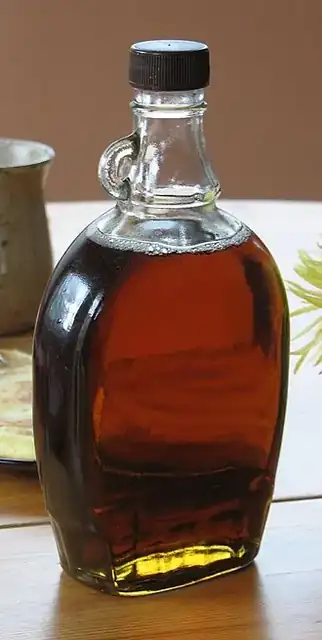
Maple syrup is a sweet syrup made from the sap of maple trees. In cold climates these trees store starch in their trunks and roots before winter; the starch is then converted to sugar that rises in the sap in late winter and early spring. Maple trees are tapped by drilling holes into their trunks and collecting the sap, which is heated to evaporate much of the water, leaving the concentrated syrup.
Maple syrup was first made by the Indigenous people of Northeastern North America. The practice was adopted by European settlers, who gradually changed production methods. Technological improvements in the 1970s further refined syrup processing. Almost all of the world's maple syrup is produced in Canada and the United States, with Quebec alone accounting for 72% of global output.
Maple syrup is graded based on its colour and taste. Sucrose is the most prevalent sugar in maple syrup. In Canada syrups must be made exclusively from maple sap to qualify as maple syrup and must also be at least 66 per cent sugar. Maple syrup is often used as a condiment for pancakes, waffles, French toast, oatmeal or porridge. It is also used as an ingredient in baking and as a sweetener or flavouring agent.
Sources
Three species of maple (Acer) trees are the main sources of maple syrup: the sugar maple (A. saccharum), the black maple (A. nigrum), and the red maple (A. rubrum), because their sap has a high sugar content, two to five per cent. The black maple is included as a subspecies or variety in a more broadly viewed concept of A. saccharum, the sugar maple, by some botanists. Of these, the red maple has a shorter season because it buds earlier than sugar and black maples, which alters the flavour of the sap.
A few other species of maple are also sometimes used as sources of sap for producing maple syrup, including the box elder or Manitoba maple (Acer negundo), the silver maple (A. saccharinum), and the bigleaf maple (A. macrophyllum). In the Southeastern United States Florida sugar maple (Acer floridanum) is occasionally used for maple syrup production.
Indigenous peoples
Indigenous peoples living in northeastern North America were the first groups known to have produced maple syrup and maple sugar. According to Indigenous oral traditions, as well as archaeological evidence, maple tree sap was being processed into syrup long before Europeans arrived in the region. There are no authenticated accounts of how maple syrup production and consumption began, but various legends exist; one of the most popular involves maple sap being used in place of water to cook venison served to a chief. Indigenous tribes developed rituals around syrup-making, celebrating the Sugar Moon (the first full moon of spring) with a Maple Dance. Many aboriginal dishes replaced the salt traditional in European cuisine with maple syrup.
The Algonquians recognized maple sap as a source of energy and nutrition. At the beginning of the spring thaw, they made V-shaped incisions in tree trunks; they then inserted reeds or concave pieces of bark to run the sap into clay buckets or tightly woven birch-bark baskets. The maple sap was concentrated first by leaving it exposed to the low temperatures overnight and disposing of the layer of ice that formed on top. Following that, the sap was transported by sled to large fires where it was boiled in clay pots to produce maple syrup. Often, multiple pots were used in conjunction, with the liquid being transferred between them as it grew more concentrated.
Colonists
In the early stages of European colonization in northeastern North America, local Indigenous peoples showed the arriving colonists how to tap the trunks of certain types of maples during the spring thaw to harvest the sap. André Thevet, the "Royal Cosmographer of France", wrote about Jacques Cartier drinking maple sap during his Canadian voyages. By 1680, European settlers and fur traders were involved in harvesting maple products. However, rather than making incisions in the bark, the Europeans used the method of drilling tapholes in the trunks with augers. Prior to the 19th century, processed maple sap was used primarily as a source of concentrated sugar, in both liquid and crystallized-solid form, as cane sugar had to be imported from the West Indies.
Since 1850
Around the time of the American Civil War (1861–1865), syrup makers started using large, flat sheet metal pans as they were more efficient for boiling than heavy, rounded iron kettles, because of a greater surface area for evaporation. Around this time, cane sugar replaced maple sugar as the dominant sweetener in the US; as a result, producers focused marketing efforts on maple syrup. The first evaporator, used to heat and concentrate sap, was patented in 1858. In 1872 an evaporator was developed that featured two pans and a metal arch or firebox, which greatly decreased boiling time. Around 1900, producers bent the tin that formed the bottom of a pan into a series of flues, which increased the heated surface area of the pan and again decreased boiling time.
Some producers also added a finishing pan, a separate batch evaporator, as a final stage in the evaporation process.
Production
Maple syrup production is centred in northeastern North America; however, given the correct weather conditions, it can be made wherever suitable species of maple trees grow, such as New Zealand, where there are efforts to establish commercial production.
Maple syrup production begins with collecting sap in a "sugarbush". Maples are usually tapped beginning at 30 to 40 years of age. Each tree can support between one and three taps, depending on its trunk diameter. The average maple tree will produce 35 to 50 L of sap per season, up to 12 L per day. This is roughly equal to seven per cent of its total sap. Tap seasons typically happen during late winter and spring and usually last for four to eight weeks, though the exact dates depend on the weather, location, and climate.
Off-flavours
Off-flavours can occasionally develop during the production of maple syrup, caused by contaminants in the boiling apparatus (such as disinfectants), microorganisms, fermentation byproducts, metallic can leaching, or "buddy sap"—an off-flavour that occurs late in the syrup season when tree budding has begun. In some circumstances it is possible to remove off-flavours through processing.
More to savor

Chicken Vindaloo
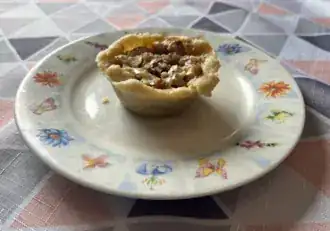
Maple Butter Tart
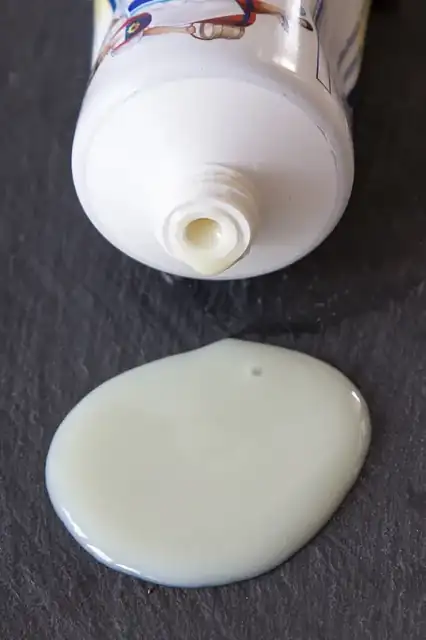
Condensed milk in the Kitchen: Exploring an Everyday Ingredient