This longer reference provides the background behind the topic. Read it alongside the recipe collection when you want to connect an ingredient or food idea with a dish to prepare.
Overview
The onion (Allium cepa , from Latin ), also known as the bulb onion or common onion, is a vegetable that is the most widely cultivated species of the genus Allium. The shallot is a botanical variety of the onion which was classified as a separate species until 2011. The onion's close relatives include garlic, scallion, leek, and chives.
The genus contains several other species
cultivated for food, such as the Japanese bunching onion Allium fistulosum, the tree onion Allium × proliferum, and the Canada onion Allium canadense. The name wild onion is applied to a number of Allium species, but A. cepa is exclusively known from cultivation. Its ancestral wild original form is not known, although escapes from cultivation have become established in some regions. The onion is most frequently a biennial or a perennial plant, but is usually treated as an annual and harvested in its first growing season.
The onion plant has a fan of hollow, bluish-green leaves, and its bulb at the base of the plant begins to swell when a certain day-length is reached. The bulbs are composed of shortened, compressed, underground stems surrounded by fleshy modified scale (leaves) that envelop a central bud at the tip of the stem. In the autumn (or in spring, in the case of overwintering onions), the foliage dies down and the outer layers of the bulb become more dry, and brittle. The crop is harvested and dried and the onions are ready for use or storage. The crop is prone to attack by a number of pests and diseases, particularly the onion fly, the onion eelworm, and various fungi which can cause rotting.
Some varieties of A. cepa, such as shallots and potato onions, produce multiple bulbs.
Onions are cultivated and used around the world. As a food item, they are often served raw as a vegetable or part of a prepared savoury dish, but can be eaten cooked or used to make pickles or chutneys. They are pungent when chopped and contain certain chemical substances which may irritate the eyes.
Description
The onion is a biennial plant but is usually grown as an annual. Modern varieties typically grow to a height of 15 to 45 cm. The leaves are yellowish- to bluish green and grow alternately in a flattened, fan-shaped swathe. They are fleshy, hollow, and cylindrical, with one flattened side. They are at their broadest about a quarter of the way up, beyond which they taper to blunt tips. The base of each leaf is a flattened, usually white sheath that grows out of the basal plate of a bulb. From the underside of the plate, a bundle of fibrous roots extends for a short way into the soil. As the onion matures, food reserves accumulate in the leaf bases, and the bulb of the onion swells.
In the autumn, the leaves die back, and the outer scales of the bulb become dry and brittle, so the crop is normally harvested. If left in the soil over winter, the growing point in the middle of the bulb begins to develop in the spring. New leaves appear, and a long, stout, hollow stem expands, topped by a bract protecting a developing inflorescence. The inflorescence takes the form of a rounded umbel of white flowers with parts in sixes. The seeds are glossy black and triangular in cross-section. The average pH of an onion is around 5.5.
Culinary
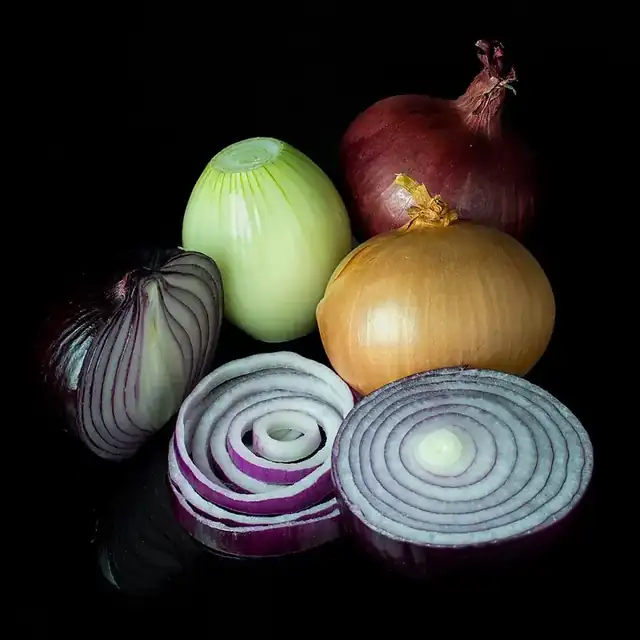
Onions come in three colour varieties:
Yellow or brown onions are sweet, with many cultivars bred specifically to accentuate this sweetness, such as Vidalia, Walla Walla, Cévennes, and Bermuda. Yellow onions turn a rich, dark brown when caramelised and are used to add a sweet flavour to various dishes, such as French onion soup.
Red or purple onions, known for their sharp pungent flavour, are commonly cooked in many cuisines, and used raw and in grilling.
White onions are mild in flavour; they have a golden colour when cooked and a particularly sweet flavour when sautéed.
Onions are commonly chopped and used as an ingredient in various hearty warm dishes, and may be used as a main ingredient in their own right, for example in French onion soup, creamed onions, and onion chutney. They are versatile and can be baked, boiled, braised, grilled, fried, roasted, sautéed, or eaten raw in salads. Onions are a major ingredient of some curries; the Persian-style dopiaza's name means "double onion", and it is used both in the dish's sour curry sauce and as a garnish. Onion powder is a seasoning made from finely ground, dehydrated onions; it is often included in seasoned salt and spice mixes.
Other uses
Onions have particularly large cells that are easy to observe under low magnification. Forming a single layer of cells, the bulb epidermis is easy to separate for educational, experimental, and breeding purposes. Onions are therefore commonly used in science education to teach the use of a microscope for observing cell structure. Onion skins can be boiled to make an orange-brown dye.
Nutrients
Most onion cultivars are about 89% water, 9% carbohydrates (including 4% sugar and 2% dietary fibre), 1% protein, and negligible fat (table). Onions contain low amounts of essential nutrients and have an energy value of 166 kJ (40 kilocalories) in a 100 g (3.5 oz) amount. Onions contribute savoury flavour to dishes without contributing significant caloric content.
Adverse effects and toxicity
Some people suffer from allergic reactions after handling onions. Symptoms can include contact dermatitis, intense itching, rhinoconjunctivitis, blurred vision, bronchial asthma, sweating, and anaphylaxis. Allergic reactions may not occur when eating cooked onions, possibly due to the denaturing of the proteins from cooking.
Production
Onions are a widely cultivated vegetable crop, produced in the second largest quantity after tomatoes. In 2021, the top global producers of onions were China, India, the United States, and Turkey. In 2022, world production of onions and shallots (as green produce) was 5.0 million tonnes, led by China with 17% of the total, and Mali, Angola, and Japan as secondary producers.
More to savor

Chicken Vindaloo
Marinara Sauce
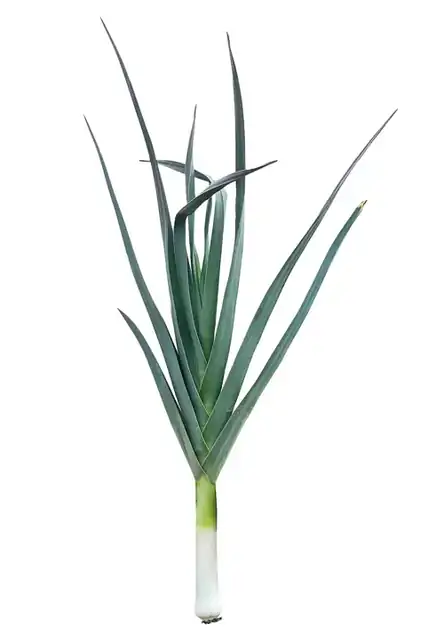
Leek at the Table: The Food Behind the Name