The dish is a starting point for exploring a wider food story. The guide below looks more closely at its background and different forms. When you want to cook, visit the recipe collection for ingredient quantities and step-by-step methods.
Overview
Pastry is various unleavened doughs, often enriched with fat or eggs. The dough may be called pastry dough. Common pastry dishes include börek, pies, tarts, and turnovers.
In North America, the term pastry is used for sweet baked goods made with dough, however, it is generally used colloquially to describe all sweet baked or fried goods. This usage is a modern term, as historically, as per The American Heritage Dictionary, the term was similar to that used in British and Australian English.
Items like croissant and Danish pastry may look like puff pastry (one of the types of pastry dough) but are made with a leavened dough, called Viennoiserie, and are described by some as a meeting point between bread and pastry, or, as by the Dictionnaire Petit Robert, as neither a pastry nor a bread.
Definitions and terms
The precise definition of the term pastry varies based on location and culture. Common doughs used to make pastries include filo dough, puff pastry, choux pastry, shortcrust pastry, and flaky pastry. Pastries tend to have a delicate texture, often flaky or crumbly, and rich flavor. This is caused by the crystals found in solid fats, which forces the starch particles apart and stops the formation of elastic gluten, making the pastry short. Pastries also tend to be baked.
Pastry terms
Pastry blender A kitchen implement used to chop the fat into the flour, which prevents the melting of the fat with body heat from fingers, and improves control of the size of the fat chunks. Usually constructed of wire or plastic, with multiple wires or small blades connected to a handle.
Pastry board A square or oblong board, preferably marble but usually wood, on which pastry is flattened.
Pastry brake/Dough sheeter Opposed and counter-rotating rollers with a variable gap through which pastry can be worked and reduced in thickness for commercial production. A small version is used domestically for pasta production.
History
The European tradition of pastry-making is often traced back to the shortcrust era of flaky doughs that were in use throughout the Mediterranean in ancient times. In the ancient Mediterranean, the Romans, Greeks, and Phoenicians all had filo-style pastry in their culinary traditions.
In the plays of Aristophanes, written in the 5th century BC, there is mention of sweetmeats, including small baked goods filled with fruit. Roman cuisine used flour, oil, and water to make the pastry dough that were used to cover meats and fowls during baking in order to keep in the juices, but the pastry was not meant to be eaten. A pastry that was meant to be eaten was a richer pastry that was made into small baked goods containing eggs or little birds and that were often served at banquets. Greeks and Romans both struggled in making a good pastry because they used oil in the cooking process, and oil causes the pastry to lose its stiffness.
In the medieval cuisine of Northern Europe, chefs were able to produce nice, stiff pastry dough because they cooked with shortening and butter. Some incomplete lists of ingredients have been found in medieval cookbooks, but no full, detailed versions. There were stiff, empty pastry dough called coffins or 'huff paste', that were eaten by servants only and included an egg yolk glaze to help make them more enjoyable to consume. Medieval pastry based baked goods also included small tarts to add richness.
Types of pastry dough
Shortcrust pastry Shortcrust pastry is the simplest and most common pastry. It is made with flour, fat, butter, salt, and water to bind the dough. Pâte brisée is the French version of classic pie or tart shortcrust pastry. The process of making pastry includes mixing of the fat and flour, adding water, chilling and then rolling out the dough. Chilling before rolling is essential since it enables the fat (lard, butter, etc.) to harden again and thus create flaky layers in the dough. It also allows for even hydration and inhibits gluten formation. It results in a tender flaky pastry.
The fat is mixed with the flour first, generally by rubbing with fingers or a pastry blender, which inhibits gluten formation by coating the gluten strands in fat and results in a short (as in crumbly; hence the term shortcrust), tender pastry. A related type is the sweetened sweetcrust pastry, also known as pâte sucrée, in which sugar and egg yolks have been added (rather than water) to bind the pastry.
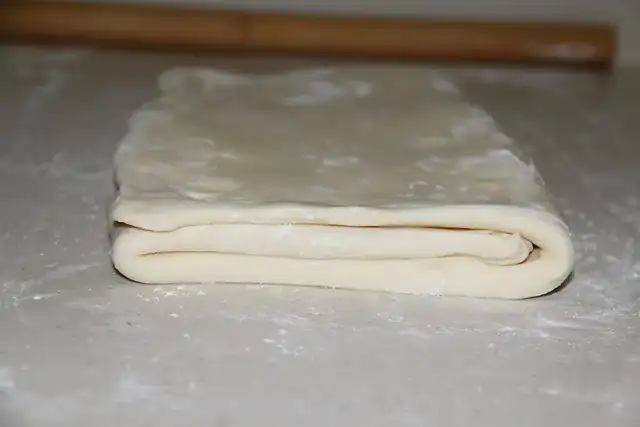
Puff pastry Puff pastry has many layers that cause it to expand or "puff" when baked. Puff pastry is made using a laminated dough consisting of flour, butter, salt, and water. The pastry rises up due to the water and fats expanding as they turn into steam upon heating. Puff pastry come out of the oven light, flaky, and tender.
Chemistry
Different kinds of pastry doughs are made by utilizing the natural characteristics of wheat flour and certain fats. When wheat flour is mixed with water and kneaded into plain dough, it develops strands of gluten, which are what make bread tough and elastic. In a typical pastry, however, this toughness is unwanted, so fat or oil is added to slow down the development of gluten. Pastry flour can also be used, since it typically has a lower level of protein than all-purpose or bread flours.
Lard or suet work well because they have a coarse, crystalline structure that is very effective. Using unclarified butter does not work well because of its water content; clarified butter, or ghee, which is virtually water-free, is better, but shortcrust pastry using only butter may develop an inferior texture. If the fat is melted with hot water or if liquid oil is used, the thin oily layer between the grains offers less of an obstacle to gluten formation and the resulting pastry is tougher.
A good pastry is light and airy and fatty, but firm enough to support the weight of the filling. When making a shortcrust pastry, care must be taken to blend the fat and flour thoroughly before adding any liquid. This is to ensure that the flour granules are adequately coated with fat and less likely to develop gluten. On the other hand, overmixing results in long gluten strands that toughen the pastry.
Gallery
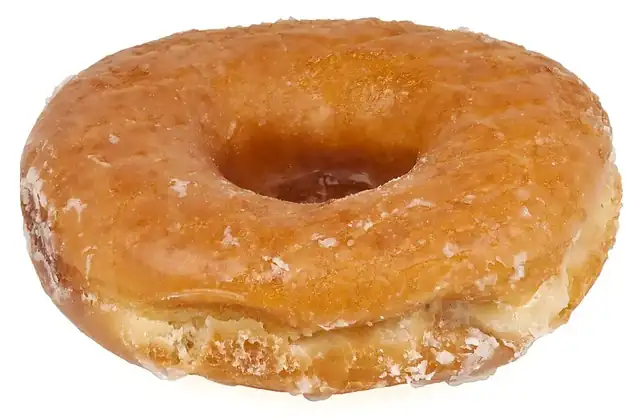
Items made with pastry dough.
More to savor
Vanillekipferl (Almond Crescent Cookies)
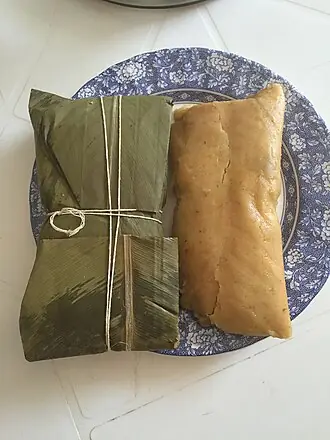
Hallaca (Venezuelan Stuffed Corn Dough)
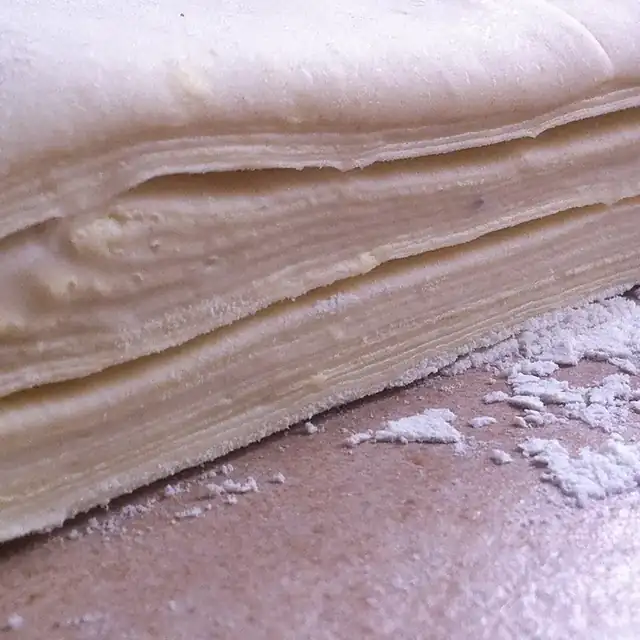
Puff Pastry: The Layers Behind a Light, Flaky Bite