This longer reference provides the background behind the topic. Read it alongside the recipe collection when you want to connect an ingredient or food idea with a dish to prepare.
Overview
Pea is a pulse or fodder crop, but the word often refers to the seed or sometimes the pod of this flowering plant species. Peas are eaten as a vegetable. The pea is native to the Mediterranean region and southwest Asia, and cultivated nearly worldwide.
Carl Linnaeus gave the species the scientific name Pisum sativum in 1753 (meaning cultivated pea). Some sources now treat it as Lathyrus oleraceus; however the need and justification for the change is disputed. The name "Pea" is also used to describe other edible seeds from the Fabaceae such as the pigeon pea (Cajanus cajan), the cowpea (Vigna unguiculata), the seeds from several species of Lathyrus, and Sturt's desert pea (Swainsona formosa).
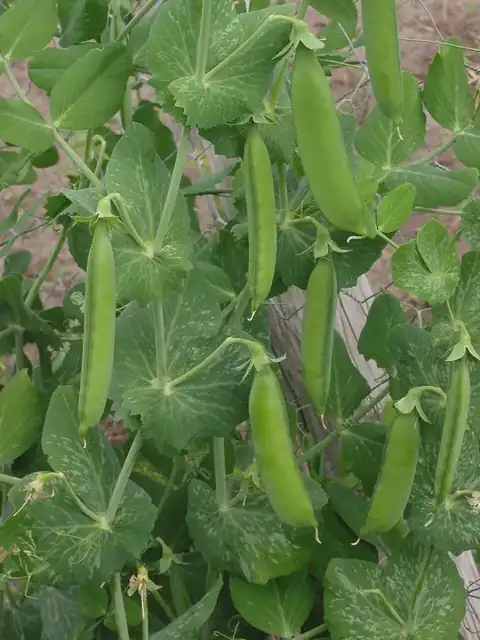
Each pod contains several seeds (peas), which can have green or yellow cotyledons when mature. Botanically, pea pods are fruit, since they contain seeds and develop from the ovary of a pea flower.
Description
A pea is a most commonly green, occasionally golden yellow, or infrequently purple pod-shaped vegetable, the pod has a length of about 4 to 10 cm, the fruit is widely grown as a cool-season crop. The seeds may be planted as soon as the soil temperature reaches 10 °C, with the plants growing best at temperatures of 13 to 18 C. They do not thrive in the summer heat of warmer temperate and lowland tropical climates, but do grow well in cooler, high-elevation, tropical areas. Many cultivars reach maturity about 60 days after planting.
Peas have both low-growing and vining cultivars. The vining cultivars grow thin tendrils from leaves that coil around any available support and can climb to be 1 to 2 m high. A traditional approach to supporting climbing peas is to thrust branches pruned from trees or other woody plants upright into the soil, providing a lattice for the peas to climb. Branches used in this fashion are called pea sticks or sometimes pea brush. Metal fences, twine, or netting supported by a frame are used for the same purpose. In dense plantings, peas give each other some measure of mutual support. Pea plants can self-pollinate.
Genome
The pea karyotype consists of seven chromosomes, five of which are acrocentric and two submetacentric. Despite its scientific popularity, its relatively large genome size (4.45Gb) made it challenging to sequence compared to other legumes such as Medicago truncatula and soybeans. The International Pea Genome Sequencing Consortium was formed to develop the first pea reference genome, and the draft assembly was officially announced in September 2019. It covers 88% of the genome (3.92Gb) and predicted 44,791 gene-coding sequences. The pea used for the assembly was the inbred French cultivar "Caméor". In 2022, a pea pangenome was published.
Garden peas
There are many cultivars of garden peas. Some of the most common cultivars are listed here, with the number of days they require to reach maturity. PMR indicates some degree of powdery mildew resistance; afila types, also called semi-leafless, have clusters of tendrils instead of leaves. Unless otherwise noted these are so called dwarf cultivars which grow to an average height of about 1 m. Giving the vines support is recommended, but not required. Extra dwarf are suitable for container growing, reaching only about 25 cm. Tall cultivars grow to about 2 m with support required.
Alaska, 55 days (smooth seeded)
Tom Thumb / Half Pint, 55 days (heirloom, extra dwarf)
Thomas Laxton (heirloom) / Laxton's Progress / Progress #9, 60–65 days
Mr. Big, 60 days, 2000 AAS winner
Little Marvel, 63 days, 1934 AAS winner
Early Perfection, 65 days
Kelvedon Wonder, 65 days, 1997 RHS AGM winner
Sabre, 65 days, PMR
Edible-pod peas
Some peas lack the tough membrane inside the pod wall and have tender edible pods, allowing them to be eaten whole. There are two main types:
Snow peas have flat pods with thin pod walls. Pods and seeds are eaten when they are very young.
Snap peas (also known as sugar snap peas) have rounded pods with thick pod walls. Pods and seeds are eaten before maturity.
The name sugar pea can include both types or be synonymous with either snow peas or snap peas in different dictionaries. The term mangetout (from pois mange-tout, 'eat-all pea') is generally used in British English to refer to the snow pea specifically, but may also refer to a snap pea, especially when used in other contexts.
Production
In 2023, world production of green peas was 21.5 million tonnes, led by China and India with 86% of the total when combined (table).
Culinary
In modern times peas are usually boiled or steamed, which breaks down the cell walls and makes them taste sweeter and the nutrients more bioavailable. Along with broad beans and lentils, these formed an important part of the diet of most people in the Middle East, North Africa and Europe during the Middle Ages. By the 17th and 18th centuries, it had become popular to eat peas "green", that is, while they are immature and right after they are picked. New cultivars of peas were developed by the English during this time, which became known as "garden" or "English" peas. The popularity of green peas spread to North America. Thomas Jefferson grew more than 30 cultivars of peas on his estate. With the invention of canning, peas were one of the first vegetables to be canned.
Fresh peas are often eaten boiled and flavoured with butter or spearmint as a side dish vegetable. Salt and pepper are also commonly added to peas when served. Fresh peas are also used in pot pies, salads and casseroles. Pod peas (snow peas and snap peas) are used in stir-fried dishes, particularly those in American Chinese cuisine. Pea pods do not keep well once picked, and if not used quickly, are best preserved by drying, canning or freezing within a few hours of harvest.
Dried peas are often made into a soup or simply eaten on their own. In Japan, China, Taiwan and some Southeast Asian countries, including Thailand, the Philippines and Malaysia, peas are roasted and salted, and eaten as snacks. In the Philippines, peas, while still in their pods, are a common ingredient in viands and pansit. In the UK, dried yellow or green split peas are used to make pease pudding (or "pease porridge"), a traditional dish. In North America, a similarly traditional dish is split pea soup.
Pea soup is eaten in many other parts of the world, including northern Europe, parts of middle Europe, Russia, Iran, Iraq and India.
More to savor

Chicken Vindaloo
Seaweed Salad
Getting to Know Gorgonzola: A Food Lover’s Guide