A cooking method is easier to appreciate when you connect it with the food on the plate. The background below explains the subject in more detail; for a complete method and ingredient quantities, explore the recipe collection.
In this story
OverviewAge of ExplorationWestern AsiaSouth AsiaSoutheast AsiaEast AsiaCentral and Eastern EuropeOverview
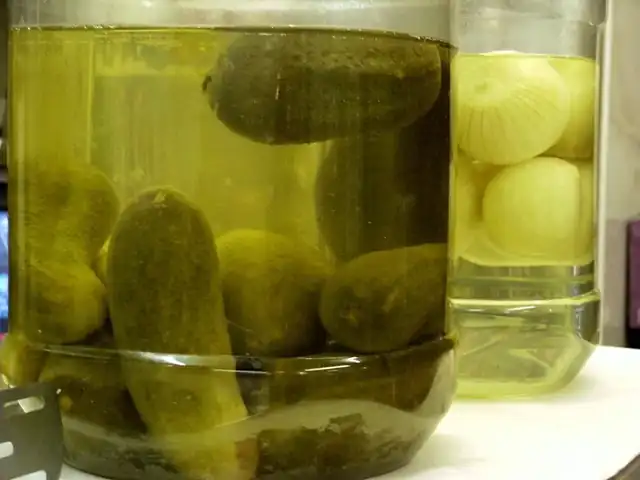
Pickling is the process of preserving or extending the shelf life of food by either anaerobic fermentation in brine or immersion in vinegar. The pickling procedure typically affects the food's texture and flavor. The resulting food is called a pickle, or, if named, the name is prefaced with the word "pickled". Foods that are pickled include vegetables, fruits, mushrooms, meats, fish, dairy and eggs.
Pickling solutions are typically highly acidic, with a pH of 4.6 or lower, and high in salt, preventing enzymes from working and micro-organisms from multiplying. Pickling can preserve perishable foods for months, or in some cases years. Antimicrobial herbs and spices, such as mustard seed, garlic, cinnamon or cloves, are often added. If the food contains sufficient moisture, a pickling brine may be produced simply by adding dry salt. For example, sour cabbage, sauerkraut, and kimchi are produced by salting the vegetables to draw out excess water. Natural fermentation at room temperature, by lactic acid bacteria, produces the required acidity. Other pickles are made by placing vegetables in vinegar. Unlike the canning process, pickling (which includes fermentation) does not require that the food be completely sterile.
The acidity or salinity of the solution, the temperature of fermentation, and the exclusion of oxygen determine which microorganisms dominate, and determine the flavor of the end product.
Age of Exploration
Pickling was used as a way to preserve food for out-of-season use and for long journeys, especially by sea. Salt pork and salt beef were common staples for sailors before the days of steam engines. Although the process was invented to preserve foods, pickles are also made and eaten because people enjoy the resulting flavors. Pickling may also improve the nutritional value of food by introducing B vitamins produced by bacteria.
Western Asia
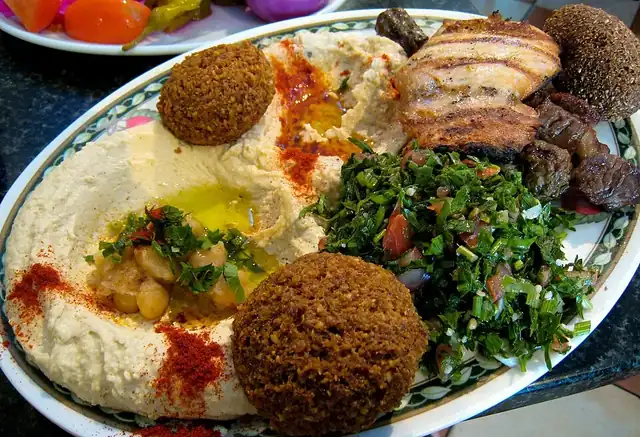
In Iran, Armenia, Turkey, Arab countries, Northern Africa, the Balkans, and some other countries in West Asia, pickles that are called torshi, or mekhallel are a pickled mix of cucumbers, and turnips, onions, carrots, olives or other regional vegetables. Toursi is a traditional appetizer (meze) to go with arak, rakı, ouzo, oghi, tsipouro, and rakia. In some regions, notably in Turkey (turşu suyu), the pickle juice or torshi water is a popular beverage. In 2021, Turkey's pickle exports reached the level of $300 million.
Iran has hundreds of types of torshi (تورشی), according to regional customs and different events. In some families, no meal is considered complete without a bowl of torshi on the table.
South Asia
South Asia has a large variety of pickles (known as achar (अचार, اچار) in Nepali, Assamese, Bengali, Hindi (अचार), Punjabi, Gujarati, Urdu (اچار) uppinakaayi in Kannada, lonacha (लोणचं) in Marathi, uppilittathu or achar in Malayalam, oorukai in Tamil, pacchadi (పచ్చడి) or ooragaya (ఊరగాయ) in Telugu, which are mainly made from varieties of mango, lemon, lime, gongura (a sour leafy shrub), tamarind, Indian gooseberry (amla), and chilli. Vegetables such as eggplant, carrots, cauliflower, tomato, bitter gourd, green tamarind, ginger, garlic, onion, and citron are also occasionally used. These fruits and vegetables are mixed with ingredients such as salt, spices, and vegetable oils. The pickling process is completed by placing filled jars in the sun to mature.
In Pakistan, pickles are known locally as achaar (in Urdu اچار) and come in a variety of flavours. A popular item is the traditional mixed Hyderabadi pickle, prepared from an assortment of fruits (most notably mangoes) and vegetables blended with selected spices. Although the origin of the word is ambiguous, the word āchār is widely considered to be of Persian origin. Āchār in Persian is defined as 'powdered or salted meats, pickles, or fruits, preserved in salt, vinegar, honey, sugar or syrup.'
In Sri Lanka, a date and shallot pickle, achcharu, is traditionally prepared from carrots, chilli powder, shallots and ground dates mixed with garlic, crushed fresh ginger, green chilis, mustard seeds and vinegar, and left to sit in a clay pot.
Southeast Asia
Singapore, Indonesian and Malaysian pickles, called acar are typically made out of cucumber, carrot, bird's eye chilies, and shallots, these items being seasoned with vinegar, sugar and salt. Fruits, such as papaya and pineapple, are also sometimes pickled. In Malaysia, it's common for pickles to be made in brine (usually made with sugar or starchy water to provide the best environment for fermentation). These pickles, known locally as jeruk, are made from unripe mango, papaya, pineapple and lime. Eaten with a meal, or on its own as a snack, jeruk is especially popular among children.
In the Philippines, pickling is a common method of preserving food, with many commonly eaten foods pickled, traditionally within large earthen jars. The process is known as buro or binuro. Pickling was a common method of preserving a large variety of foods such as fish throughout the archipelago before the advent of refrigeration, but its popularity is now confined to vegetables and fruits. Atchara is primarily made out of julienned green papaya, carrots, and shallots, seasoned with cloves of garlic and vinegar; but could include ginger, bell peppers, white radishes, cucumbers or bamboo shoots. Pickled unripe mangoes or burong mangga, unripe tomatoes, guavas, jicama, bitter gourd and other fruit and vegetables still retain their appeal.
East Asia
A wide variety of foods are pickled throughout East Asia. The pickles are often sweet, salty, and/or spicy and preserved in sweetened solutions or oil.
China is home to first documented origins of fermented salt pickles, based upon a poem written around 7th century BCE. Pickling then spread across Asia, concerning a large variety of vegetables, including radish, baicai (Chinese cabbage, notably suan cai, pao cai, and Tianjin preserved vegetable), zha cai, chili pepper (e.g. duo jiao), and cucumbers, among many others.
Central and Eastern Europe
In Hungary, traditionally main courses usually include some kind of pickles (savanyúság), but pickles are also commonly consumed at other times of the day. The most commonly consumed pickles are sauerkraut (savanyú káposzta), pickled cucumbers and peppers, and csalamádé, but tomatoes, carrots, beetroot, baby corn, onions, garlic, certain squashes and melons, and a few fruits such as plums and apples are also used. Stuffed pickles are specialties, usually made of peppers or melons pickled after being stuffed with a cabbage filling. Pickled plum stuffed with garlic is a unique Hungarian type of pickle just like csalamádé and leavened cucumber (kovászos uborka). Csalamádé is a mixed pickle of cabbage, cucumber, paprika, onion, carrot, tomatoes, and bay leaf mixed up with vinegar as the fermenting agent.
More to savor

Germknödel (Plum and Poppy Seed Dumpling)
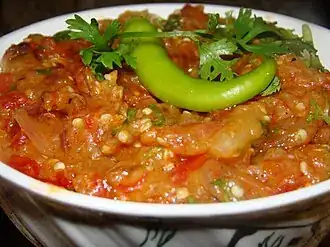
Baingan Bartha (South Indian Eggplant with Coconut and Chili) I
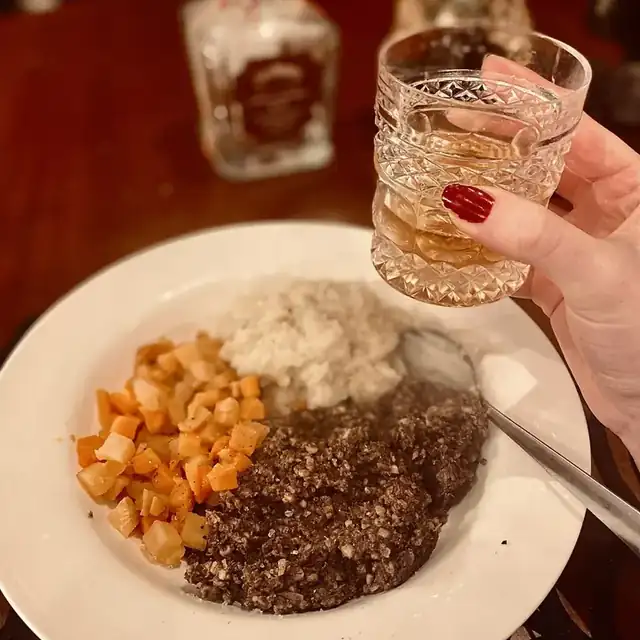
At the Scottish Table: Food, Place and Tradition