This longer reference provides the background behind the topic. Read it alongside the recipe collection when you want to connect an ingredient or food idea with a dish to prepare.
Overview
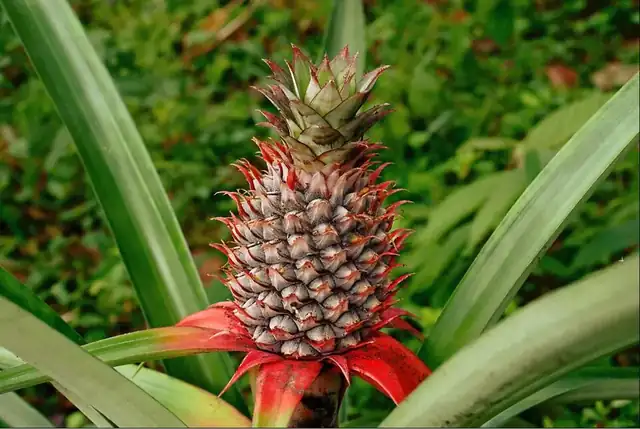
The pineapple (Ananas comosus) is a tropical plant with an edible fruit; it is the most economically significant plant in the family Bromeliaceae.
The pineapple is native to South America, where it has been cultivated for many centuries. The introduction of the pineapple plant to Europe in the 17th century made it a significant cultural icon of luxury. Since the 1820s, pineapple has been commercially grown in greenhouses and many tropical plantations. The fruit, particularly its juice, has diverse uses in cuisines and desserts.
Pineapples grow as a small shrub; the individual flowers of the unpollinated plant fuse to form a multiple fruit. The plant normally propagates from the offset produced at the top of the fruit or from a side shoot, and typically matures within a year.
Description
The pineapple is a herbaceous perennial, which grows to 1 to 1.5 m tall on average, although sometimes it can be taller. The plant has a short, stocky stem with tough, waxy leaves. When creating its fruit, it usually produces up to 200 flowers, although some large-fruited cultivars can exceed this. Once it flowers, the individual fruits of the flowers join together to create a multiple fruit. After the first fruit is produced, side shoots (called 'suckers' by commercial growers) are produced in the leaf axils of the main stem. These suckers may be removed for propagation, or left to produce additional fruits on the original plant. Commercially, suckers that appear around the base are cultivated.
It has 30 or more narrow, fleshy, trough-shaped leaves that are 30 to 100 cm long, surrounding a thick stem; the leaves have sharp spines along the margins. In the first year of growth, the axis lengthens and thickens, bearing numerous leaves in close spirals. After 12 to 20 months, the stem grows into a spike-like inflorescence up to 15 cm long with over 100 spirally arranged, trimerous flowers, each subtended by a bract.
In the wild, pineapples are pollinated primarily by hummingbirds. Certain wild pineapples are foraged and pollinated at night by bats. Under cultivation, because seed development diminishes fruit quality, pollination is performed by hand, and seeds are retained only for breeding. In Hawaii, where pineapples were cultivated and canned industrially throughout the 20th century, importation of hummingbirds was prohibited.
Old World introduction
While the pineapple fascinated Europeans as a fruit of colonialism, it was not successfully cultivated in Europe until Pieter de la Court (1664–1739) developed greenhouse horticulture near Leiden. Pineapple plants were distributed from the Netherlands to English gardeners in 1719 and French ones in 1730. In England, the first pineapple was grown at Dorney Court, Dorney in Buckinghamshire, and a huge "pineapple stove" to heat the plants was built at the Chelsea Physic Garden in 1723. In France, King Louis XV was presented with a pineapple that had been grown at Versailles in 1733. In Russia, Peter the Great imported de la Court's method into St. Petersburg in the 1720s; in 1730, twenty pineapple saplings were transported from there to a greenhouse at Empress Anna's new Moscow palace.
Because of the expense of direct import and the enormous cost in equipment and labour required to grow them in a temperate climate, in greenhouses called "pineries", pineapple became a symbol of wealth. They were initially used mainly for display at dinner parties, rather than being eaten, and were used again and again until they began to rot. In the second half of the 18th century, the production of the fruit on British estates became the subject of great rivalry between wealthy aristocrats. John Murray, 4th Earl of Dunmore, built a hothouse on his estate surmounted by a huge stone cupola 14 metres tall in the shape of the fruit; it is known as the Dunmore Pineapple. In architecture, pineapple figures became decorative elements symbolizing hospitality.
Phytochemistry
Pineapple fruits and peels contain diverse phytochemicals, among which are polyphenols, including gallic acid, syringic acid, vanillin, ferulic acid, sinapic acid, coumaric acid, chlorogenic acid, epicatechin, and arbutin.
Present in all parts of the pineapple plant, bromelain is a group of proteolytic enzymes present in stem, fruit, crown, core, and leaves of pineapple.
Having sufficient bromelain content, raw pineapple juice may be useful as a meat marinade and tenderizer. Although pineapple enzymes can interfere with the preparation of some foods or manufactured products, such as gelatin-based desserts or gel capsules, their proteolytic activity responsible for such properties may be degraded during cooking and canning. The quantity of bromelain in a typical serving of pineapple fruit is probably not significant, but specific extraction can yield sufficient quantities for domestic and industrial processing.
Cultivars
Many cultivars are known. The leaves of the commonly grown "Smooth Cayenne" cultivar and its various clones are smooth, and it is the most commonly grown worldwide. Many cultivars have become distributed from its origins in Paraguay and the southern part of Brazil, and later improved stocks were introduced into the Americas, the Azores, Africa, India, Malaysia and Australia. Varieties include:
"Hilo" is a compact, 1.0- to 1.5-kg (2– to 3-lb) Hawaiian variant of smooth cayenne; the fruit is more cylindrical and produces many suckers, but no slips.
Production
In 2024, world production of pineapples was 29 million tonnes, led by Costa Rica, the Philippines, and Indonesia, each producing about 3 million tonnes.
Culinary
The flesh and juice of the pineapple are used in cuisines around the world. In many tropical countries, pineapple is prepared and sold on roadsides as a snack. It is sold whole or in halves with a stick inserted. Whole, cored slices with a cherry in the middle are a common garnish on hams in the West. Chunks of pineapple are used in desserts such as fruit salad, as well as in some savory dishes, including Hawaiian pizza, or as a grilled ring on a hamburger. Traditional dishes that use pineapple include hamonado, afritada, kaeng som pla, and Hawaiian haystack. Crushed pineapple is used in yogurt, jam, sweets, and ice cream.
The juice of the pineapple is served as a beverage, and it is also the main ingredient in cocktails such as piña colada and in the drink tepache.
In the Philippines, a traditional jelly-like dessert called nata de piña has also been produced since the 18th century. It is made by fermenting pineapple juice with the bacteria Komagataeibacter xylinus.
More to savor

Chicken Vindaloo
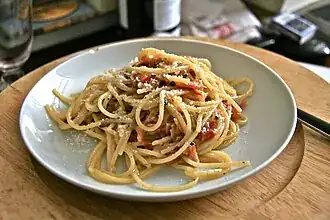
Spaghetti alla Carbonara
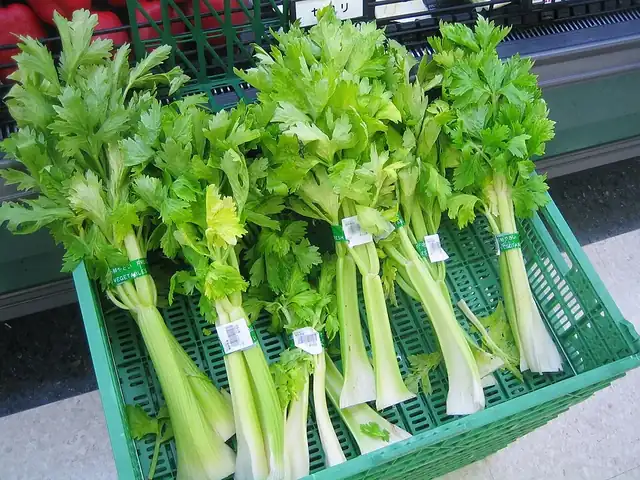
A Closer Look at Celery: From Ingredient to Meal