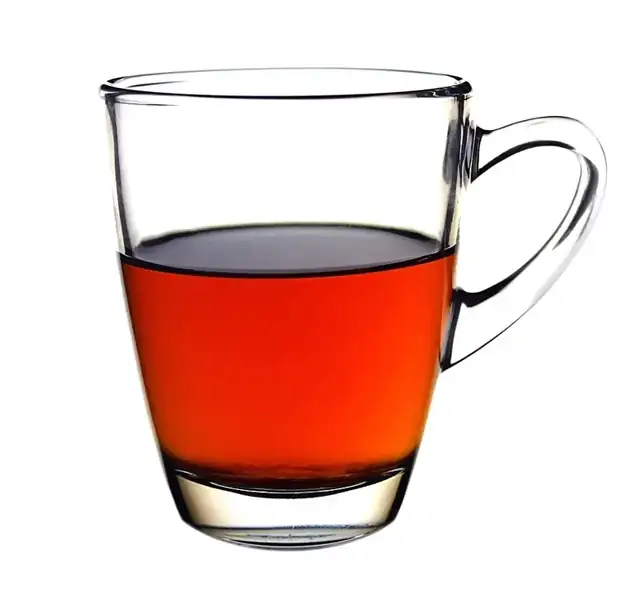
The dish is a starting point for exploring a wider food story. The guide below looks more closely at its background and different forms. When you want to cook, visit the recipe collection for ingredient quantities and step-by-step methods.
Overview
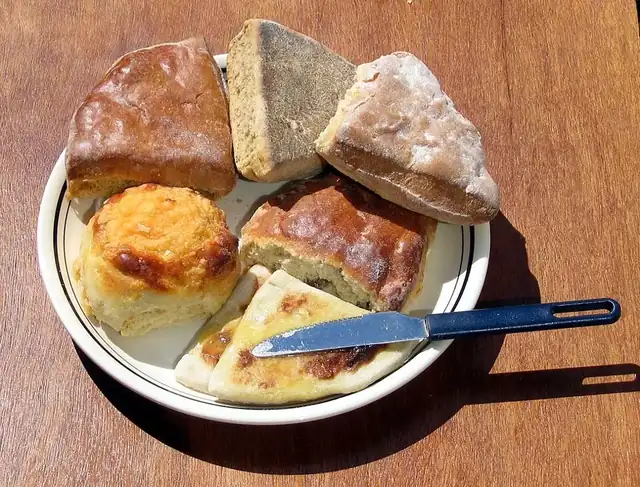
A scone ( or ) is a traditional British and Irish baked good, popular in the United Kingdom, Ireland, Canada, Australia and New Zealand. In the US, scones are a different baked product from the rest of the world, usually sweeter, triangular in shape and served on their own. Scones are usually made of either wheat flour or oatmeal, with baking powder as a leavening agent, and baked on sheet pans, or fried in a frying pan. A scone can be either lightly sweetened or savoury, and can be occasionally glazed with egg wash. The sweetened scone is a basic component of the cream tea, and the afternoon tea. It differs from teacakes and other types of sweet breads that are made with yeast.
Scones were chosen as Ireland's representative for Café Europe during the Austrian presidency of the European Union in 2006.
Lexicology
The pronunciation of the word within the English-speaking world varies, with some pronouncing it (rhymes with "gone"), and others (rhymes with "tone"). The dominant pronunciation differs by area. Pronunciation rhyming with "tone" is strongest in the English Midlands and Ireland, though it seems to have less prominent patches in Cornwall and Essex. The pronunciation rhyming with "gone" is strongest in Northern England and Scotland, although this also seems to be the favoured pronunciation in Southern England, the Home Counties, and East Anglia. Natives of Ireland and the United States mainly use the pronunciation. British dictionaries usually show the form as the preferred pronunciation, while recognising the form.
The difference in pronunciation is alluded to in a poem:
Bread, cake or just a scone
What a scone is, either a bread or a cake, is a matter of debate. The Oxford Companion to Food by Alan Davidson names the scone as a cake, which is also the description used by both the Oxford and Cambridge dictionaries. Food writers and producers have also stated it's neither a bread or a cake, as they are richer than bread, but not as rich as cake, with a texture of its own. Unlike bread, scone dough is not kneaded but lightly worked, while cake is made with a batter. The Food Standards Australia New Zealand agency classify them not as a bread or a cake, but in their own category Scones and Rock Cakes.
Varieties
British scones can be lightly sweetened or savoury. They frequently include raisins, currants, cheese or dates. Though most sweetened scones are made with self raising flour, milk, sugar and a fat (traditionally butter), British celebrity baker Mary Berry incorporates an egg into her scone dough. In Scotland and Ulster, savoury varieties of scone include soda scones, also known as soda farls, sour dough scones known as soor dook scones made with sour milk, and potato scones, normally known as tattie scones in Scotland, which resemble small, thin savoury pancakes made with potato flour. Potato scones, also known as Potato Farls or Potato Cakes, are most commonly served fried in a full Scottish breakfast or an Ulster fry.
The Griddle scone (most dialects of English), which are also known as girdle scone (Scots and Northumbrian English), Drop Scones (Scots), and as a Singin' Hinnie (Northumbrian English) is a variety of scone which is baked on a griddle or frying pan rather than in an oven. In New Zealand, griddle scones are generally cooked as one large disk shaped mass which is divided into wedges for serving, often with golden syrup or jam.
Other varieties include the lemonade scone, which is made with clear lemonade and cream instead of butter and milk. The fruit scone or fruited scone contains currants, sultanas, peel and glacé cherries mixed into the dough.
In some countries one may also encounter savoury varieties of scone that may contain or be topped with combinations of cheese or bacon.
Scones can be presented with various toppings and condiments, typically butter, jam and cream. Strawberries are also sometimes used.
Australia
Pumpkin scones, made by adding mashed cooked pumpkin to the dough mixture, had increased exposure during the period when Florence Bjelke-Petersen was in the public eye. Date scones, which contain chopped dried dates, can also be found in Australia. Another old style of cooking scones, generally in the colder months, is to deep-fry or pan-fry them in dripping or oil; prepared this way, they are called "puftaloons".
Canada
Scones of both British and American varieties are popular across Canada.
In Newfoundland and Labrador, American scones exist there as a very similar baked goods known as a "tea bun". Tea bun recipes often include evaporated milk and may be either sweet or savoury, frequently containing raisins, blueberries, lingonberries, molasses, crowberries, coconut, or salted pork. As the name suggests, tea buns are typically consumed alongside tea and may be topped with butter or various berry jams.
Hungary
In Hungary, a scone very similar in appearance to the British version exists under the name "pogácsa", although this is made with yeast and not baking powder. The name has been adopted by several neighbouring nations' languages. Pogácsa is almost always savoury and served with varied seasonings and toppings, like dill and cheese.
More to savor
Quorn Pitta
Hallaca (Venezuelan Stuffed Corn Dough)
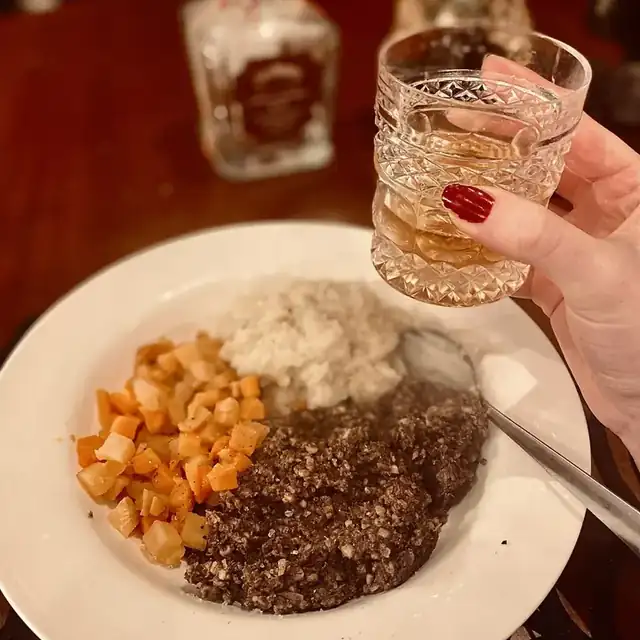
At the Scottish Table: Food, Place and Tradition