The dish is a starting point for exploring a wider food story. The guide below looks more closely at its background and different forms. When you want to cook, visit the recipe collection for ingredient quantities and step-by-step methods.
Overview
Soba ( or , "buckwheat") are Japanese noodles made from buckwheat flour, with varying amounts of wheat flour mixed in.
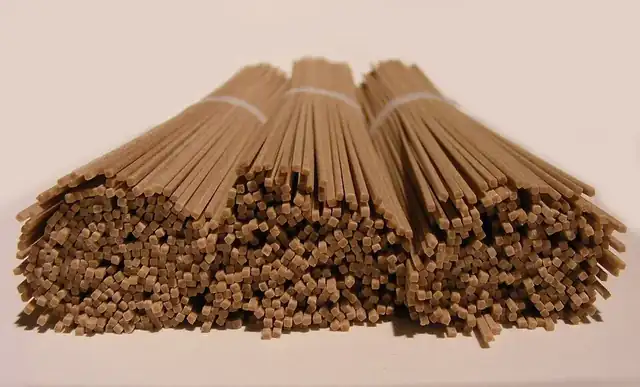
It has an ashen brown color, and a slightly grainy texture. The noodles are served either chilled with a dipping sauce, or hot in a noodle soup. They are used in a wide variety of dishes.
In Japan, soba noodles can be found at fast food venues like standing-up-eating to expensive specialty restaurants. Dried soba noodles are sold in stores, along with men-tsuyu, or instant noodle broth, to make home preparation easy.
The amino acid balance of the protein in buckwheat, and therefore in soba, is well matched to the needs of humans and can complement the amino acid deficiencies of other staples such as rice and wheat (see protein combining). The tradition of eating soba among ordinary people arose in the Edo period.
Background
Traces of buckwheat have been found at Neolithic sites in Japan, dating to 4000–2000 BCE, during the Jōmon period.
Buckwheat cultivation was first recorded in the Shoku Nihongi, in an imperial edict of 722 CE issued by Empress Genshō, instructing farmers to plant buckwheat in response to drought and famine. Another edict of 839 CE declared that buckwheat should be sown in August, and harvested in October, because the crop grows quickly in poor soil. However, buckwheat did not seem to be widely cultivated, and was only sporadically eaten as porridge.
In the 8th century, noodle-type foods of Chinese origin appeared in Japan. Later, the monk Enni (1202–1280) is traditionally credited for introducing noodles to Japan after returning from China.
The first specific reference to buckwheat noodles (soba-kiri) comes from a record of 1574, kept at Jōshō-ji temple, which documents that soba-kiri was served to workers repairing the main hall. More mentions of soba noodles follow throughout the early 1600s.
Edo period
Modern soba originates from the Edo period (1603–1868), centered around the city of Edo (modern Tokyo). The earliest references to soba are associated with Buddhist monasteries and tea ceremonies.
The 1643 cookbook Ryōri Monogatari (料理物語) is the first to contain a recipe for making soba. After the Great Fire of Meireki in 1657, soba shops became increasingly common in Tokyo.
At first, soba was considered a low-class food, but its reputation improved by the 18th century, when it began to be eaten by samurai and other high status peoples.
One estimate states that every city block had one or more restaurants serving soba. These soba establishments, many also serving sake, functioned much like modern cafes where locals would stop for a casual meal. In 1860, a meeting in Tokyo concerning the price of buckwheat was attended by 3,726 shops, indicating the popularity of soba. Soba was also sold from mobile food stalls called yatai.
At the time, much of the city's population was susceptible to beriberi, due to high consumption of white rice, which is low in thiamine. Soba, which is high in thiamine, was regularly eaten to prevent beriberi.
Preparation
Soba is made by slicing dough into thin noodles. Historically, soba was made only from buckwheat flour, and was steamed in baskets, because they were too brittle to boil. Modern soba is usually made from a mix of 80% buckwheat flour, and 20% wheat flour.
Fresh soba, often served at restaurants, are generally cooked immediately after slicing, when the noodles are still moist and pliable. Store bought soba are dried and straight, and come in bundles.
Types
Like many Japanese noodles, soba noodles are often served drained and chilled in the summer, and hot in the winter with a soy-based dashi broth. Extra toppings can be added to both hot and cold soba. Toppings are chosen to reflect the seasons and to balance with other ingredients. Most toppings are added without much cooking, although some are deep-fried. Most of these dishes may also be prepared with udon.
Noodle varieties
Different flavors and types of soba noodles are available. In Japan, buckwheat is produced mainly in Hokkaido. Soba that is made with newly harvested buckwheat is called shin-soba. It is sweeter and more flavorful than regular soba.
Nagano Prefecture is famous for a variety of soba called shinshu soba, because the region's volcanic soil and temperature extremes are suited for growing buckwheat. From the Kurohime and Togakushi highlands in the north to the Kaida highlands in the south, and the prefecture boasts the second-highest production of soba in Japan. Many facilities integrate cultivation, milling and cutting, and provide soba cutting courses for customers, a major leisure activity in Nagano. Only noodles containing 40% or more buckwheat flour can carry the shinshu name.
By ingredients
Cha soba: flavored with green tea powder
Hegi soba: flavored with funori seaweed. Originated in Uonuma, Niigata
Jinenjo soba: flavored with wild yam, Japanese yam or Chinese yam flour
Yomogi soba: flavored with mugwort
Sarashina soba: thin, light-colored soba, made with refined buckwheat
Inaka soba: "country soba", thick soba made with whole buckwheat
Ni-hachi soba: "two-eight soba", soba containing 20% wheat and 80% buckwheat
Towari soba or Juwari soba: 100% buckwheat soba.
Etiquette
Soba is typically eaten with chopsticks, and in Japan, it is considered acceptable to slurp the noodles noisily. This is especially common with hot noodles, as drawing up the noodles quickly into the mouth helps cool them. However, quiet consumption of noodles is no longer uncommon.
More to savor

English Breakfast
Tonkotsu Ramen
Matcha: The Japanese Tea You Drink as a Powder