What we eat is only part of the story of a meal. The setting, the way food is served, and the habits around the table can be just as revealing. The guide below follows the subject in more detail.
In this story
OverviewPopularisationTea-serving establishmentsContemporary significanceAfternoon teaHigh teaOutside BritainOverview
Tea is an umbrella term for several different meals consisting of food sometimes accompanied by tea to drink. The English writer Isabella Beeton, whose books on home economics were widely read in the 19th century, describes meals of various kinds and provides menus for the "old-fashioned tea", the "at-home tea", the "family tea", and the "high tea".
Teatime is the time at which this meal is usually eaten, which is mid-afternoon to early evening. Tea as a meal is associated with the United Kingdom and some Commonwealth countries. Some people in Britain and Australasia refer to their main evening meal as "tea" rather than "dinner" or "supper". The use of "tea" varies by social class. "Tea" can refer to a light meal or a snack. A tea break is the term used for a work break in either the morning or afternoon for a cup of tea or other beverage.
The most common elements of the "afternoon tea" as a meal are the drink itself and baked goods such as cakes, scones and bread and jam, and perhaps sandwiches. These are the pillars of the "traditional afternoon tea" offered by expensive London hotels. Other types of both drink and food may be offered at home.
Popularisation
Anna Russell, the Duchess of Bedford, is commonly cited as the originator of the meal of afternoon tea. Accordingly to the story, at some time in the 1830s or 1840s, the duchess requested a collation of tea and snacks be sent up to her room between the mid-day and evening meals. During this period, it was the custom for the aristocracy to take their evening meal no earlier than 19:30, or 20:00. The duchess, who found herself hungry during the intervening period, is said to have devised afternoon tea as a means to endure the long wait until the evening meal. Later, she turned this personal habit into an opportunity for social gathering.
Tea-serving establishments
Commercial establishments known as teahouses or tearooms which served tea as a meal were once common in the UK, but they have declined in popularity since the Second World War. The first tea room was established at Glasgow in Scotland by tea merchant Stuart Cranston during the 1880s. His sister, Catherine Cranston, later opened a chain of tea rooms, which included the Willow Tearooms, designed by Charles Rennie Mackintosh.
Contemporary significance
The popularity of tea, both as a beverage and as a light meal, declined somewhat in the mid-20th century, but from the beginning of the 21st century it has been experiencing a revival: more and more establishments are returning it to their menus, and the people of Britain and the Commonwealth are showing growing interest in both domestic and public tea services. As in the early 20th century, hotels and restaurants have embraced the trend, and the service often extends beyond dining rooms into lounge areas and common spaces. Guests are willing to pay substantial sums for a modest meal that is easy to prepare in the kitchen and generates income during the lull between lunch and dinner.
Tea establishments and restaurants usually offer patrons a choice of at least a dozen tea varieties, including traditional black teas, herbal infusions, rooibos, and green teas. Food and beverage managers in British hotels design menus emphasising variety in dishes as well as tea types. Some establishments even employ tea sommeliers who create a tea menu including varieties from around the world.
Afternoon tea
Afternoon tea, also called low tea, is a light meal originally eaten between 16:00 and 17:00. It consisted of thinly sliced bread and butter, delicate sandwiches (customarily cucumber sandwiches or egg and cress sandwiches) and usually cakes, such as Battenberg cake or Victoria sponge, and other baked goods. Scones (with clotted cream and jam) would also be served, as they are for cream tea. The sandwiches are usually crustless, cut into small segments, either as triangles or fingers, and pressed thin. Biscuits are not usually served.
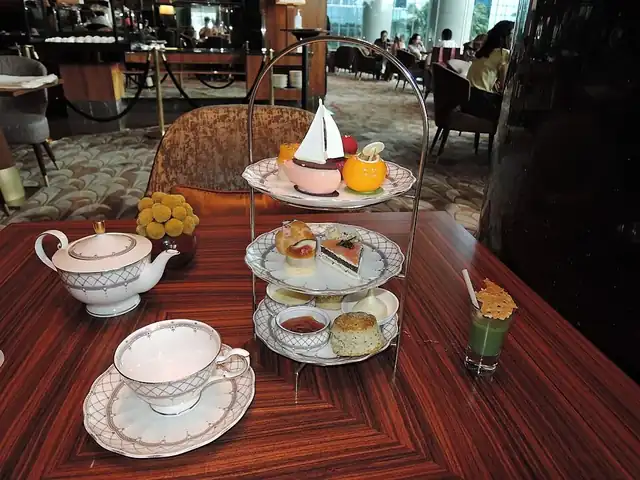
A multi-tiered stand for serving sandwiches, scones, and other baked goods is often placed in the centre of the table, along with napkins. The bottom tier holds sandwiches, the middle tier scones, and the top tier petit fours and sweet cakes. Typically, black tea is served, often Darjeeling, Assam, Earl Grey, or Ceylon tea, served with milk, or lemon if serving Chinese or Russian-style tea.
High tea
High tea is a late afternoon or early evening meal, sometimes associated with the working class, farming, and eating after sports matches. It is typically eaten between 5 pm and 7 pm. Its name originates from the practice of serving the meal at a high table. It was also formerly called "meat-tea". While afternoon tea became popular among the upper and middle classes during the 1860s–1870s, the working class adopted high tea, which was taken around the same time, but much heartier. This separate custom emerged due to a change in working habits. High tea was typically served after a long working day, and consists of a savoury dish (either something hot, or cold cuts of meat such as ham salad), followed by cakes and bread, butter and jam, all accompanied by tea.
In The Cambridge Social History of Britain, 1750–1950, high tea is defined thus:
Outside Britain
Afternoon tea has become a symbol of English culture. Its presence, or absence, in the former colonies of the British Empire reflects the rise and decline of English influence, as well as which traditions were valued and preserved. Britain imported goods and raw materials from its colonies, and exported its cultural traditions to them. By the end of the 19th century, colonial officials had firmly adopted afternoon tea into their routines and continued the tradition at new posts. Afternoon tea became part of the colonial legacy, rooted in many post-colonial cultures, and continues to exist in both modified and unchanged forms.
Afternoon tea became widespread in countries of the former British Empire, including Australia, Hong Kong, India, Canada, Kenya, Malta, and South Africa. The custom is also observed in society and luxury hotels in countries such as Austria, Belgium, Hungary, Greece, Denmark, Italy, Norway, Poland, Finland, Czech Republic, Sweden, and Switzerland. In Russia, the term "five o'clock tea" became a symbol of refined lifestyle and entered the vocabulary of the Russian intelligentsia in the late 19th century. Among lower social strata, afternoon tea with a samovar also became a habit.
More to savor

Chicken Vindaloo
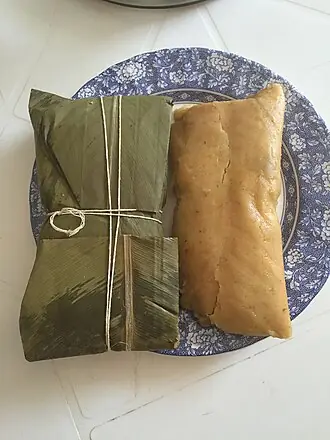
Hallaca (Venezuelan Stuffed Corn Dough)
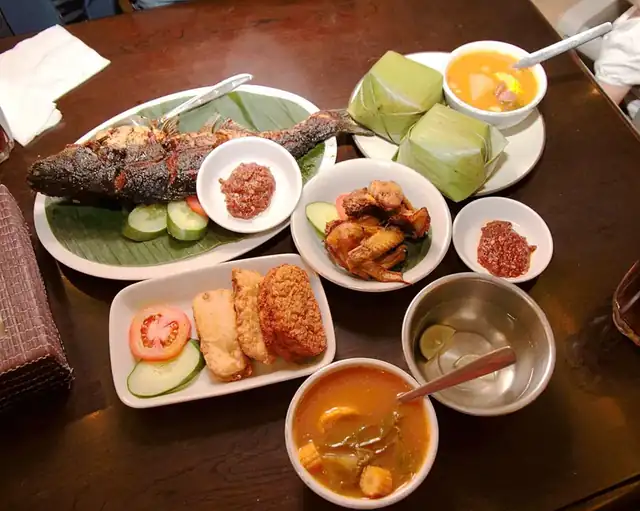
A Taste of Indonesia: A Country of Regional Food Stories