The dish is a starting point for exploring a wider food story. The guide below looks more closely at its background and different forms. When you want to cook, visit the recipe collection for ingredient quantities and step-by-step methods.
In this story
OverviewBatterFryingIngredientsSeafoodVegetablesOthersServing and presentationJapanOutside JapanOverview
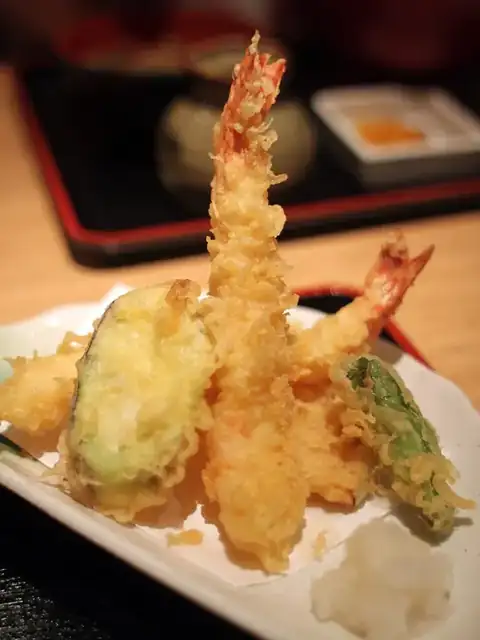
Tempura is a Japanese dish that usually consists of seafood and vegetables that have been coated in a thin batter and deep-fried. Tempura originated in the 16th century, when Portuguese Jesuits brought the Western-style cooking method of coating foods with flour and frying, via Nanban trade.
Batter
A light batter is made of iced water, eggs, and soft wheat flour (cake, pastry or all-purpose flour). Sometimes baking soda or baking powder is added to make the batter light. Using sparkling water in place of plain water has a similar effect. Tempura batter is traditionally mixed in small batches using chopsticks for only a few seconds, leaving lumps in the mixture that, along with the cold batter temperature, result in a unique fluffy and crisp tempura structure when cooked. The batter is often kept cold by adding ice or placing the bowl inside a larger bowl with ice. Overmixing the batter will activate wheat gluten, which causes the flour mixture to become soft and dough-like when fried.
Specially formulated tempura flour is available in supermarkets. This is generally light (low-gluten) flour and occasionally contains leaveners such as baking powder.
Tempura does not use breadcrumbs (panko) in the coating. Deep-fried foods that are coated with breadcrumbs are called furai, Japanese-invented Western-style deep-fried foods, such as tonkatsu or ebi furai (fried prawn).
No seasonings or salt are added to the batter, or the ingredients, except for some recipes recommending rinsing seafood in salt water before preparation.
Frying
Thin slices or strips of vegetables or seafood are dipped in the batter, then briefly deep-fried in hot oil. Vegetable oil or canola oil are most common; however, tempura was traditionally cooked using sesame oil. Many specialty shops still use sesame oil or tea seed oil, and it is thought certain compounds in these oils help to produce light, crispier batter.
The finished fry is pale whiteish, thin and fluffy, yet crunchy.
The bits of batter (known as tenkasu) are scooped out between batches of tempura so they do not burn and leave a bad flavor in the oil. A small mesh scoop (ami jakushi) is used for this purpose. Tenkasu are often reserved as ingredients in other dishes or as a topping.
Ingredients
Various seafood and vegetables are commonly used as the ingredients in traditional tempura.
Seafood
Types of seafood used in tempura include:
prawn – ebi tempura
shrimp
squid
scallop
crab
ayu (sweetfish)
anago (conger eel)
fish
catfish
white fish
cod
haddock
pollock
coley
plaice
skate
ray
Huss (Various fish species including Galeorhinus, Mustelus, Scyliorhinus, Galeus melastomus, Squalus acanthias – also known as spiny dogfish or "rock salmon")
rock salmon (a term covering several species of dogfish and similar fish)
whiting
Japanese whiting – kisu
sea bass
sea perch
Vegetables
Vegetable tempura is called yasai tempura. All-vegetable tempura may be served as a vegetarian dish. Types of vegetables include:
bamboo shoots
bell pepper
broccoli
butternut squash
carrot
maize
eggplant
gobo (burdock, Arctium lappa)
ginger
green beans
kabocha squash
kakiage
Japanese mugwort
mushrooms
maitake mushroom
shiitake mushroom
okra
onion
pumpkin
potato
renkon (lotus root)
seaweed
shishito pepper
shiso leaf
sweet potato
yam
Others
egg
Serving and presentation
Cooked pieces of tempura are either eaten with dipping sauce, salted without sauce, or used to assemble other dishes. Tempura is commonly served with grated daikon and eaten hot immediately after frying. In Japan, it is often found in bowls of soba or udon soup in the form of shrimp, shiso leaf, or fritter. The most common sauce is tentsuyu sauce (roughly three parts dashi, one part mirin, and one part shōyu). Alternatively, skim tempura may be sprinkled with sea salt before eating. Mixtures of powdered green tea and salt or yuzu and salt are also used.
'' is a type of tempura made with mixed vegetable strips, such as onion, carrot, and burdock, and sometimes including shrimp or squid, which are deep fried as small round fritters.
Tempura is also used in combination with other foods. When served over soba (buckwheat noodles), it is called tempura soba or tensoba. Tempura is also served as a donburi dish where tempura shrimp and vegetables are served over steamed rice in a bowl (tendon) and on top of udon soup (tempura udon).
Japan
In Japan, restaurants specializing in tempura are called tenpura-ya. Many restaurants offer tempura as part of a set meal or a bento (lunch box), and it is also a popular ingredient in take-out or convenience store bento boxes. The ingredients and styles of cooking and serving tempura vary greatly throughout the country, with importance placed on using fresh, seasonal ingredients.
Outside Japan
Outside Japan (as well as recently in Japan), there are many nontraditional and fusion uses of tempura. Chefs all over the world include tempura dishes on their menus, and a wide variety of different batters and ingredients are used, including nontraditional broccoli, zucchini, asparagus and chuchu. More unusual ingredients may include nori slices, dry fruit such as bananas, and ice cream (tempura-based fried ice cream). American restaurants are known to serve tempura in the form of various types of meat, particularly chicken and cheeses, usually mozzarella. A variation is to use panko (breadcrumbs), which results in a crisper consistency than tempura batter, although in Japan this would be classified as a furai dish. Tempura (particularly shrimp) is often used as a filling in makizushi.
A more recent variation of tempura sushi has entire pieces of sushi dipped in batter and tempura-fried.
In Bangladesh, the blossoms of pumpkins or marrows are often deep-fried with a gram of rice flour spice mix, creating a Bengali-style tempura known as kumro ful bhaja.
More to savor
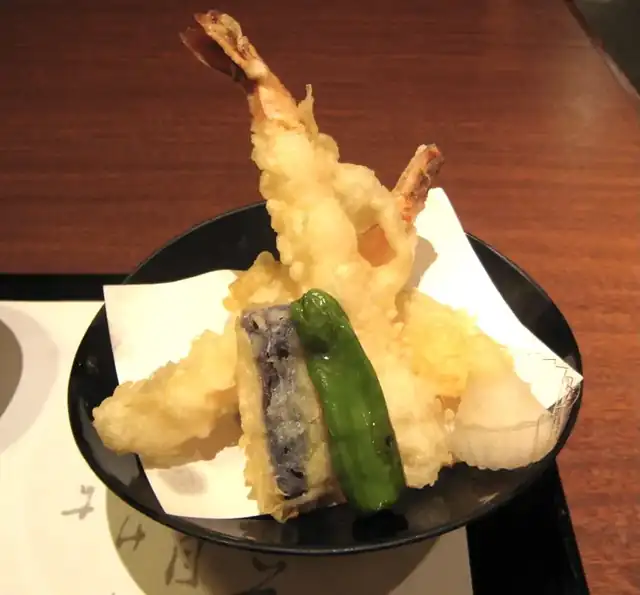
Tempura

English Breakfast
Falafel: A Crisp Bite with a Wider Food Story