The dish is a starting point for exploring a wider food story. The guide below looks more closely at its background and different forms. When you want to cook, visit the recipe collection for ingredient quantities and step-by-step methods.
In this story
OverviewVarietiesVariations based on added ingredientsJeukseok-tteokbokkiGochujang tteokbokkiGungjung tteokbokkiOther variationsGireum and gyeran tteokbokkiOverview
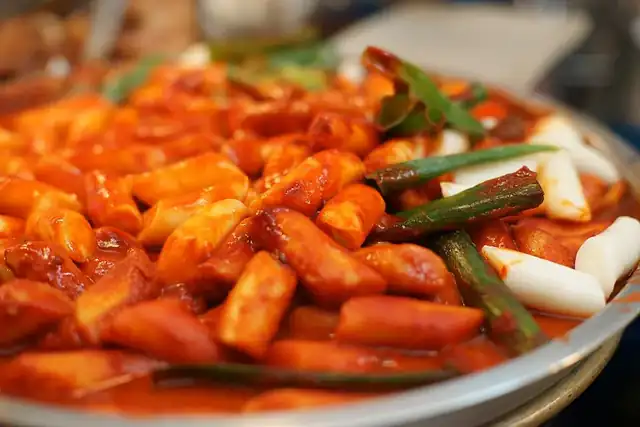
Tteokbokki (떡볶이), topokki or simmered rice cake, is a Korean food made from small-sized garae-tteok (long, white, cylinder-shaped rice cakes) called tteokmyeon or commonly tteokbokki-tteok . It is often paired with eomuk (fish cakes), boiled eggs, and scallions, and seasoned with spicy gochujang (chili paste). Less often, it is served in a non-spicy ganjang-based (soy) sauce, which is sometimes called gungjung-tteokbokki (royal court tteokbokki).
Today, variations include curry tteokbokki, cream sauce tteokbokki, jajang-tteokbokki, seafood tteokbokki, rose tteokbokki, galbi-tteokbokki and so on. Tteokbokki is commonly purchased and eaten at bunsikjip (snack bars) as well as pojangmacha (street stalls). There are also dedicated restaurants for tteokbokki, referred to as jeukseok tteokbokki (impromptu tteokbokki). It is also a popular home dish, as the garae-tteok can be purchased in pre-packaged, semi-dehydrated form.
Varieties
Like other popular Korean dishes, tteokbokki has seen numerous variations and fusions. Boiled eggs and pan-fried mandu (dumplings) were traditionally added to tteokbokki. Ingredients such as seafood, short ribs, instant noodles, and chewy noodles are also common additions to the dish.
Variations based on added ingredients
Haemul-tteokbokki features seafood as its secondary ingredient.
Galbi-tteokbokki features short ribs as its secondary ingredient.
Rabokki ( and jjolbokki are similar variants which add noodles to tteokbokki. Rabokki adds ramyeon (ramen) noodles, and jjolbokki adds chewy jjolmyeon wheat noodles.
Jeukseok-tteokbokki
Jeongol (hot pot)-type tteokbokki is called jeukseok-tteokbokki , and is boiled on a table-top stove during the meal. A variety of additions, such as vegetables, mandu (dumplings), and ramyeon or udong noodles are available at jeukseok-tteokbokki restaurants. As jeukseok-tteokbokki is usually a meal rather than a snack, it is often paired with bokkeum-bap (fried rice).
Gochujang tteokbokki
Piquant, red gochujang-based tteokbokki is one of Korea's most popular snacks. While both soup-style gungmul-tteokbokki and dry gireum-tteokbokki are commonly enjoyed, the former is considered the de facto standard style. In gungmul-tteokbokki, kelp-anchovy stock is often used to bring out the savory flavor. Gochugaru (chili powder) is often added for additional heat and color, while mullyeot (rice syrup) helps with sweetness and consistency. Eomuk (fish cakes), boiled eggs, and diagonally sliced scallions are common additions to the dish. In gireum-tteokbokki, the mixture of gochugaru, soy sauce, sugar or syrup, and sesame oil often replaces gochujang (chili paste). Soft tteok sticks are seasoned with the sauce mixture, then stir-fried in cooking oil with a handful of chopped scallions and served. Tongin Market in Jongno, Seoul is famous for its gireum-tteokbokki.
There are also many variations in gochujang tteokbokki, such as a version that is seasoned with perilla leaf.
Gungjung tteokbokki
Sweet and savory, brown soy sauce–based tteokbokki is often referred to as gungjung-tteokbokki . Its history dates back to a royal court dish before the introduction of chili pepper to the Korean peninsula in the mid-Joseon era (17th and 18th centuries). The earliest record of gungjung tteokbokki is found in an 1800s cookbook called Siuijeonseo. Having a taste similar to japchae (stir-fried glass noodles and vegetables), it was enjoyed by the royals as a banchan and as a snack. Although traditional tteokbokki was made with soup soy sauce, which is the traditional (and at the time, the only) type of soy sauce in pre-modern Korea, sweeter regular soy sauce has taken its place in modern times.
Other traditional ingredients such as sirloin or short ribs, sesame oil, scallions, rock tripe, pine nuts, and toasted and ground sesame seeds are still commonly used in modern gungjung-tteokbokki. Other ingredients such as mung bean sprouts, carrots, onions, dried Korean zucchini, garlic, and shiitake mushrooms are also common. The dish is typically served with egg garnish.
Other variations
Gungmul (soup) tteokbokki are not based on either soy sauce or gochujang and have also gained in popularity. There are some well-known variations.
Curry tteokbokki uses a yellow Korean-style curry base.
Cream sauce tteokbokki uses a base inspired by carbonara. Cream sauce and bacon are used instead of gochujang and fish cakes.
Rosé tteokbokki is a variation of tteokbokki made by adding cream, milk, or cheese to the red sauce, giving it a milder flavor and a light orange color.
Mala tteokbokki is a fusion tteokbokki dish that uses a base inspired by Chinese malatang. This variation may include mala sauce, wide glass noodles, and bok choy in addition to traditional tteokbokki ingredients.
Jajang-tteokbokki features a sauce based on jajang (sweet bean paste).
Cheese tteokbokki is a variant in which the tteokbokki is either topped or stuffed with cheese. It is sold in snack bars and can also easily be made at home. Depending on personal preference, it can be eaten with seasonings such as green tea powder, herb powder, sesame, or parsley.
Outside of Korea, Shanghainese chǎo niángāo (炒年糕) is a stir-fried dish made with tteok-like rice cakes sliced into flat oval shapes, scallions, beef, pork and cabbage.
Gireum and gyeran tteokbokki
Gireum tteokbokki is a variety of tteokbokki that is stir-fried in oil and served with little or no sauce.
Gyeran tteokbokki is another variation that features no sauce. Only tteok (rice cakes), eggs, vegetables, and seasonings (primarily salt) are used. It differs from gireum tteokbokki in that it is not spicy.
More to savor

Chicken Vindaloo

Koko da Kosai (Fermented Corn Porridge and Bean Fritters)
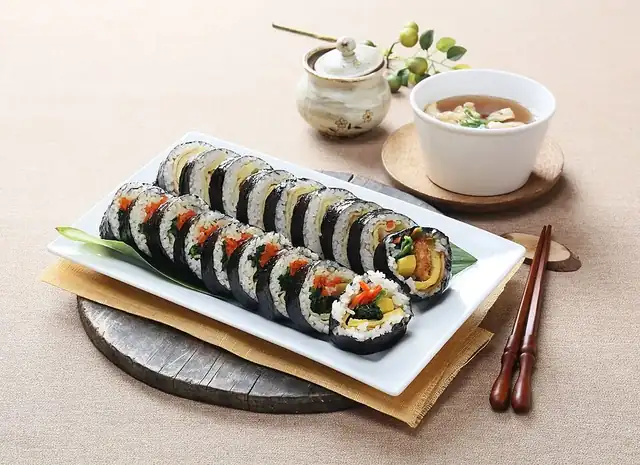
Gimbap: A Korean Meal Rolled into Bite-Sized Pieces