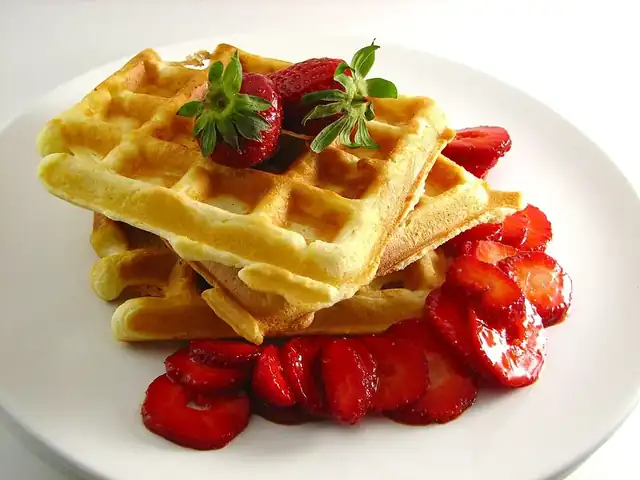
The dish is a starting point for exploring a wider food story. The guide below looks more closely at its background and different forms. When you want to cook, visit the recipe collection for ingredient quantities and step-by-step methods.
Overview
A waffle is a dish made from usually leavened batter or dough that is cooked between two plates that are patterned to give a characteristic size, shape, and surface impression. There are many variations based on the type of waffle iron and recipe used. Waffles are eaten throughout the world, particularly in Belgium, which has over a dozen regional varieties. Waffles may be made fresh or simply heated after having been commercially baked and packaged fresh or frozen.
14th–16th centuries
In the late 14th century, the first known waffle recipe was penned in an anonymous manuscript, Le Ménagier de Paris, written by a husband as a set of instructions to his young wife. While it technically contains four recipes, all are a variation of the first: Beat some eggs in a bowl, season with salt and add wine. Toss in some flour, and mix. Then fill, little by little, two irons at a time with as much of the paste as a slice of cheese is large. Then close the iron and cook both sides. If the dough does not detach easily from the iron, coat it first with a piece of cloth that has been soaked in oil or grease.
The other three variations explain how cheese is to be placed between two layers of batter, grated and mixed into the batter, or left out, along with the eggs. However, this was a waffle / gaufre in name only, as the recipe contained no leavening.
17th–18th centuries
By the 17th century, unsweetened or honey-sweetened waffles and oublies—often made of non-wheat grains—were the type generally accessible to the average citizen. The wheat-based and particularly the sugar-sweetened varieties, while present throughout Europe, were prohibitively expensive for all but the monarchy and bourgeoisie. Even for the Dutch, who controlled much of the mid-century sugar trade, a kilogram of sugar was worth half an ounce of silver (the equivalent of ~$7 for a 5 lb. bag, 01/2016 spot silver prices), while, elsewhere in Europe, it fetched twice the price of opium. Wealthier families' waffles, often known as mestiers, were "smaller, thinner and above all more delicate, being composed of egg yolks, sugar, and the finest of the finest flour, mixed in white wine" and were served "like dessert pastry."
By the dawn of the 18th century, expansion of Caribbean plantations had cut sugar prices in half. Waffle recipes abounded and became decadent in their use of sugar and other rare ingredients. For instance, Menon's gaufre from Nouveau Traité de la Cuisine included a livre of sugar for a demi-livre of flour.
19th–21st centuries
Waffles remained widely popular in Europe for the first half of the 19th century, despite the 1806 British Atlantic naval blockade that greatly inflated the price of sugar. This coincided with the commercial production of beet sugar in continental Europe, which, in a matter of decades, had brought the price down to historical lows. Within the transitional period from cane to beet sugar, Florian Dacher formalized a recipe for the Brussels Waffle, the predecessor to American "Belgian" waffles, recording the recipe in 1842/43. Stroopwafels (Dutch syrup wafels), too, rose to prominence in the Netherlands by the middle of the century. However, by the second half of the 1800s, inexpensive beet sugar became widely available, and a wide range of pastries, candies and chocolates were now accessible to the middle class, as never before; waffles' popularity declined rapidly.
By the early 20th century, waffle recipes became rare in recipe books, and only 29 professional waffle craftsmen, the oublieurs, remained in Paris. Waffles were shifting from a predominantly street-vendor-based product to an increasingly homemade product, aided by the 1918 introduction of the US company General Electric's first electric commercial waffle maker. By the mid-1930s, dry pancake/waffle mix had been marketed by a number of companies, including Aunt Jemima, Bisquick, and a team of three brothers, the Dorsas from San Jose, California, United States. It is the Dorsas who would go on to innovate commercial production of frozen waffles, which they began selling under the name "Eggo" in 1953. Manufacturers are now testing the production of waffles with potato starch, which increase the stability of the waffle and protect them from sticking to the iron.
Brussels
Brussels waffles are prepared with an egg-white-leavened or yeast-leavened batter, traditionally an ale yeast; occasionally both types of leavening are used together. They are lighter, crisper and have larger pockets compared to other European waffle varieties, and are easy to differentiate from Liège waffles by their rectangular sides. In Belgium, most waffles are served warm by street vendors and dusted with confectioner's sugar, though in tourist areas they might be topped with whipped cream, soft fruit or chocolate spread.
Liège
The Liège waffle is a richer, denser, sweeter, and chewier waffle. Native to the greater Wallonia region of Eastern Belgium – and alternately known as gaufres de chasse (hunting waffles) – they are an adaptation of brioche bread dough, featuring chunks of pearl sugar which caramelize on the outside of the waffle when baked. It is the most common type of waffle available in Belgium and prepared in plain, vanilla and cinnamon varieties by street vendors across the nation.
Flemish
Flemish waffles, or Gaufres à la Flamande, are a specialty of northern France and portions of western Belgium. The original recipe, published in 1740 by Louis-Auguste de Bourbon in Le Cuisinier Gascon, is as follows: Take "deux litrons" (1.7 liters or 7 cups) of flour and mix it in a bowl with salt and one ounce of brewer's yeast barm. Moisten it completely with warm milk. Then whisk fifteen egg whites and add that to the mixture, stirring continuously. Incorporate "un livre" (490 grams or 1.1 pounds) of fresh butter, and let the batter rise. Once the batter has risen, take your heated iron, made expressly for these waffles, and wrap some butter in a cloth and rub both sides of the iron with it.
When the iron is completely heated, make your waffles, but do so gently for fear of burning them. Cooked, take them out, put them on a platter, and serve them with both sugar and orange blossom water on top.
More to savor

English Breakfast
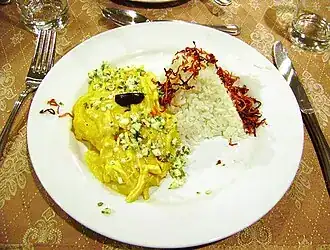
Ají de Gallina (Peruvian Chili Chicken)
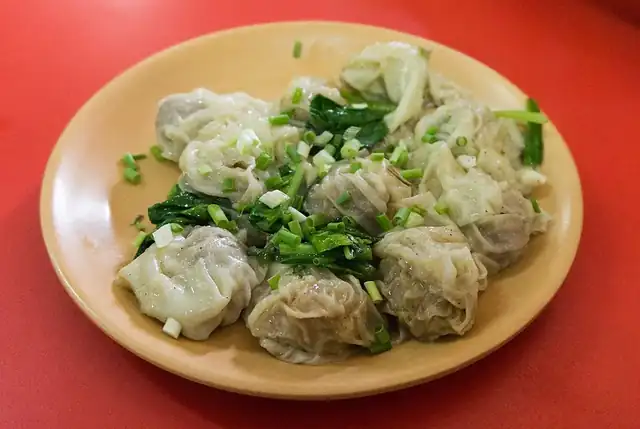
Wontons: A Small Wrapper with Many Ways to Serve