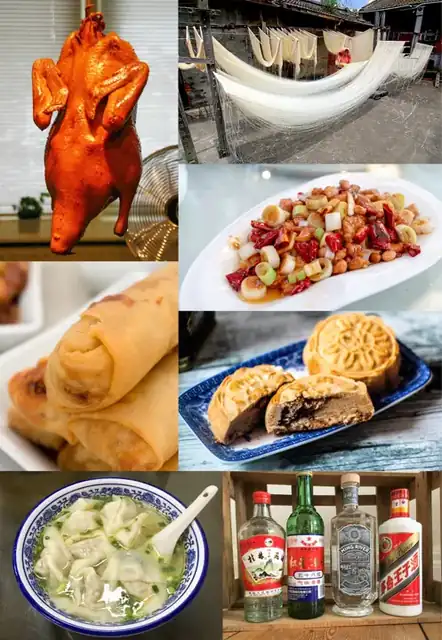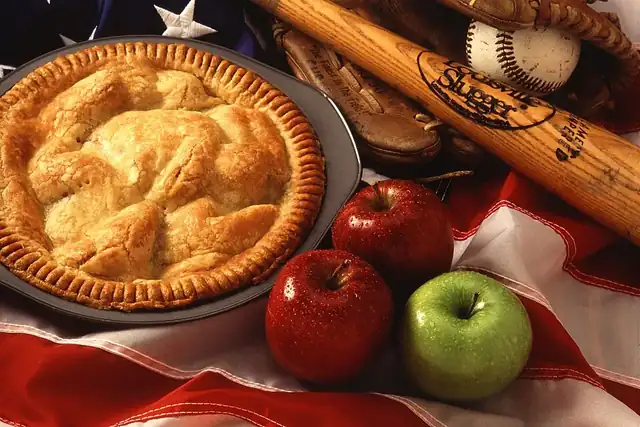
Use the regional background below as a starting point for exploring the food, rather than expecting one dish to represent every household. Food traditions differ within a country and continue to change through travel, migration, and everyday cooking.
In this story
OverviewPost-colonial cuisineRegional cuisinesCajun and Creole cuisine of LouisianaFlorida cuisineCuisine in the WestRegional cuisine chefsOverview
American cuisine encompasses the cooking style and range of dishes prepared in the United States. It primarily derives from a mixing of European cuisine, Native American and Alaskan cuisine, and African American cuisine known as soul food. The Northeast, Midwest, Mid-Atlantic, South, West, Southwest, and insular areas all have distinctive elements, reflecting native food resources, local demographics, and culinary innovation. These developments have also given some states and cities distinctive elements. Hawaiian cuisine reflects substantial influence from its native Polynesian cuisine and from East Asian cuisine, while Louisiana Creole integrates elements from French, West African, and Native American cuisines. Proximity and territorial expansion have also led to substantial influence from Latin American cuisine, including new forms such as Tex-Mex and New Mexican cuisine. Native American cuisines such as Tlingit cuisine have persisted.
Modern mass media and global immigration have brought influences from many other cultures, and some elements of American food culture have become global exports. Some traditions are regional heritages associated with a particular ethnic group, including Cajun and Pennsylvania Dutch. Several states have unique cuisines, such as Minnesotan cuisine and California cuisine. Some immigrant groups have had their cuisines evolve, resulting in a distinct tradition, such as Chinese American, German American, Italian American, Greek American, Jewish American and Mexican American.
American cooking dates back to the traditions of the Native Americans, whose diet included a mix of farmed and hunted food, and varied widely across the continent. The Colonial period created a mix of New World and Old World cookery and brought new crops and livestock. During the early 19th century, cooking was based mostly on what the agrarian population could grow, hunt, or raise on their land. With an increasing influx of immigrants and a move to city life, American food further diversified in the latter part of the 19th century. The 20th century saw a revolution in cooking as new technologies, the World Wars, a scientific understanding of food, and continued immigration combined to create a wide range of new foods. This has allowed for the rich diversity of dishes throughout the country.
The popularity of the automobile in the 20th century also influenced American eating habits in the form of drive-in and drive-through restaurants.
Post-colonial cuisine
During the 18th and 19th centuries, Americans developed many new foods. Some, such as Rocky Mountain oysters, stayed regional; some spread throughout the nation but with little international appeal, such as peanut butter (a core ingredient of the peanut butter and jelly sandwich); and some spread throughout the world, such as popcorn, cola, cornbread, quickbread muffins such as the poppyseed muffin, and brownies.
Regional cuisines
In the present day, the cuisine of the United States is highly regional. Excluding Alaska and Hawaii, the terrain spans 3,000 mi from east to west and more than 1000 mi from north to south.
Cajun and Creole cuisine of Louisiana
In Louisiana, cooking methods have more in common with rustic French cuisines of the 17th and 18th century than anything ever found at the French court in Versailles or the bistros of 19th- and 20th-century Paris; this is especially true of Cajun cuisine.
Cajun French is more closely related to dialects spoken in Northern Maine, New Brunswick, and to a lesser degree Haiti than anything spoken in modern France, and likewise their terminology, methodology, and culture concerning food is much more closely related to the styles of these former French colonies even today.
Unlike other areas of the South, Cajuns were and still are largely Catholics and thus much of what they eat is seasonal; for example, pork is an important component of the Cajun boucherie (a large community event where the hog is butchered, prepared with a fiery spice mix, and eaten snout to tail). Still, it is never consumed in the five weeks of Lent, when such would be forbidden.
Cajun cuisine tends to focus on what is locally available, historically because Cajuns were often poor, illiterate, independent farmers and not plantation owners, but today it is because such is deeply embedded in local culture.
Florida cuisine
Certain portions of the South often have their own distinct culinary subtypes owing to local history and landscape. Floridian cuisine, for example, has a distinct cooking style that features a range of ingredients, especially south of Tampa and in Orlando.
Spain controlled the state until the early 19th century and, beginning in the 1500s, used the southern tip as an outpost to guard the Spanish Main. Florida kept and still maintains ties with the Caribbean Sea, including the Bahamas, Haiti, Cuba, Puerto Rico, the Dominican Republic, and Jamaica.
South of Tampa, there are and have been for a long time many speakers of Caribbean Spanish, Haitian French, Jamaican Patois, and Haitian Creole, and each Caribbean culture has a strong hold on cooking methods and spices in Florida. In turn, each mixes and matches with the foodways of the Seminole tribe and Anglophone settlers. Thus, for almost 200 years, Floridian cooking has had a more tropical flavor than any other Southern state.
Allspice, a spice originally from Jamaica, is an ingredient found in spice mixes in summer barbecues along with ginger, garlic, scotch bonnet peppers, sea salt, and nutmeg; in Floridian cooking this is often a variant of Jamaican jerk spice. Coconuts are grown in the areas surrounding Miami and are shipped daily through its port for the consumption of coconut milk, meat, and water.
Cuisine in the West
Cooking in the American West draws on Native American and Hispanophone cultures, as well as later 19th-century settlers: Texas, for example, has some German influence in its barbecue, which uses sausages.
Another instance can be found in the Northwestern region, which encompasses Oregon, Washington, and Northern California. All of the aforementioned rely on local seafood and a few of their own classics.
In New Mexico, Colorado, Nevada, Arizona, Utah, West Texas, and Southern California, Mexican flavors and influences are extremely common, especially from the Mexican states of Chihuahua, Baja California, and Sonora.
Regional cuisine chefs
Regional chefs are emerging as localized celebrity chefs with growing broader appeal, such as Peter Merriman (Hawaii Regional Cuisine), Roy Choi (Korean American Cuisine), Jerry Traunfeld, Alan Wong (Pacific Rim cuisine), Rick Bayless and Daniela Soto-Innes (traditional Mexican cuisine with modern interpretations), Norman Van Aken (New World Cuisine – fusion Latin, Caribbean, Asian, African and American), and Mark Miller (American Southwest cuisine).
More to savor

Austrian Napkin Dumpling (Serviettenknödel)
Tattie Scones
Beyond Pasta: A Taste of Italy's Regional Tables