A cooking method is easier to appreciate when you connect it with the food on the plate. The background below explains the subject in more detail; for a complete method and ingredient quantities, explore the recipe collection.
In this story
OverviewFoods and techniquesBaking in ancient timesCommercial bakingEquipmentProcessCultural and religious significanceOverview
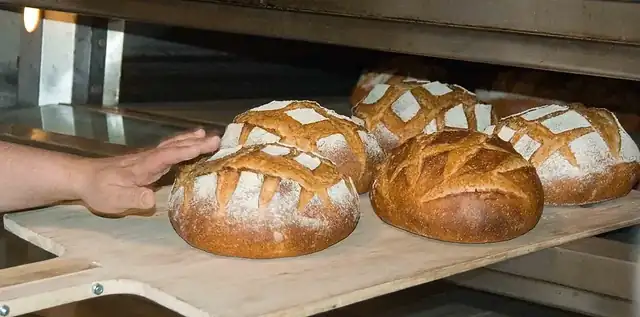
Baking is a method of preparing food that uses dry heat, typically in an oven, hot ashes, or on hot stones. The most commonly baked foods in 2025 were bread and rolls. Heat is gradually transferred from the surface of unbaked goods to their center, typically at elevated temperatures surpassing 300 °F (148 °C). Dry heat cooking imparts a distinctive richness to foods through the processes of caramelization and surface browning. As heat travels through, it transforms batters and doughs into baked goods and more with a firm dry crust and a softer center. Baking can be combined with grilling to produce a hybrid barbecue variant by using both methods simultaneously, or one after the other. Baking is related to barbecuing because the concept of the masonry oven is similar to that of a smoke pit.
Baking has traditionally been performed at home for day-to-day meals and in bakeries and restaurants for local consumption. When production was industrialized, baking was automated by machines in large factories. The art of baking remains a fundamental skill and is important for nutrition, as baked goods, especially bread, are a common and important food, both from an economic and cultural point of view. A person who prepares baked goods as a profession is called a baker.
Foods and techniques
All types of food can be baked, but some require special care and protection from direct heat. Various techniques have been developed to provide this protection. Chefs and other cookbook authors often include chapters dedicated to baking techniques or tips in addition to recipes in their books.
In addition to bread, baking is used to prepare cakes, pastries, pies, tarts, quiches, cookies, scones, crackers, pretzels, and more. These popular items are known collectively as "baked goods," and are often sold at a bakery, which is a store that carries only baked goods, or at markets, grocery stores, farmers' markets or through other venues.
Baking in ancient times
The earliest known form of baking occurred when humans took wild grass grains, soaked them in water, and mashed the mixture into a kind of broth-like paste. The paste was cooked by pouring it onto a flat, hot rock, resulting in a bread-like substance. Later, as humans mastered fire, they roasted the paste on hot embers, making bread-making more convenient as it could be done whenever fire was created. According to Britannica, the Ancient Egyptians invented the first ovens. They also baked bread using yeast, which they had previously been using to brew beer. By 2600 BCE, they were making bread in ways similar in principle to those of today.
The book Bread for the Wilderness states that "Ovens and worktables have been discovered in archaeological digs from Turkey (Hacilar) to Palestine (Jericho (Tell es-Sultan)) and date back to 5600 BC."
Commercial baking
Eventually, the Roman art of baking became known throughout Europe and eventually spread to eastern parts of Asia. By the 13th century in London, commercial trading, including baking, had many regulations attached. In the case of food, they were designed to create a system "so there was little possibility of false measures, adulterated food or shoddy manufactures". There were by that time twenty regulations applying to bakers alone, including that every baker had to have "the impression of his seal" upon bread.
Beginning in the 19th century, alternative leavening agents became more common, such as baking soda. Bakers often baked goods at home and then sold them in the streets. This scene was so common that Rembrandt, among others, painted a pastry chef selling pancakes in the streets of Germany, with children clamoring for a sample. In London, pastry chefs sold their goods from handcarts. This developed into a delivery system of baked goods to households and greatly increased demand as a result. In Paris, the first open-air café of baked goods was developed, and baking became an established art throughout the entire world.
Equipment
Baking needs an enclosed space for heatingtypically in an oven. Formerly, primitive clay ovens were in use. The fuel can be supplied by wood, coal, gas, or electricity. Adding and removing items from an oven may be done by hand with an oven mitt or by a peel, a long handled tool specifically used for that purpose.
Many commercial ovens are equipped with two heating elements: one for baking, using convection and thermal conduction to heat the food, and one for broiling or grilling, heating mainly by radiation. Another piece of equipment still used for baking is the Dutch oven. "Also called a bake kettle, bastable, bread oven, fire pan, bake oven kail pot, tin kitchen, roasting kitchen, doufeu (French: "gentle fire") or feu de compagne (French: "country oven") [it] originally replaced the cooking jack as the latest fireside cooking technology," combining "the convenience of pot-oven and hangover oven."
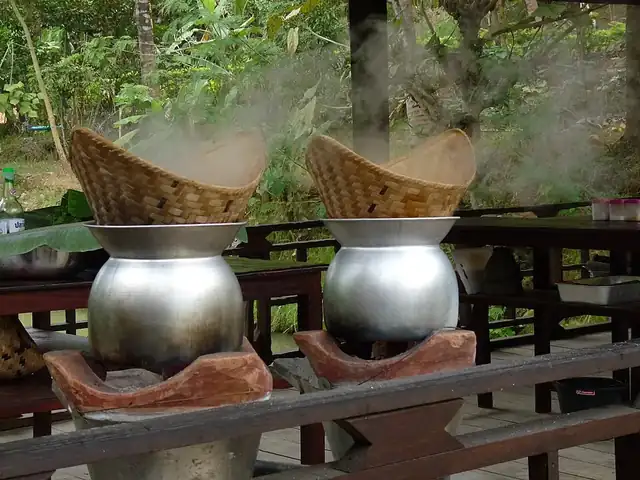
Asian cultures have adopted steam baskets to produce the effect of baking while reducing the amount of fat needed.
Process
Eleven events occur concurrently during baking, some of which (such as starch gelatinization) would not occur at room temperature.
Fats melt
Gases form and expand
Microorganisms die
Sugar dissolves
Egg, milk, and gluten proteins coagulate
Starches gelatinize or solidify
Liquids evaporate
Caramelization and Maillard browning occur on crust
Enzymes are denatured
Changes occur to nutrients
Pectin breaks down
Cultural and religious significance
Baking, especially of bread, holds special significance for many cultures. Baked goods are normally served at all kinds of parties and special attention is given to their quality at formal events. They are also one of the main components of a tea party, including at nursery teas and high teas, a tradition which started in Victorian Britain, reportedly when Anna Russell, Duchess of Bedford "grew tired of the sinking feeling which afflicted her every afternoon round 4 o'clock ... In 1840, she plucked up courage and asked for a tray of tea, bread and butter, and cake to be brought to her room. Once she had formed the habit she found she could not break it, so spread it among her friends instead. As the century progressed, afternoon tea became increasingly elaborate."
The Benedictine Sisters of the Benedictine Monastery of Caltanissetta baked a pastry called Crocetta of Caltanissetta (Cross of Caltanissetta). They used to be prepared for the Holy Crucifix festivity. The monastery was situated next to the Church of the Holy Cross, from which these sweet pastries take the name.
More to savor
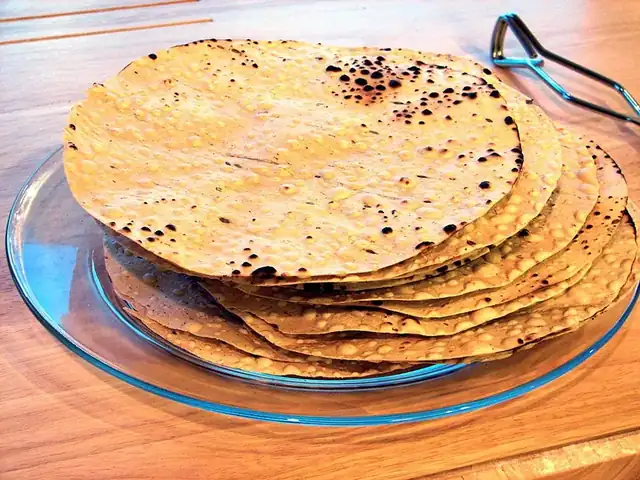
Papadam (Black Gram Flatbread)
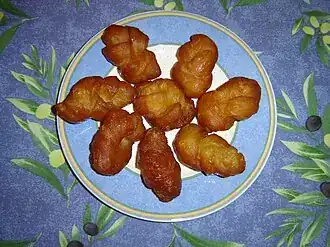
Koeksisters (Fried Braided Pastry in Syrup)
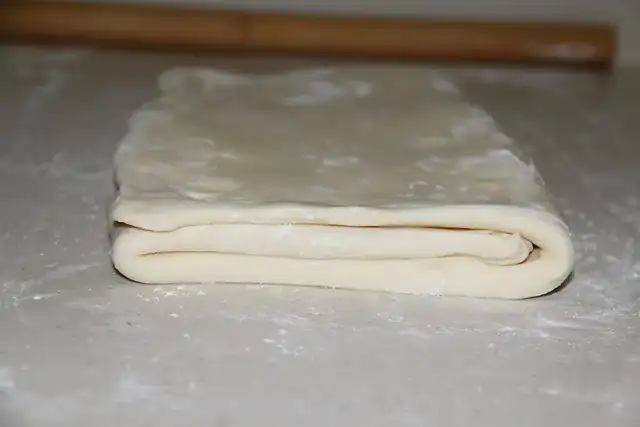
Pastry: Where Dough Becomes Something Worth Savoring