A cooking method is easier to appreciate when you connect it with the food on the plate. The background below explains the subject in more detail; for a complete method and ingredient quantities, explore the recipe collection.
Overview
Steaming is a method of cooking using steam. In steaming, the food is fully immersed in steam, with no air present, so that the steam condenses on the food, and then the condensate drips down away from the food. This is often achieved in a food steamer, a kitchen appliance made specifically to cook food with steam, but food can also be steamed in a wok. In the American Southwest, steam pits used for cooking have been found dating back about 5,000 years. Steaming is considered a healthy cooking technique that can be used for many kinds of foods.
Compared to full immersion in boiling water, steaming can be far faster and more energy-efficient because it requires heating much less water and takes advantage of the excellent thermodynamic heat transfer properties of steam.
Method
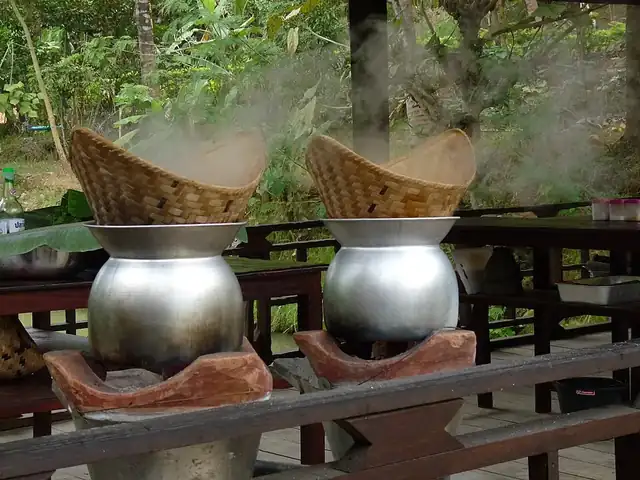
Steaming works by boiling water continuously, causing it to vaporize into steam; the steam excludes the air and carries heat to the nearby food, thus cooking the food. The food is kept separate from the boiling water but has direct contact with the steam, which condenses on the food as it heats it, resulting in a moist texture to the food. Pressure steaming is similar but is done at raised pressure inside a pressure cooker without submerging the food in the liquid. Steaming is also distinct from double boiling, in which food is not directly exposed to steam.
Such cooking is most often done by placing the food in a food steamer, typically a circular container made of metal, wood, or bamboo. The steamer usually has a lid that is placed on top of the container during cooking to allow the steam to cook through the food. When a steamer is unavailable, food can be steamed inside a wok, supported over boiling water in the bottom of the wok by a metal frame. Some modern home microwave ovens include a structure to cook food with steam vapor produced in a separate water container, providing a similar result to being cooked on a stove. There are also specialized steam ovens available.
Western cooking
In Western cooking, steaming is most often used to cook vegetablesit is rarely used to cook meats. However, steamed clams are prepared by steaming. With Chinese cuisine, vegetables are usually stir fried or blanched and seldom steamed. Seafood and meat dishes are steamed. For example: Steamed whole fish, steamed crab, steamed pork spare ribs, steamed ground pork or beef, steamed chicken and steamed goose.
Rice
Rice can be steamed too, although in Chinese cooking this is simply referred to as "cooking" rather than "steaming". In Thailand steaming is the definition of minimalist cooking. Wheat foods are steamed as well. Examples include buns and Chinese steamed cakes. Similarly, in Mexican and Central American cuisine, tamales are made by steaming a dough made from nixtamalized maize (called masa) in wrappers made from corn husks or banana leaves; the dough can be stuffed or left plain.
Chinese dishes
Steamed meat dishes (except fish and some dim sum) are less common in Chinese restaurants than in traditional home cooking, because meats usually require longer cooking times to steam than to stir fry. Commercially sold frozen foods (such as dim sum) formerly had instructions to reheat by steaming, until the rise in popularity of home microwave ovens, which have considerably shorter cooking times.
Staple foods
Mantou, steamed buns
Wotou, Chinese cornbread
Dim sum
Siu mai, meat dumplings
Har gao, shrimp dumplings
Baozi, filled buns
Lion's head meatballs
Steamed meatballs
Pearl meatballs, pork meatballs covered in sticky rice
Rice
Steamed rice with crab, Fujian cuisine called 蠘飯 (蟳飯)
Fenzhengrou (粉蒸肉): Steamed pork with rice flour
Seafood
Fish: Chinese perch, grouper, Japanese black porgy
Crab: Chinese mitten crab, Shanghai cuisine for the autumn
Soup
Weitang: Steamed pork rib soup, Jiangxi cuisine
Buddha Jumps Over the Wall: Fujian cuisine
Winter Melon Soup: Using a hollowed out and sculpted gourd as a vessel
Qi Guoji Steamed Chicken Soup: Chicken soup cook in a double steamer, Yunnan cuisine
Sweets
Double skin milk, said to be made in the 1850s in Daliang in Foshan, Guangdong
Guilinggao: also known as Turtle Jelly, a jelly-like Chinese medicine, also sold as a dessert
Others
Chinese steamed eggs similar to custard with local variety of ingredients and vessels.
Japanese dishes
In Japan, glutinous rice is steamed to prepare mochi rice cakes. Traditional Japanese sweets or wagashi making involves steaming rice or wheat dough for making mochigashi and manju.
Glutinous rice. Instead of boiling, glutinous rice is steamed to eat. as it is called, receipts with ingredients and vessel chestnuts (kuri okowa) or wild herbs (sansai okowa) are popular.
Red rice: served at festive occasions with azuki bean and color agent added to enhance red color.
Mochi: prepared with steamed rice and kneaded.
Chawanmushi: savory egg custard
Odamaki-mushi: udon in a cup of chawan-mushi. Osaka specialty.
There are recipes where sauce is added to the main ingredients, aiming to control smell or aroma, or keep moisture to the ingredients.
Awayukimushi: egg meringue over fish or seafood and keep moisture as well as retain aroma.
Kaburamushi: grated or shredded turnip covers crabs and fish to keep moisture.
Sakamushi: add sake to steam sea bream and clams which will reduce fishy smell.
Recipes named after the container.
Dobin-mushi: matsutake and fish in a pot together with dashi soup.
Yugama: yuzu citrus is hollowed out into a cup to hold and add zest to the food.
Sea bream milt steamed in yugama
Sweets: steaming is an important process in Japanese sweets making such as manjū, yōkan, uirō, karukan or suama.
Korean dishes
Gyeran-jjim, a custardy dish
More to savor
Apple Crisp I
Soft Sugar Cookies
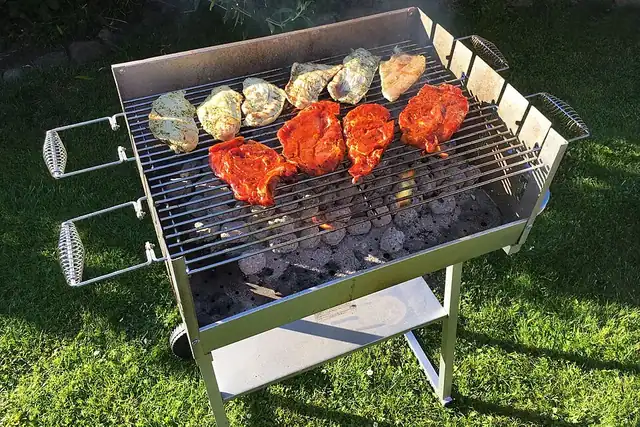
Grilling: The Direct Heat Behind a Shared Meal