This longer reference provides the background behind the topic. Read it alongside the recipe collection when you want to connect an ingredient or food idea with a dish to prepare.
Overview
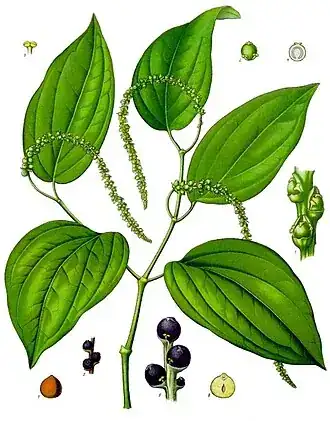
Black pepper (Piper nigrum) is a flowering vine in the family Piperaceae, cultivated for its fruit (the peppercorn), which is usually dried and used as a spice and seasoning. The fruit is a drupe (stonefruit) which is about 5 mm in diameter (fresh and fully mature), dark red, and contains a stone which encloses a single pepper seed. Peppercorns and the ground pepper derived from them may be described simply as pepper, or more precisely as black pepper (cooked and dried unripe fruit), green pepper (dried unripe fruit), or white pepper (ripe fruit seeds).
Black pepper is native to South Asia. Ground, dried, and cooked peppercorns have been used since antiquity, both for flavour and as a traditional medicine. Black pepper is one of the most commonly traded spices in the world. Its spiciness is due to the chemical compound piperine, which is a different kind of spiciness from that of capsaicin characteristic of chilli peppers. It is ubiquitous in the Western world as a seasoning and is often paired with salt and available on dining tables in shakers or mills.
Description
The pepper plant is a perennial woody vine growing up to 4 m in height on supporting trees, poles, or trellises. It is a spreading vine, rooting readily where trailing stems touch the ground. The leaves are alternate, entire, 5 to 10 cm long and 3 to 6 cm across.
The flowers are small, produced on pendulous spikes 4 to 8 cm long at the leaf nodes, the spikes lengthening up to 7 to 15 cm as the fruit matures. A single stem bears 20 to 30 fruiting spikes. The fruit of the black pepper is a drupe and when dried is known as a peppercorn.Within the genus Piper, black pepper is most closely related to other Asian species such as P. caninum.
Varieties
Processed peppercorns come in a variety of colours, any one of which may be used in food preparation, especially common peppercorn sauce.
Black pepper
Black pepper is produced from the still-green, unripe drupe of the pepper plant. The drupes are cooked briefly in hot water, both to clean them and to prepare them for drying. The heat ruptures cell walls in the pepper, accelerating enzymes that cause browning during drying.
The pepper drupes can also be dried in the sun or by machine for several days, during which the pepper skin around the seed shrinks and darkens into a thin, wrinkled black layer containing melanoidin. Once dry, the spice is called black peppercorn. After the peppercorns are dried, pepper powder for culinary uses is obtained by crushing the berries, which may also yield an essential oil by extraction.
White pepper
White pepper consists solely of the seed of the ripe fruit of the pepper plant, with the thin darker-coloured skin (flesh) of the fruit removed. This is usually accomplished by a process known as retting, where fully ripe red pepper berries are soaked in water for about a week so the flesh of the peppercorn softens and decomposes; rubbing then removes what remains of the fruit, and the naked seed is dried. Sometimes the outer layer is removed from the seed through other mechanical, chemical, or biological methods.
Ground white pepper is commonly used in Chinese, Thai, and Portuguese cuisines. It finds occasional use in other cuisines in salads, light-coloured sauces, and mashed potatoes as a substitute for black pepper, because black pepper would visibly stand out. However, white pepper lacks certain compounds present in the outer layer of the drupe, resulting in a different overall flavour.
Production
In 2023, world production of black peppercorns was 855,105 tonnes, led by Vietnam with 30% of the total, and Brazil, Indonesia, and India as secondary producers. Peppercorns are among the most widely traded spices in the world, accounting for 20% of all spice imports.
Flavour
Pepper gets its spicy heat mostly from piperine derived from both the outer fruit and the seed. Black pepper contains between 4.6 and 9.7% piperine by mass, and white pepper slightly more than that. Refined piperine, by weight, is about one percent as hot as the capsaicin found in chilli peppers. The outer fruit layer, left on black pepper, also contains aroma-contributing terpenes, including germacrene (11%), limonene (10%), pinene (10%), alpha-phellandrene (9%), and beta-caryophyllene (7%), which give citrusy, woody, and floral notes. These scents are mostly missing in white pepper, as the fermentation and other processing removes the fruit layer (which also contains some of the spicy piperine). Other flavours also commonly develop in this process, some of which are described as off-flavours when in excess: Primarily 3-methylindole (pig manure-like), 4-methylphenol (horse manure), 3-methylphenol (phenolic), and butyric acid (cheese).
The aroma of pepper is attributed to rotundone (3,4,5,6,7,8-Hexahydro-3α,8α-dimethyl-5α-(1-methylethenyl)azulene-1(2H)-one), a sesquiterpene originally discovered in the tubers of Cyperus rotundus, which can be detected in concentrations of 0.4 nanograms/l in water and in wine: rotundone is also present in marjoram, oregano, rosemary, basil, thyme, and geranium, as well as in some Shiraz wines.Pepper loses flavour and aroma through evaporation, so airtight storage helps preserve its spiciness longer. Pepper can also lose flavour when exposed to light, which can transform piperine into nearly tasteless isochavicine. Once ground, pepper's aromatics can evaporate quickly; most culinary sources recommend grinding whole peppercorns immediately before use for this reason. Handheld pepper mills or grinders, which mechanically grind or crush whole peppercorns, are used for this as an alternative to pepper shakers that dispense ground pepper.
Spice mills, such as pepper mills, were found in European kitchens as early as the 14th century, but the mortar and pestle used earlier for crushing pepper have remained a popular method for centuries, as well.
Enhancing the flavour profile of peppercorns (including piperine and essential oils), prior to processing, has been attempted through the postharvest application of ultraviolet-C light (UV-C).
More to savor

Koko da Kosai (Fermented Corn Porridge and Bean Fritters)
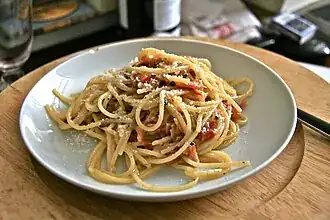
Spaghetti alla Carbonara
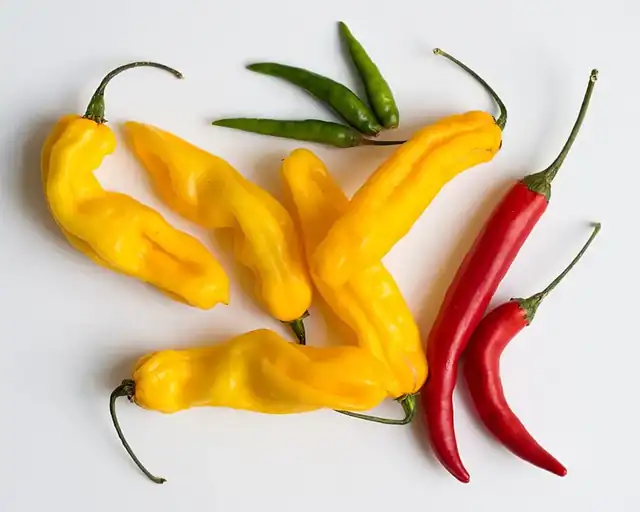
Getting to Know Chili pepper: A Food Lover’s Guide