This longer reference provides the background behind the topic. Read it alongside the recipe collection when you want to connect an ingredient or food idea with a dish to prepare.
In this story
OverviewDescriptionDistribution and habitatSite selection and plantingManures and fertilizersCulinaryBeveragesOverview
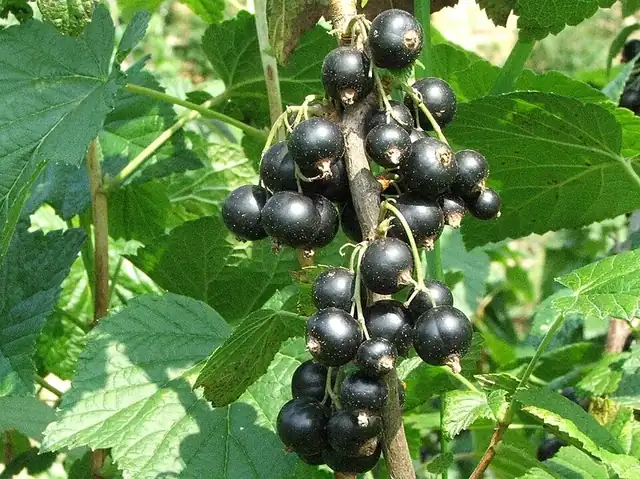
The blackcurrant (Ribes nigrum), black currant or cassis is a deciduous shrub in the family Grossulariaceae grown for its edible berries. It is native to temperate parts of central and northern Europe and northern Asia, where it prefers damp fertile soils. It is widely cultivated both commercially and domestically.
It is winter hardy, but cold weather at flowering time during the spring may reduce the size of the crop. Bunches of small, glossy black fruit develop along the stems in the summer and can be harvested by hand or by machine.
The raw fruit is particularly rich in vitamin C and polyphenols. Blackcurrants can be eaten raw but are usually cooked in various dishes. They are used to make jams, preserves, and syrups and are grown commercially for the juice market. The fruit is also used to make alcoholic beverages and dyes.
Description
Ribes nigrum is a medium-sized shrub, growing to 1.5 by. The leaves are alternate, simple, 3 to 5 cm broad and long with five palmate lobes and a serrated margin. All parts of the plant are strongly aromatic. The flowers are produced in racemes known as "strigs" up to 8 cm long containing 10–20 flowers, each about 8 mm in diameter. Each flower has a hairy calyx with yellow glands, the five lobes of which are longer than the inconspicuous petals. There are five stamens surrounding the stigma and style and two fused carpels. The flowers open in succession from the base of the string and are mostly insect pollinated, but some pollen is distributed by the wind. They are somewhat self-pollinating, but produce more fruit when pollinated by another plant of a different variety.
A pollen grain landing on a stigma will germinate and send a slender pollen tube down the style to the ovule. In warm weather, this takes about 48 hours, but in cold weather, it may take a week, and by that time, the ovule may have passed the stage where it is receptive. If fewer than about 35 ovules are fertilised, the fruit may not be able to develop and will fall prematurely. Frost can damage both unopened and open flowers when the temperature falls below -1.9 °C. The flowers at the base of the strig are more protected by the foliage and are less likely to be damaged.
Distribution and habitat
The blackcurrant is native to northern Europe and Asia.
Site selection and planting
Blackcurrants can grow well on sandy or heavy loams, or forest soils, as long as their nutrient requirements are met. They prefer damp, fertile but not waterlogged ground and are intolerant of drought. Although the bushes are winter hardy, frosts during the flowering period may adversely affect the yield and cold winds may restrict the number of flying insects visiting and pollinating the flowers. A soil pH of about 6 is ideal for blackcurrants and the ground can be limed if the soil is too acidic. Planting is usually done in the autumn or winter to allow the plants to become established before growth starts in the spring, but container-grown stock can be planted at any time of year.
Two-year-old bushes are usually planted but strong one-year-old stock can also be used. Planting certified stock avoids the risk of introducing viruses. On a garden scale the plants can be set at intervals of 1.5 to 1.8 m or they can be set in rows with planting intervals of 1.2 m and row separations of 2.5 m or more. In the UK, young bushes are generally planted deeper than their initial growing level to encourage new stems to grow from the base.
Manures and fertilizers
The blackcurrant requires a number of essential nutrients to thrive; nitrogen provides strong plant growth and stimulates the production of flower sprigs; phosphorus aids growth, the setting of fruit and crop yield; potassium promotes growth of individual shoots and increases the weight of individual fruits; magnesium is a constituent of chlorophyll and helps increase yields through interaction with potassium; calcium is required for cell division and enlargement and is particularly important for young plants and buds.
Culinary
The fruit of blackcurrants when eaten raw has a strong, tart flavour. It can be made into jams and jellies which set readily because of the fruit's high content of pectin and acid. For culinary use, the fruit is usually cooked with sugar to produce a purée, which can then be passed through muslin to separate the juice. The purée can be used to make blackcurrant preserves and be included in cheesecakes, yogurt, ice cream, desserts, sorbets, and many other sweet dishes. The exceptionally strong flavour can be moderated by combining it with other fruits, such as raspberries and strawberries in summer pudding, or apples in crumbles and pies. The juice can be used in syrups and cordials. Blackcurrants are a common ingredient of rødgrød, a popular kissel-like dessert in North German and Danish cuisines.
Blackcurrants are also used in savoury cooking. Their astringency creates added flavour in sauces, meats and other dishes. Blackcurrants are included in some unusual combinations of foods. They can be added to tomato and mint to make a salad. Blackcurrants may accompany roast beef, grilled lamb, duck, seafood and shellfish. Canvasback duck with blackcurrants was a delicacy in nineteenth century New York. They can provide a dipping sauce at barbecues. They can be blended with mayonnaise, and used to invigorate bananas and other tropical fruits. Blackcurrants can be combined with dark chocolate or added to mincemeat in traditional mince pies at Christmas.
Japan imports US$3.6 million of New Zealand blackcurrants for uses as dietary supplements, snacks, functional food products and as quick-frozen (IQF) produce for culinary production as jams, jellies or preserves.
Beverages
The juice forms the basis for various squashes, juice drinks, and smoothies. In Britain, 95% of the blackcurrants grown are used to manufacture Ribena (a brand of fruit juice whose name is derived from Ribes nigrum) and similar fruit syrups and juices. Macerated blackcurrants are also the primary ingredient in the apéritif, crème de cassis, which in turn is added to white wine to produce a Kir or to champagne to make a Kir Royal.
In the UK, a blackcurrant squash may be mixed with beer or alcoholic cider to make drinks including "cider and black", "lager and black", or "snakebite and black".
More to savor

Chicken Vindaloo
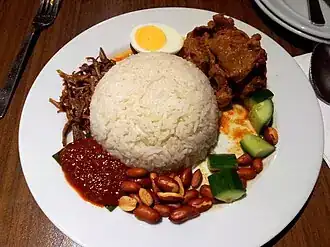
Coconut Rice (Nasi Lemak)
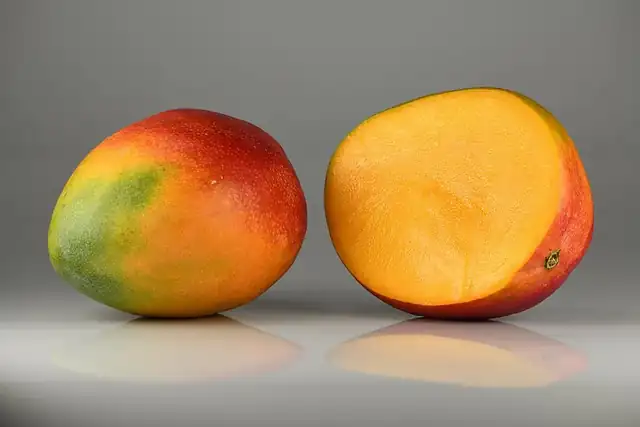
Mango in the Kitchen: Exploring an Everyday Ingredient