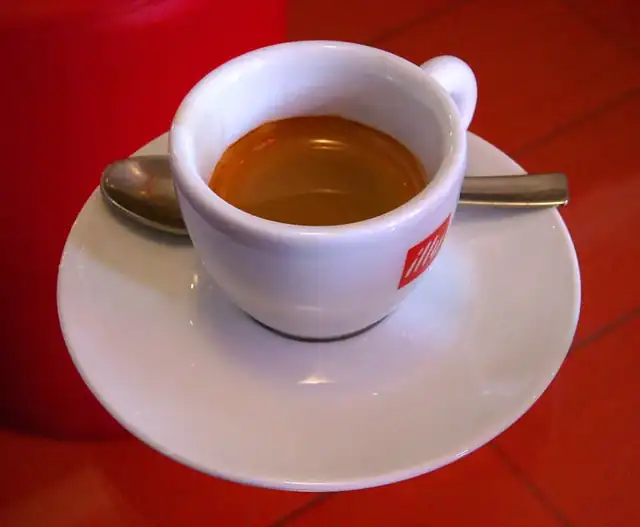
The dish is a starting point for exploring a wider food story. The guide below looks more closely at its background and different forms. When you want to cook, visit the recipe collection for ingredient quantities and step-by-step methods.
Overview
Cappuccino is an espresso-based coffee drink traditionally prepared with steamed milk, including a layer of milk foam.
Variations of the drink involve the use of cream instead of milk, using non-dairy milk substitutes and flavoring with cocoa powder (in Europe and Australasia) or cinnamon (in the United States and South Korea). It is typically smaller in volume than that of a caffè latte, and topped with a thick layer of macrofoam rather than being made with microfoam.
The name comes from the Capuchin friars, referring to the color of their habits, and in this context, referring to the color of the beverage when milk is added in small portions to dark, brewed coffee (today mostly espresso). The physical appearance of a modern cappuccino with espresso crema and steamed milk is a result of a long evolution of the drink.
The Viennese bestowed the name Kapuziner, possibly in the 18th century, on an early version that included whipped cream and spices. Later, the Kapuziner was introduced in northern Italy during the period of Austrian domination, and Italians started to use it for the beverage as well as the friar dress. It is sometimes said to have been served in the coffeehouses of Trieste and other Italian areas of the Austro-Hungarian Empire in the early 20th century, spreading throughout the Kingdom of Italy after World War I. However, the existence in central Italy of a coffee drink mixed with milk named cappuccino is already documented in the 19th century.
Definitions
A cappuccino is a coffee drink that today is typically composed of a single, double, or triple espresso shot and hot milk, with the surface topped with foamed milk.
In a cappuccino, as served in Europe and the United States, the total of espresso and milk/foam make up between approximately 150 and 180 ml. Commercial coffee restaurant chains in the US more often serve the cappuccino as a 360 ml drink or larger. In Italy, a cappuccino consists of 25 ml of espresso; the rest of the cup is filled with equal parts of milk and foam.
A cappuccino is traditionally served in a small cup with a handle (180 ml maximum) with a thick layer of foam, while a caffè latte is espresso and milk (200–300 ml), with the milk steamed to be hot and to form microfoam, and is usually served in a large glass.
Etymology
The coffee beverage has its name not from the hood but from the color of the hooded robes worn by friars and nuns of the Capuchin order.
Drinks called Kapuziner, consisting of coffee with a few drops of cream, showed up in coffee house menus all over the Habsburg monarchy around the late 1700s, so nicknamed due to the vestments of the Capuchin friars, commonly seen in Vienna, sharing the same color as the drink.
The word cappuccino, in its Italian form, appears in Italian writings in the 19th century and is described as "black coffee with a few drops of milk or cream which give it the color the tunic of the Capuchins, from which it takes its name".
Popularity
In Italy and throughout continental Europe, cappuccino is traditionally consumed in the morning, usually as part of breakfast, often with some type of pastry. Italians generally do not drink cappuccino with meals other than breakfast, although they often drink espresso after lunch or dinner. In Italy, cappuccino is usually consumed up to 11:00am, since cappuccinos are milk-based and considered too heavy to drink later in the day. Instead, espresso is usually ordered after a meal due to the belief that the lack of milk aids in digestion. In North America, cappuccinos have become popular concurrent with the boom in the American coffee industry through the late 1990s and early 2000s, especially in the urban Pacific Northwest.
As of 2024, 57% of American adults reported consuming a specialty coffee beverage in the past week, with cappuccino making up 14% of the specialty coffee share. In South Korea, espresso and its variants (cappuccino, latte, and caffè mocha) became popular in 2000.
Cappuccino is traditionally served in 150 - 180 ml cups. By the start of the 21st century, a modified "short-cut" version was being served by fast-food chains in servings up to 600 ml.
Traditional
Although size is what varies most among cappuccinos served in different regions, the traditional way of preparing cappuccino is to add equal proportions of the ingredients: 1/3 espresso, 1/3 steamed milk and 1/3 milk foam. Proper milk texturing is considered essential to the beverage, as steaming incorporates microscopic air bubbles that produce a stable, velvety foam while increasing the milk's natural sweetness through lactose perception. Professional barista standards generally recommend steaming milk to about 55–65 °C (131–149 °F) to preserve sweetness and texture while avoiding scalding.
In some countries, a cappuccino is often topped with a dusting of chocolate or cocoa powder; that is the case, among others, in Argentina, Australia, and Brazil.
Freddo cappuccino
In Greece and Cyprus, a cold cappuccino is widespread known as freddo cappuccino, as opposed to cappuccino freddo. Despite its Italian name, the drink both tastes and is prepared differently from its Italian counterpart, and is uncommon outside of Greece. Freddo cappuccino is topped with a cold milk-based foam known as afrógala (Greek: αφρόγαλα), which is created by blending cold milk using an electric frother. These frothers are commonplace in Greek coffee shops due to their usage during the preparation of frappé coffee. The foam is then added to espresso poured over ice.
Along with the freddo espresso, they were conceived in Greece in 1991 and are in higher demand during summer. Outside Greece and Cyprus, freddo cappuccino or cappuccino freddo is mostly found in coffee shops and delis catering to the Greek expat community. In 2017, Starbucks added cappuccino freddo to branch menus in Europe.
Similar drinks
Other milk and espresso drinks similar to the cappuccino include:
Macchiato (short for caffè macchiato, sometimes espresso macchiato) is a significantly shorter drink, which consists of espresso with only a small amount of milk.
Cortado is a Spanish hybrid: a slightly shorter drink, which consists of espresso mixed with milk in a 1:1 to 1:2 ratio, and is not topped with foam. Café cortado has traditionally been served in a small glass on a saucer, and its character comes from the Spanish preference of coffee beans and roast plus condensed milk replacing fresh dairy milk. Modern coffee shops have started using fresh milk.
More to savor
Apple Crisp I
Loukoumas (Greek Donuts with Honey) II

Hainanese Chicken Rice: A Meal Built from Simple Parts