This longer reference provides the background behind the topic. Read it alongside the recipe collection when you want to connect an ingredient or food idea with a dish to prepare.
In this story
OverviewTypes and distributionUsesFood and beverageCompositionProductionProduction practicesOverview
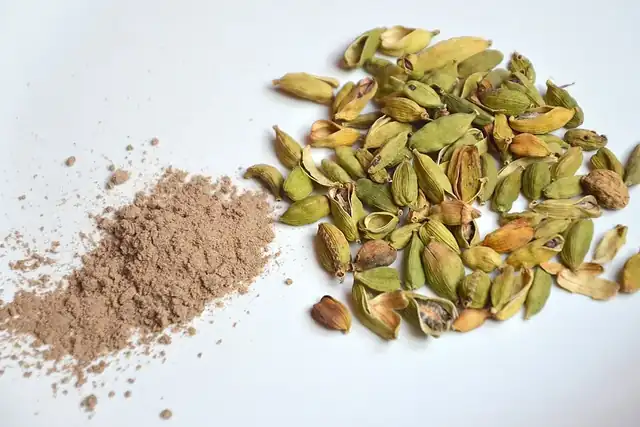
Cardamom , sometimes cardamon or cardamum, is a spice made from the seeds of several plants in the genera Elettaria and Amomum in the family Zingiberaceae. Both genera are native to the Indian subcontinent and Indonesia. They are recognized by their small seed pods: triangular in cross-section and spindle-shaped, with a thin, papery outer shell and small, black seeds; Elettaria pods are light green and smaller, while Amomum pods are dark brown and larger.
Species used for cardamom are native throughout tropical and subtropical Asia. The first references to cardamom are found in Sumer, and in Ayurveda. In the 21st century, it is cultivated mainly in India, Indonesia, and Guatemala.
Types and distribution
The two main types of cardamom are:
True or green cardamom (or white cardamom when bleached) comes from the species Elettaria cardamomum and is distributed from India to Malaysia.
Black cardamom, also known as brown, greater, large, longer, or Nepal cardamom, comes from the species Amomum subulatum and is native to the eastern Himalayas and mostly cultivated in Eastern Nepal, Sikkim, and parts of Darjeeling district in West Bengal of India, and southern Bhutan.
Other related culinary plants known as cardamom:
Siam cardamom, Wurfbainia vera, often referred to as white cardamon.
Ethiopian cardamom, Aframomum corrorima.
Uses
All the above-listed types of cardamom are used as flavorings and/or cooking spices in food and drink. E. cardamomum (green cardamom) is used as a spice, a masticatory, or is smoked.
Food and beverage
Cardamom has a strong taste, with an aromatic, resinous fragrance. Black cardamom has a more smoky – though not bitter – aroma, with a coolness comparable to mint.
Green cardamom is one of the most expensive spices by weight, but little is needed to impart flavor. It is best stored in the pod, as exposed or ground seeds quickly lose their flavor. Grinding the pods and seeds together lowers both the quality and the price. For recipes requiring whole cardamom pods, a generally accepted equivalent is 10 pods equal 1/1/2 teaspoons (7.4 ml) of ground cardamom.
Cardamom is a common ingredient in Indian cooking. It is also often used in baking in the Nordic countries, in particular in Sweden, Norway, and Finland, where it is used in traditional treats such as the Scandinavian Yule bread Julekake, the Swedish Kardemummabullar sweet bun, and Finnish sweet bread pulla. In the Middle East, green cardamom powder is used as a spice for sweet dishes, and as a traditional flavouring in coffee and tea. Cardamom is used to a wide extent in savoury dishes. In some Middle Eastern countries, coffee and cardamom are often ground in a wooden mortar, a mihbaj, and cooked together in a skillet, a mehmas, over wood or gas, to produce mixtures with up to 40% cardamom.
In Asia, both types of cardamom are widely used in both sweet and savoury dishes, particularly in the south. Both are frequent components in such spice mixes as Indian and Nepali masalas, Thai curry pastes, and Yemeni hawaij. Green cardamom is often used in traditional Indian sweets and in masala chai (spiced tea). Both are also often used as a garnish in basmati rice and other dishes. Individual seeds are sometimes chewed and used in much the same way as chewing gum. It is used by confectionery giant Wrigley; its Eclipse Breeze Exotic Mint packaging indicates the product contains "cardamom to neutralize the toughest breath odors". It is also included in aromatic bitters, gin, and herbal teas.
Composition
The essential oil content of cardamom seeds depends on storage conditions and may be as high as 8%. The oil is typically 45% α-terpineol, 27% myrcene, 8% limonene, 6% menthone, 3% β-phellandrene, 2% 1,8-cineol, 2% sabinene and 2% heptane. Other sources report the following contents: 1,8-cineol (20 to 50%), α-terpenylacetate (30%), sabinene, limonene (2 to 14%), and borneol.
In the seeds of round cardamom from Java (Wurfbainia compacta), the content of essential oil is lower (2 to 4%), and the oil contains mainly 1,8-cineol (up to 70%) plus β-pinene (16%); furthermore, α-pinene, α-terpineol and humulene are found.
Production
In 2022, world production of cardamom (included with nutmeg and mace for reporting to the United Nations) was 138,888 tonnes, led by India, Indonesia and Guatemala, which together accounted for 85% of the total (table).
Production practices
According to Nair (2011), in the years when India achieves a good crop, it is still less productive than Guatemala. Other notable producers include Costa Rica, El Salvador, Honduras, Papua New Guinea, Sri Lanka, Tanzania, Thailand, and Vietnam.
Much production of cardamom in India is cultivated on private property or in areas the government leases out to farmers. Traditionally, small plots of land within the forests (called eld-kandies) where the wild or acclimatised plant existed are cleared during February and March. Brushwood is cut and burned, and the roots of powerful weeds are torn up to free the soil. Soon after clearing, cardamom plants spring up. After two years the cardamom plants may have eight-to-ten leaves and reach 1 ft in height. In the third year, they may be 4 ft in height. In the following May or June the ground is again weeded, and by September to November a light crop is obtained.
In the fourth year, weeding again occurs, and if the cardamoms grow less than 6 ft apart a few are transplanted to new positions. The plants bear for three or four years; and historically the life of each plantation was about eight or nine years. In Malabar the seasons run a little later than in Mysore, and – according to some reports – a full crop may be obtained in the third year. Cardamoms grown above 2000 ft elevation are considered to be of higher quality than those grown below that altitude.
Plants may be raised from seed or by division of the rhizome. In about a year, the seedlings reach about 1 ft in length, and are ready for transplantation. The flowering season is April to May, and after swelling in August and September, by the first half of October usually attain the desired degree of ripening. The crop is accordingly gathered in October and November, and in exceptionally moist weather, the harvest protracts into December. At the time of harvesting, the scapes or shoots bearing the clusters of fruits are broken off close to the stems and placed in baskets lined with fresh leaves. The fruits are spread out on carefully prepared floors, sometimes covered with mats, and are then exposed to the sun.
More to savor

Chicken Vindaloo
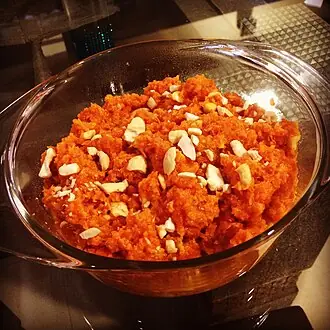
Gajjar Halwa (Carrot Pudding)
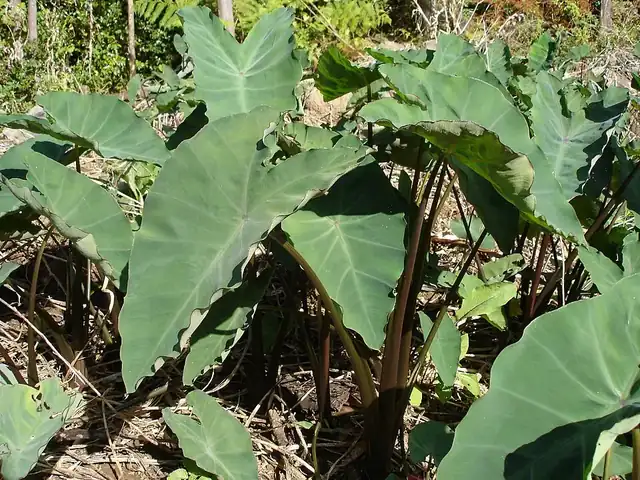
Getting to Know Taro: A Food Lover’s Guide