The dish is a starting point for exploring a wider food story. The guide below looks more closely at its background and different forms. When you want to cook, visit the recipe collection for ingredient quantities and step-by-step methods.
In this story
OverviewAmerican Chinese cuisineAustralian cuisineCanadian Chinese cuisineCaribbean Chinese cuisineIndian Chinese cuisineIndonesian Chinese cuisineOverview
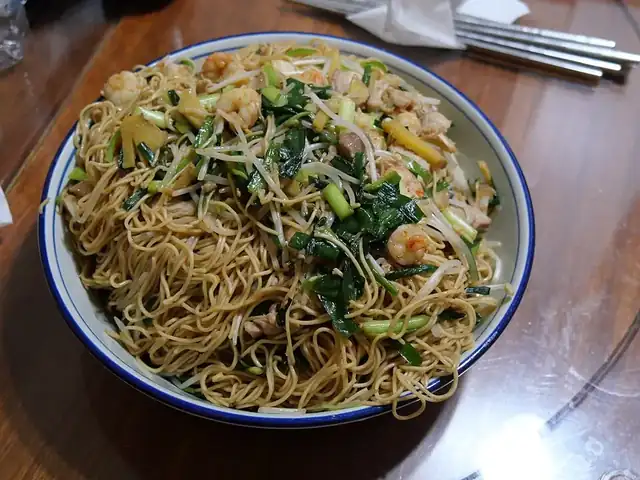
Chow mein ( and ;Mandarin Pinyin: chǎomiàn; Cantonese Yale: cháaumihn) is a dish of Chinese stir-fried noodles with vegetables and sometimes meat or tofu. Over the centuries, variations of chǎomiàn were developed in many regions of China; there are several methods of frying the noodles and a range of toppings can be used. It was introduced in other countries by Chinese immigrants. The dish is popular throughout the Chinese diaspora and appears on the menus of most Chinese restaurants abroad. It is particularly popular in India, Nepal, the UK, and the US.
American Chinese cuisine
Chow mein was introduced from China into the United States by Chinese immigrants who came from the Guangdong provinces in the California gold rush era, bringing their Cantonese style of cooking.
In American Chinese cuisine, it is a stir-fried dish consisting of noodles, meat (chicken being most common but pork, beef, shrimp or tofu sometimes being substituted), onions and celery. It is often served as a specific dish at westernized Chinese restaurants. Vegetarian or vegan chow mein is also common.
In the American market, two types of chow mein include crispy chow mein and steamed chow mein.
The steamed chow mein has a softer texture, while the former is crisper and drier. Crispy chow mein uses fried, flat noodles, while soft chow mein uses long, rounded noodles.
Australian cuisine
Outside of Asian communities, many Australians appear to confuse chow mein with chop suey. The most common Australian version contains minced beef (called ground beef in North America) and curry powder and sometimes served over rice instead of fried noodles. This version has been promoted by the Australian Institute of Sport, on ABC radio, and a popular Australian women's magazine since the mid-1960s and during the 21st century.
A chicken chow mein recipe that was published in a major Melbourne newspaper in 1963 had a recipe list that included a can of condensed cream of mushroom soup, a can of pineapple pieces, and cooked noodles or macaroni that were combined and baked in an oven.
Canadian Chinese cuisine
Canadian westernized Chinese restaurants may offer up to three different types of chow mein, none of which is identical to either of the two types of American chow mein. Cantonese style chow mein contains deep-fried crunchy golden egg noodles, green peppers, pea pods, bok choy, bamboo shoots, water chestnuts, shrimp, Chinese roast pork (char siu), chicken, and beef, and is served in a thick sauce. Plain chow mein is similar to other Western chow meins, but contains far more mung bean sprouts; some regional recipes may substitute bean sprouts for noodles completely.
The Japanese Canadian community also have their own version of chow mein that might include dried seaweed and pickle ginger and could be served in a bun. The Japanese Canadian chow mein is sometimes referred to as "Cumberland Chow Mein" where it first appeared in the Canadian coal mining town of Cumberland, British Columbia, during the nineteenth century. Cumberland was the first site of significant Japanese immigration into Canada.
In Newfoundland, their version of chow mein does not contain any noodles. In place of noodles, cabbage cut in such a way to resemble noodles are used as a substitute. Although no one knows the reason why this change had occurred, it is believed that the island's remoteness in the North Atlantic during its history as an independent self-governing British dominion contributed to the lack of availability of the necessary ingredients from the rest of North America or from Europe.
Caribbean Chinese cuisine
Many West Indian people include chow mein in their cuisine, especially peoples from islands like Trinidad and Tobago and Jamaica, which include a significant ethnic Chinese population; much of the cooking has infused itself into the population in general. As well, in the South American Caribbean countries Guyana and Suriname (known by its Dutch name "tjauw min" or "tjauwmin"). These chow mein dishes are cooked in a similar manner, with green beans, carrots, peas, onions and sometimes other vegetables. Meat used is mostly chicken but sometimes pork or shrimp. The Surinamese version may use a pork sausage as the meat. The main difference is that local spices are added, and the dish is often served with hot Scotch bonnet peppers or pepper sauce.
In Cuba, aside from the foreign-owned tourist hotels which often serve Western-style Chinese food, local Chinese restaurants can be found in Havana that offer a distinct Cuban style.
Indian Chinese cuisine
Chow mein is a popular dish in the Indian Chinese cuisine. In India, it was introduced by the Chinese of Calcutta. Chow mein always refers to soft, boiled noodles. When the noodles are lightly fried, the chow mein is referred to as "Hakka style" which originates from the culinary traditions of the Hakka people in southeastern China. Crispy fried noodles are also often available, but under the name "chop suey" or "American chop suey". All styles always include a medley of vegetables including cabbage, bamboo shoots, pea pods, green peppers, chilli peppers and carrots. Common proteins are chicken and scrambled eggs, but pork and shrimp are also used. In the New Delhi area, chow mein can sometimes include paneer with the mixture of noodles and vegetables.
In Kolkata, the home city of Indian-Chinese cuisine, the dish is sold out of thousands of street carts lining every neighborhood, often spelled as "chowmin" and involves heavy use of green chilli and garlic. The Pakistani version includes carrots, cabbage, peppers, spring onions, chilies, and ginger garlic paste.
Indonesian Chinese cuisine
There are two Indonesian versions of chow mein. One is Mie goreng, which is (sometimes spicy) stir-fried noodle dish with variants of toppings, and the other is a crispy noodle dish topped with sauce that is pretty popular and existed in virtually all Chinese restaurant in Indonesia. It goes popular with the name of Ifumi or Mi Siram, literally means drenched noodle, in Indonesian Chinese cuisine. In Indonesia, ifumi is usually served with thick egg sauce with cauliflower, broccoli, mushroom, kekkian or prawn cake, and chicken. Several varieties does exists such as vegetarian and seafood that contains squid, prawn and fish instead of kekkian. The dish is often confused with Lo mein.
More to savor
Tattie Scones
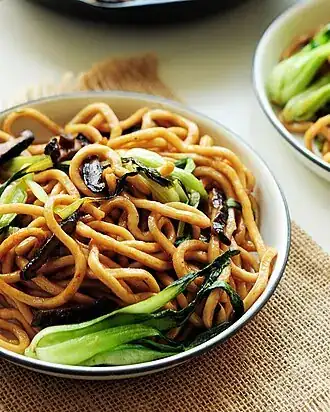
Pan-Fried Shanghai Noodles
Fufu: A Starchy Staple with Many Regional Forms