The dish is a starting point for exploring a wider food story. The guide below looks more closely at its background and different forms. When you want to cook, visit the recipe collection for ingredient quantities and step-by-step methods.
Overview
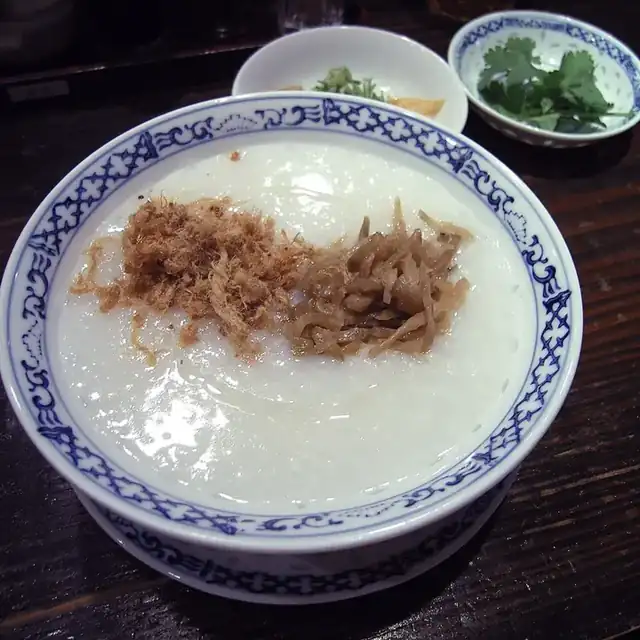
Congee (derived from Tamil கஞ்சி ) is a form of savoury porridge, primarily made by boiling rice in a large amount of water until the rice softens, and commonly flavored with salt or mild broth. Depending on the rice–water ratio, the thickness of congee varies from a Western oatmeal porridge to a gruel. Congee is typically served with side dishes, or it can be topped with meat, fish, and pickled vegetables.
Vivid experiences of eating or delivering thin congee as wartime or famine food often feature in diaries and chronicles. In some cultures, congee is eaten primarily as a breakfast food or late supper; some may also eat it as a substitute for rice at other meals. It is often considered suitable for the sick as a mild, easily digestible food.
China
By porridge ( or in Standard Chinese), Chinese languages across the south usually mean rice porridge, while in the north it may be cornmeal porridge, proso millet porridge, foxtail millet porridge, or sorghum porridge, reflecting the north–south divide of grain production.
In northwest Shanxi and Inner Mongolia, fermented rice and millet porridge known as 酸粥 (Jin ) is popular. Rice and millet are soaked to allow fermentation, then water is drained to obtain porridge. The water is served as a drink, 酸米湯 (Jin ). The porridge is eaten with pickles of turnips, carrots, radish or celery. When stirred-fried, the porridge is called 炒酸粥 . The porridge may also be steamed into solids known as 酸撈飯 . While the traditional grain is proso millet, it is mixed with rice when available. Many folk idioms of sourness derive from this dish.
In Shanghai, Suzhou and nearby, an iconic glutinous rice porridge topped by red bean paste, sweet olive syrup and brown sugar is
赤豆糊糖粥 (Wu ). Street hawking of this porridge is featured in a well-known Wu Chinese nursery rhyme.
Originating in Guangdong, century egg congee ( in Cantonese) has become popular nationwide since the 2000s. It was first tested on the menu of KFC in Shanghai in 2002 and later rolled out to all KFCs in mainland China and Taiwan. Century egg porridge ranked in the top ten in breakfast orders in almost every Chinese major city as far north as Harbin.
Additional common regional ingredients include salted duck eggs, rousong, zhacai, pickled tofu, mung beans and organ meats (especially pig liver). Youtiao is served as a side dish in some Chinese cultures. Congee with multiple ingredients tends to be seen as expensive and festive congee, such as Laba congee.
Taiwan
In Taiwan, congee is known as in Taiwanese Hokkien or in Mandarin. Sweet potato, taro root, or century egg is often added for taste. A famous congee dish in Taiwan is milkfish congee.
Japan
, or often is the name for the type of congee eaten in Japan, which typically uses water to rice ratios of 5:1 or 7:1 and is cooked for about 30 minutes. There are recipes that use a water to rice ratio of up to 20:1.
Kayu may be made with just rice and water, and is often seasoned with salt. Eggs can be beaten into it to thicken it. Toppings may be added to enhance flavour; welsh onion, salmon, roe, ginger, and umeboshi (pickled plums) are among the most common. Miso or chicken stock may be used to flavor the broth. Most Japanese electric rice cookers have a specific setting for cooking congee.
In Japan, porridge – because it is soft and easily digestible – is regarded as a food particularly suitable for serving to the sick and elderly. For similar reasons, it is commonly the first solid food served to Japanese infants, being used to help with the transition from liquids to normally cooked rice, the latter being a major part of the Japanese diet.
A type of kayu referred to as nanakusa-gayu (七草粥, "seven herb porridge") is traditionally eaten on 7 January with special herbs that some believe protect against evils and invite good luck and longevity in the new year. As a simple, light dish, nanakusa-gayu serves as a break from the many heavy dishes eaten over the Japanese New Year.
Kayu is also used in Shinto divination rituals.
Zōsui is a similar dish, which uses already cooked rice, rather than cooking the rice in the soup.
Korea
Juk is a Korean porridge dish made by boiling rice or other grains or legumes, such as beans, sesame, nuts, and pumpkin. Juk is often eaten warm, especially as a morning meal, but is now eaten at any time of the day.
Depending on the ingredients and consistency, juk can be considered as food for recuperation, a delicacy, or famine food. It is also sold commercially by many chain stores in South Korea, and is a common takeout dish.
The most basic form of juk, made from plain rice, is called ssaljuk (쌀죽; 'rice porridge') or huinjuk (흰죽; 'white porridge'). It is usually served with more flavorful side dishes, such as jeotgal (salted seafood) and various types of kimchi.
There are more than forty varieties of juk mentioned in historical documents. Notable varieties include jatjuk made from finely ground pine nuts, jeonbok-juk made with abalones, yulmu-juk made from yulmu (Coix lacryma-jobi var. ma-yuen), and patjuk made from red beans.
Myanmar
In Myanmar, congee is called hsan byoke or hsan pyoke, literally "(uncooked) rice boiled". It is plain porridge, often made with just rice and water, but sometimes with chicken or pork stock and served with a simple garnish of chopped spring onions and crispy fried onions. Paired with garnishes of choice. (Fish sauce, chilli flakes, etc.)
Odisha
Kaanji is a traditional Odia dish. It is a soup-based dish like dal, but tastes a little sour. It is made of rice starch fermented for a few days in an earthen pot. This is considered a healthy dish as many winter vegetables are used as main ingredients. It is seasoned with mustard seeds and turmeric and served hot. Pakhala is a separate dish with certain similarities to the congee.
In the Buddhist Yāgu Sutta of the Aṅguttara Nikāya (AN 5.207), the Buddha recommends eating rice porridge, "yāgu": "There are these five benefits in rice porridge. What five? It stills hunger, dispels thirst, settles wind, cleans out the bladder, and promotes the digestion of the remnants of undigested food. These are the five benefits of rice porridge.".
More to savor
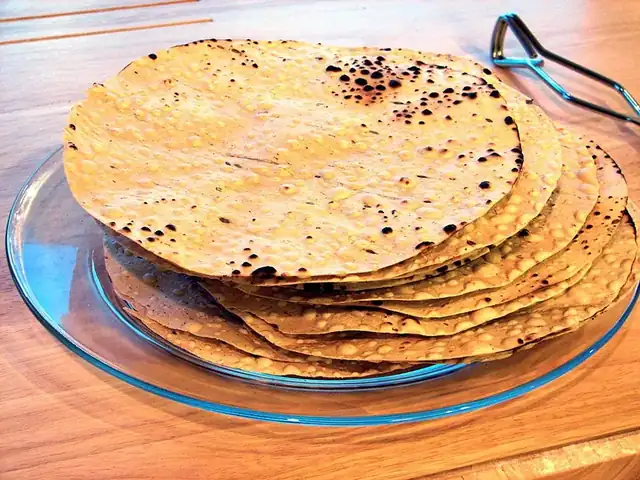
Papadam (Black Gram Flatbread)

Chicken Vindaloo

Omelettes: How Beaten Eggs Become a Meal