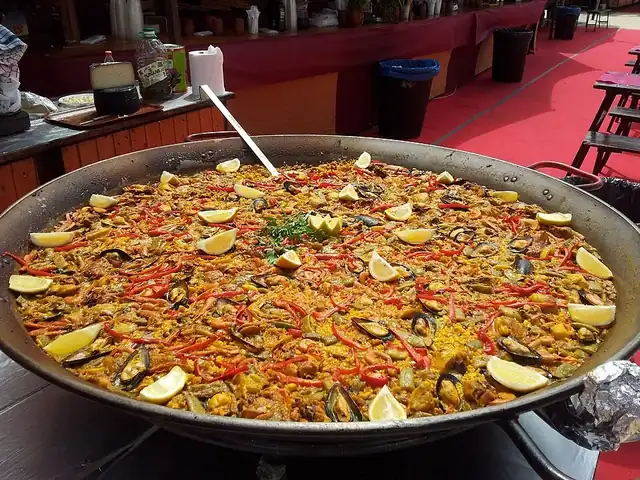
What we eat is only part of the story of a meal. The setting, the way food is served, and the habits around the table can be just as revealing. The guide below follows the subject in more detail.
In this story
OverviewInfluences on cuisineEvolution of cuisineGlobal cuisineRegional diversityAfrican cuisineAsian cuisinesOverview
A cuisine is a style of cooking characterized by distinctive ingredients, techniques, and dishes, and usually associated with a specific culture or geographic region. Regional food preparation techniques, customs and ingredients combine to enable dishes unique to a region. Every cuisine evolves from the resources available in a region, and the climate, agriculture, trade routes, and cultural exchanges result in the distinctive flavors and practices that distinguish one culinary tradition from another. Because of this, cuisine serves as both a practical system for nourishment and a symbolic language through which societies communicate values and heritage. Cuisine is thus also a broad cultural expression that reflects the history, geography, and identity of the people who create it.
Cuisines vary significantly but also share common patterns shaped by migration, colonization, and globalization. Historical interactions, such as the Columbian exchange, the Silk Road, and the spread of empires introduced new ingredients and methods that transformed local foodways. For example, tomatoes, chilies, and potatoes, originally from the Americas, became essential to Italian, Indian, and Irish cuisines respectively, indicating how cuisines are dynamic systems that continually adapt while maintaining ties to their origins.
Influences on cuisine
A cuisine is partly determined by ingredients that are available locally or through trade. Regional ingredients are developed and commonly contribute to a regional or national cuisine, such as Japanese rice in Japanese cuisine.
Religious food laws can also exercise an influence on cuisine, such as Indian cuisine and Hinduism that is mainly lacto-vegetarian (avoiding meat and eggs) due to sacred animal worship. Sikhism in Punjabi cuisine, Buddhism in East Asian cuisine, Christianity in European cuisine, Islam in Middle Eastern cuisine, and Judaism in Jewish and Israeli cuisine all exercise an influence on cuisine.
Some factors that have an influence on a region's cuisine include the area's climate, the trade among different countries, religious or sumptuary laws and culinary culture exchange. For example, a tropical diet may be based more on fruits and vegetables, while a polar diet might rely more on meat and fish.
Evolution of cuisine
Cuisines evolve continually, and new cuisines are created by innovation and cultural interaction. One recent example is fusion cuisine, which combines elements of various culinary traditions while not being categorized per any one cuisine style, and generally refers to the innovations in many contemporary restaurant cuisines since the 1970s. Nouvelle cuisine ('New cuisine') is an approach to cooking and food presentation in French cuisine that was popularized in the 1960s by the food critics Henri Gault, who invented the phrase, and his colleagues André Gayot and Christian Millau in a new restaurant guide, the Gault-Millau, or Le Nouveau Guide.
Molecular cuisine is a modern style of cooking which takes advantage of many technical innovations from the scientific disciplines (molecular cooking). The term was coined in 1999 by the French INRA chemist Hervé This because he wanted to distinguish it from the name Molecular gastronomy (a scientific activity) that was introduced by him and the late Oxford physicist Nicholas Kurti in 1988. It is also named as multi sensory cooking, modernist cuisine, culinary physics and experimental cuisine by some chefs. Besides, international trade brings new foodstuffs including ingredients to existing cuisines and leads to changes.
Global cuisine
A global cuisine is a cuisine that is practiced around the world, and can be categorized according to the common use of major foodstuffs, including grains, produce and cooking fats. Since the later part of the twentieth century, cuisine has become increasingly globalized, with restaurants, media, and travel exposing people to a wide range of culinary traditions. This has led to the rise of fusion cuisine that blends elements from multiple cultures. While globalization can sometimes challenge the authenticity or continuity of local traditions, it also fosters creativity and cross-cultural appreciation. As a result, cuisine remains an evolving aspect of human culture, reflecting both continuity and change in the way people experience food.
Regional diversity
Regional cuisines can vary based on availability and usage of specific ingredients, local cooking traditions and practices, as well as overall cultural differences. Such factors can be more-or-less uniform across wide swaths of territory, or vary intensely within individual regions. For example, in Central and North South America, corn (maize), both fresh and dried, is a staple food, and is used in many different ways. In northern Europe, wheat, rye and fats of animal origin predominate, while in southern Europe olive oil is ubiquitous and rice is more prevalent. In Italy, the cuisine of the north, featuring butter and rice, stands in contrast to that of the south, with its wheat pasta and olive oil. In some parts of Greece, gyros is the staple, while in others this role is filled by bread.
Throughout the Middle East and Mediterranean, common ingredients include lamb, olive oil, lemons, peppers and rice. The vegetarianism practiced in much of India has made pulses (crops harvested solely for the dry seed) such as chickpeas and lentils as important as wheat or rice. From India to Indonesia, the extensive use of spices is characteristic; coconuts and seafood are also used throughout the region both as foodstuffs and as seasonings.
African cuisine
African cuisines use a combination of locally available fruits, cereals and vegetables, as well as milk and meat products. In some parts of the continent, the traditional diet features a preponderance of milk, curd and whey products. In much of tropical Africa, however, cow's milk is rare and cannot be produced locally (owing to various diseases that affect livestock). The continent's diverse demographic makeup is reflected in the many different eating and drinking habits, dishes and preparation techniques of its manifold populations.
Asian cuisines
Due to Asia's vast size and extremely diverse geography and demographics, Asian cuisines are many and varied, and include East Asian cuisine, South Asian cuisine, Southeast Asian cuisine, Central Asian cuisine and West Asian cuisine. Ingredients common to East Asia and Southeast Asia (due to overseas Chinese influence) include rice, ginger, garlic, sesame seeds, chilies, dried onions, soy and tofu, with stir frying, steaming and deep frying being common cooking methods. While rice is common to most regional cuisines in Asia, different varieties are popular in the different regions: Basmati rice is popular in South Asia, Jasmine rice in Southeast Asia, and long-grain rice in China and short-grain rice in Japan and Korea.
More to savor
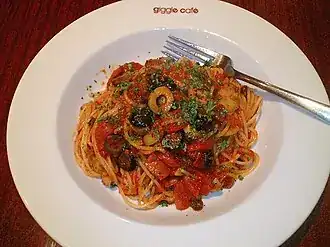
Spaghetti alla Puttanesca

Koko da Kosai (Fermented Corn Porridge and Bean Fritters)
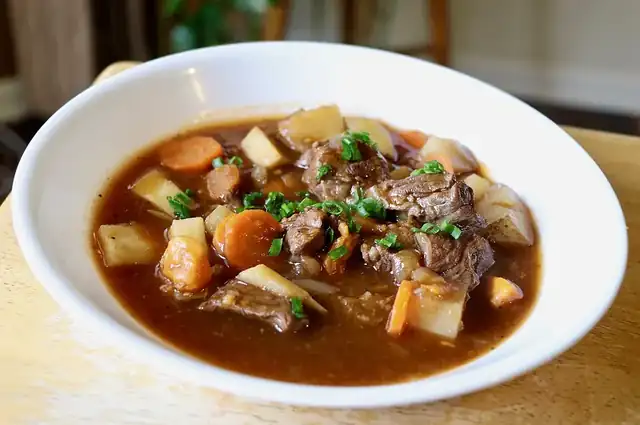
A Taste of Ireland: The Cooking Traditions Behind the Plate