This longer reference provides the background behind the topic. Read it alongside the recipe collection when you want to connect an ingredient or food idea with a dish to prepare.
Overview
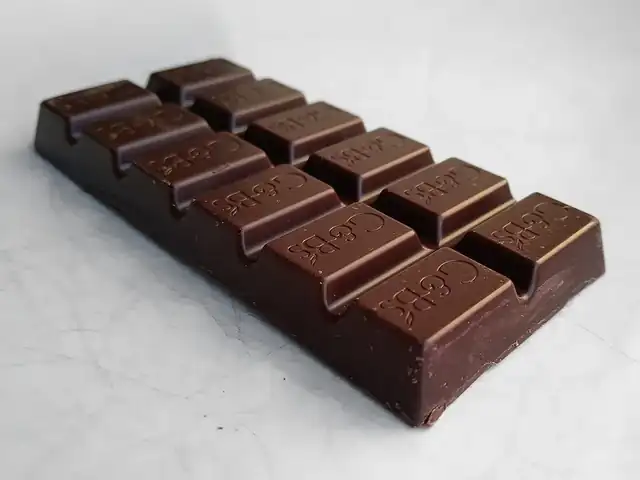
Dark chocolate, also known as plain chocolate and black chocolate, is a form of chocolate made from chocolate liquor, cocoa butter and sugar. It has a higher cocoa percentage than white chocolate and milk chocolate. Dark chocolate is valued for its health benefits, and for its reputation as a sophisticated choice of chocolate. Like milk and white chocolate, dark chocolate is used to make chocolate bars and to coat confectionery.
Dark chocolate gained much of its reputation in the late 20th century, as French chocolatiers worked to establish dark chocolate as preferred over milk chocolate in the French national palate. As this preference was exported to countries such as the United States, associated values of terroir, bean-to-bar chocolate making and gourmet chocolate followed. Because of the high cocoa percentage, dark chocolate can contain particularly high amounts of heavy metals such as lead and cadmium.
Terminology
In Britain, dark is also known as plain chocolate, although the term dark chocolate is now more common. It is known in East Asia as black chocolate, e.g. by the Japanese brand Ghana. Dark chocolates are sometimes categorized into sweet, semi-sweet, and bittersweet chocolate depending on the sugar content. Dark chocolate without added sugar is known as bitter chocolate or unsweetened chocolate.
The term fondant ("melting") dates to the invention of conching in 1879. While the term is no longer widely used, it survives in parts of Europe as a designation for dark chocolate.
Characteristics
Dark chocolate is harder than milk chocolate, because of its particle size and fat and lecithin content. It also has a more bitter and intense flavor than milk chocolate, due to a higher proportion of chocolate liquor (also known as cocoa mass), which contains theobromine, caffeine, l-leucine, and catechin flavonoids. Compared to other types of chocolate, dark relies more on the quality of cocoa beans, and the most highly flavored cocoa butters are reserved for dark chocolates. Dark chocolate can exhibit burnt, chocolate, smoky, nutty and sour flavors, among others. These variations are particularly noticeable among dark chocolates using single-origin cocoa beans. While the appeal of the taste of sugary, milky milk chocolate is often immediately apparent, dark chocolate's more complex flavors can make it more of an acquired taste.
Perceptions of the intensity of flavor are correlated with color: darker chocolates are understood to have a more intense flavor.
Research
While dark chocolate is popularly considered a health food, only limited high-quality clinical research has been conducted to evaluate the effects of compounds found in cocoa on physiological outcomes, such as blood pressure, for which only small (1–2 mmHg) changes resulted from short-term, high consumption of chocolate up to 105 grams and 670 milligrams of flavonols per day. A recent 2024 study though, showed that those who consumed more than five servings a week of dark chocolate had about 20% lower risk of developing type 2 diabetes.
Flavanols found in dark chocolate include the monomers catechin and epicatechin, and (to a lesser extent) the polymeric procyanidins, which remain under laboratory research. Flavanols break down as cocoa beans are fermented, roasted and treated with the Dutch process. To consume enough cocoa flavanols for the presumed effects claimed in some limited studies requires eating at least around 4.75 oz of dark chocolate a day, which also involves intake of significant amounts of sugar and saturated fats. The chocolate industry, and in particular Mars, Inc., has funded research to promote chocolate as a health food. As of 2018, Mars had funded more than 150 studies into cocoa flavanols since the 1980s. That year, they said they would no longer try to imply chocolate is a health food.
Metal content
Chocolate, particularly dark chocolate, may contain appreciable levels of toxic heavy metals, such as cadmium, which may be present naturally in the soil of cocoa plantations, particularly in Latin America. For products containing over 50% cocoa, the European Commission has set a limit for cadmium of 0.8mg/kg, while for chocolate containing between 30%–50% cocoa, the limit is 0.3mg/kg. After these limits came into enforcement in 2019, similar regulations were enforced in other jurisdictions across the world. The state of California recommends a maximum daily intake of 4.1 micrograms of cadmium.
A 2024 report analyzing dark chocolate and cocoa samples in the United States from 2014 to 2022 found that multiple samples exceeded Prop 65 levels for heavy metals: 43% of samples exceeding levels for lead, and 35% exceeding levels for cadmium. However, a 2024 study published in Food Research International found that high metal content in dark chocolate may pose health concerns mainly only for children.
Ingredients
Dark chocolate is mainly a combination of chocolate liquor, cocoa butter and sugar. Milk fats are often added to dark chocolate to delay the formation of chocolate bloom; dark chocolate containing 1–2% milk fat experiences a delay in blooming. Milk fats are also added by some manufacturers to slightly soften dark chocolate and allow for more flavor to be released. During the final step of standardizing, emulsifiers such as lecithin or PGPR are added to improve texture. Some manufacturers add vanilla or vanillin as a flavoring.
Basic dark chocolate (or baking chocolate) can be made using only chocolate liquor, sugar and lecithin, whereas higher-quality sweet dark chocolate typically contains additional cocoa butter to improve fluidity and melting properties. In the context of craft chocolate making, chocolate can also be made using only chocolate liquor and sugar, but with a lower proportion of sugar than in conventional sweet dark chocolate to maintain fluidity; this is referred to as "two-ingredient chocolate". Unsweetened dark chocolate can consist solely of chocolate liquor, although some jurisdictions (Europe for instance) require chocolate to contain a minimum amount of sugar.
Process
The basic process of making dark chocolate involves mixing, refining, conching and standardizing. With its relatively low viscosity, dark chocolate is the easiest chocolate to handle in manufacturing. In the mixing stage, chocolate liquor is combined in a melanger with sugar and some cocoa butter, mixing until a paste is formed. As long as the chocolate liquor has been correctly milled, the refining process for dark chocolate is primarily about grinding down sugar. Refining involves putting chocolate through a refiner machine, which carries the chocolate paste through large steel rollers set to varying widths, enveloping them in fat until the chocolate particles are as small as is desired, and the chocolate paste is a fine powder.
More to savor

Chicken Vindaloo
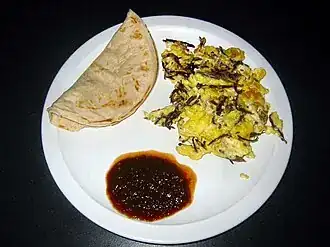
Machacado con Huevo (Eggs with Shredded Beef)
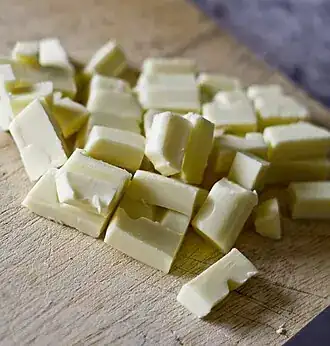
White chocolate at the Table: The Food Behind the Name