A cooking method is easier to appreciate when you connect it with the food on the plate. The background below explains the subject in more detail; for a complete method and ingredient quantities, explore the recipe collection.
Overview
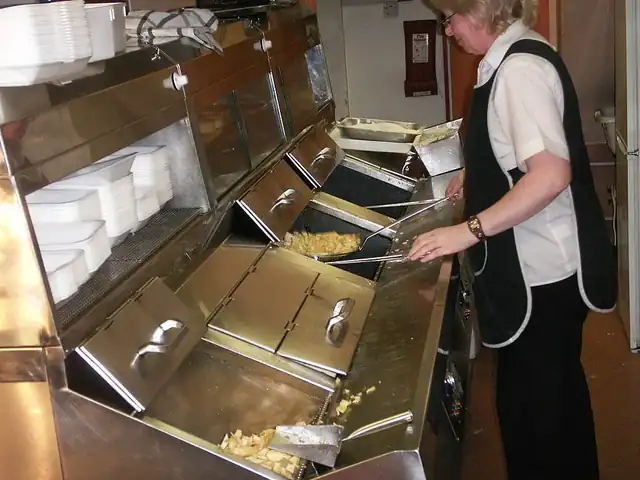
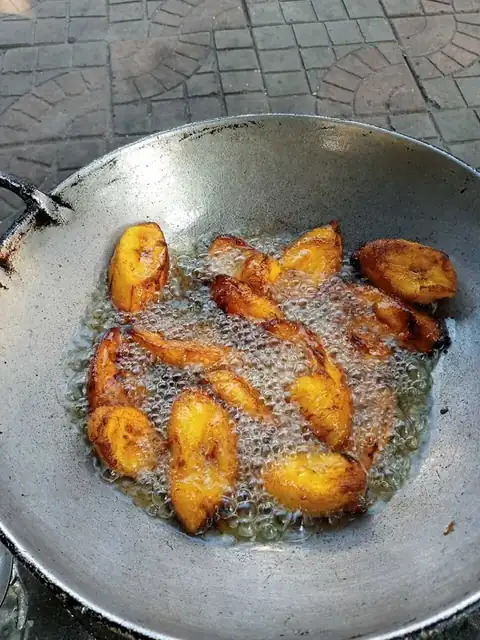
Deep frying (sometimes referred to as deep fat frying) is a cooking method in which food is submerged in hot fat, traditionally lard but today most commonly oil, as opposed to the shallow frying used in conventional frying done in a frying pan. Normally, a deep fryer or chip pan is used for this; industrially, a pressure fryer or vacuum fryer may be used. Deep frying may also be performed using oil that is heated in a pot. Deep frying is classified as a hot-fat cooking method. Typically, deep frying foods cook quickly since oil has a high rate of heat conduction and all sides of the food are cooked simultaneously.
The term "deep frying" and many modern deep-fried foods were not invented until the 19th century, but the practice has been around for millennia. Early records and cookbooks suggest that the practice began in certain European countries before other countries adopted the practice.
Deep frying is popular worldwide, with deep-fried foods accounting for a large portion of global caloric consumption.
Technique
Deep frying food is defined as a process where food is submerged in hot oil at temperatures typically between 350 F and 375 F, but deep frying oil can reach temperatures of over 400 °F (205 °C). One common method for preparing food for deep frying involves adding multiple layers of batter around the food, such as cornmeal, flour, or tempura; breadcrumbs may also be used.
While most foods need batter coatings for protection, it is not as necessary for cooked noodles and potatoes because their high starch content enables them to hold more moisture and not shrink. Foods such as French fries can be battered if extra crispiness is desired. Meats are sometimes partially cooked before deep frying to ensure that they are done inside while keeping their juiciness.
When performed properly, deep frying does not make food excessively greasy, because the moisture in the food repels the oil. The hot oil heats the water within the food, steaming it; oil cannot go against the direction of this powerful flow because (due to its high temperature) the water vapor pushes the bubbles toward the surface. As long as the oil is hot enough and the food is not immersed in the oil for too long, oil penetration will be confined to the outer surface. Foods deep-fried at proper temperatures typically absorb less than per of oil used. This oil absorption rate is around the same as occurs with shallow frying, such as in a pan.
Tools
Deep frying is done with a deep fryer, a pan such as a wok or chip pan, a Dutch oven, or a cast-iron pot. Additional tools include fry baskets, which are used to contain foods in a deep fryer and to strain foods when removed from the oil, and cooking thermometers, used to gauge oil temperature. Tongs, slotted spoons, wooden spoons, and sieves may be used to remove or separate foods from the hot oil.
Japanese deep frying tools include long metal chopsticks; the agemono-nabe deep frying pot, which is heavy for retaining heat and deep for holding oil; the ami-shakushi net ladle used for scooping out batter debris; and the abura-kiri oil drying rack pan.
Dishes, foods, and culture
Deep-fried foods are common in many countries, and have also been described as "a staple of almost all street cuisines on all continents". There are hundreds of dishes that are associated with deep frying as most foods can be deep-fried. Examples of food that can be deep-fried include meat, poultry, fish and vegetables. Fish and chips, for instance, combines deep-fried fish and deep-fried potatoes. French fries, doughnuts, onion rings, and hushpuppies are common deep-fried foods. Other common deep-fried foods include Chinese you bing deep-fried pancakes, Southeast Asian jin deui, and Japanese tempura. Less common deep-fried foods include maple leaves, peanut butter and jelly sandwiches, pizza, Mars and Snickers bars.
Africa
In Northern Africa, deep-fried dishes are a part of the cuisine. A common food in this region is the deep-fried fritter, also referred to as "sponges". In East Africa deep fried food is common, cooked in cast iron or earthenware pots. Frying in batter is common. A Ugandan specialty is a kind of doughnut called Mandazi. In areas of Southern Africa, street foods include deep-fried potato and cassava chips. Deep-fried foods in the country of South Africa include fish and chips, vetkoek and koeksisters, among others.
Asia
Japanese tempura is a popular deep-fried food that generally consists of battered and fried seafood and vegetables. Japanese deep-fried dishes, or Agemono, include other styles besides tempura, such as Karaage, Korokke, Kushikatsu, and Tonkatsu.
In areas of Southeast Asia such as Thailand, insects are commonly deep-fried for human consumption. Western-style fast food items such as donuts, deep-fried chicken, and deep-fried potatoes are also becoming popular in Asia.
In Indonesia deep fried food is quite common, serving as either a main dish or a snack. The ingredients are usually deep fried in palm oil, the most widely used cooking oil in the country. Some popular deep fried foods include ayam goreng (chicken), pecel lele (catfish), pempek (fishcake) and tempeh. Fritters in Indonesia is generally identified as gorengan, the most popular one including pisang goreng (banana fritter), bakwan jagung (corn) and tahu goreng (tofu).
Deep-fried fish, tofu, and chả giò are commonly eaten in Vietnamese cuisine. Deep frying is also used to make several kinds of bánh, including bánh rán (fried rice ball), bánh cam (sesame ball), bánh tiêu (hollow doughnut), bánh rế (sweet potato pancake), bánh chuối chiên (banana fritter), Hồ Tây–style bánh tôm (shrimp fritter), and bánh gối (pillow cake).
Deep-fried sticks of dough, known as youtiao in Chinese, are eaten in many East and Southeast Asian cuisines.
Europe
Many countries such as the United Kingdom use pure or hydrogenated rapeseed oil for deep-frying. Fish and chips is a very popular deep-fried dish in the U.K. since it originated in London in the 19th century and became popular among the working class. Its popularity continues with 229 million portions of fish and chips being sold annually in England alone.
There is an annual trade fair devoted to deep-fried foods called the International Symposium on Deep-Fat Frying which features discussions on deep fat frying as well as exhibitions by companies involved with the process.
Belgian tradition requires French fries to be deep-fried in filtered fat of cattle, locally called blanc de boeuf or ossewit.
More to savor
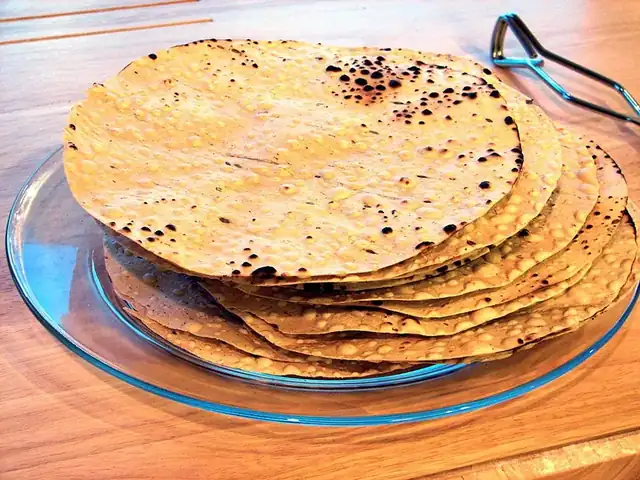
Papadam (Black Gram Flatbread)
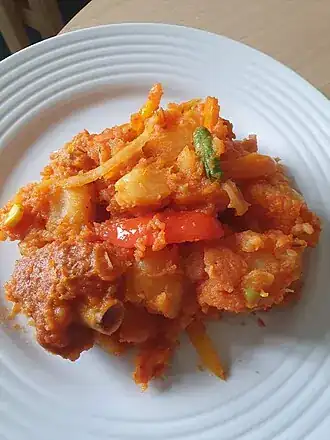
Asaro
Frying: The Sizzle Behind So Many Familiar Meals