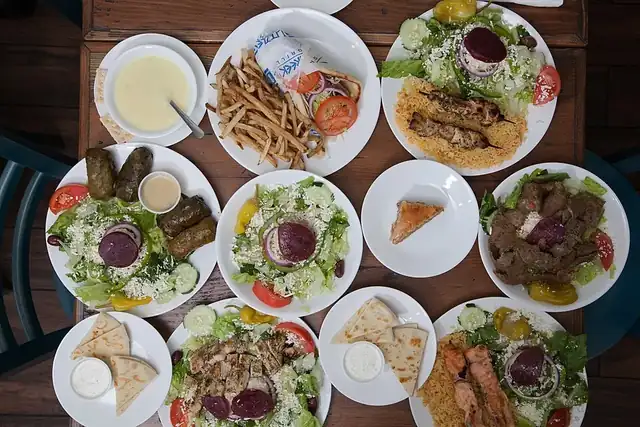
A cooking method is easier to appreciate when you connect it with the food on the plate. The background below explains the subject in more detail; for a complete method and ingredient quantities, explore the recipe collection.
In this story
OverviewProcessAir fryingDeep fryingSautéingShallow fryingStir fryingFume inhalationEffects of oilMonounsaturated fatsOverview
Frying is a method of cooking where food is made in oil or animal fat. Frying is believed to have first appeared in Ancient Egypt around 2500 BC, with tiger nut cakes deep fried in oil.
A variety of foods can be fried. The amount of oil or fat will usually affect the food's taste and texture. Foods fried in more oil, or deep fried, will typically be crispier or more tender, whereas foods fried in less oil, like shallow frying or pan frying, will usually still be crisp but to a lesser extent. Other methods utilize the movement of the food in the pan or using oil or fat with other sauces.
Frying is a dehydration process which involves the transfer of mass and heat. Different chemical changes take place during the frying process such as protein denaturation, starch gelatinization, surface browning, rapid water evaporation and oil absorption.
Process
When in contact with oil heated to 150 , food undergoes heat and mass transfer. The food's water content reaches boiling point and begins to vaporize, creating pores in its cell walls which enable it to absorb oil. As heat exposure is greater on the surface of the food in direct contact with the oil, water vaporization occurs more quickly. This dehydration effect causes a crisp crust to form which protects the center of the food against further oil absorption.
The crust browns due to the formation of melanoidins caused by caramelization and the Maillard reaction. The food's starch content gelatinizes, causing it to soften; the surface contains less water and retains its crisp crust. Frying is complete when all water content in the food vaporizes. When a fried food reduces in temperature below 100 C, water vapor inside condenses and internal pressure drops, causing oil absorption into the food via a vacuum effect.
Air frying
In air frying, food is placed in an air fryer with a small amount of oil and then heated to an extreme temperature. Air fryers are typically considered to be a healthier alternative to frying, as they usually have less calories and a lower fat content than deep fried or shallow fried foods.
Deep frying
In deep frying, food is submerged in hot oil or fat so that all sides are cooked simultaneously. A deep fryer or chip pan may be used, or, in an industrial frying operation, a pressure fryer or vacuum fryer. One method for preparing food for deep frying involves battering or breading, which adds color and crunch to its surface. French fries, doughnuts, cong you bing, and tempura are common deep-fried foods.
Sautéing
In sautéing, food is tossed over high heat in a frying pan with a small amount oil to prevent sticking. A shallow pan or sauté pan are what is typically used for sautéing foods. Sauté pans usually have higher sides to prevent food from exiting the pan while tossing.
Shallow frying
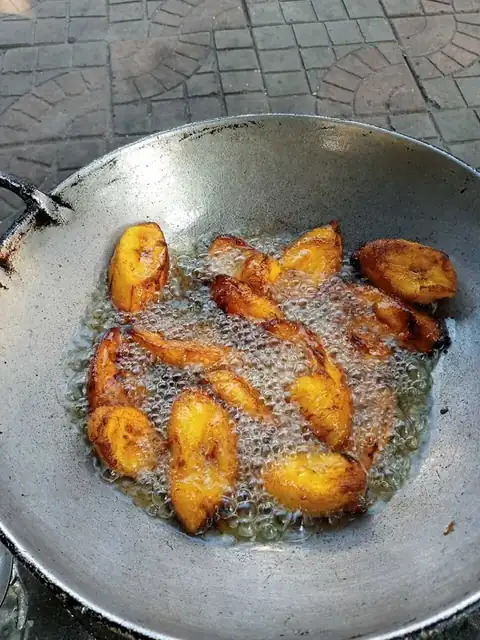
In shallow frying, also known as pan frying, food is partially submerged and fried in shallow oil on one side until browned, then flipped to cook the other side.
Stir frying
Stir frying is a Chinese, high-heat technique using a wok in which ingredients are constantly stirred for even cooking. The base of the wok is placed directly in the fire and its concave shape allows the flames to envelop the bowl; the base of the wok can reach 400 C. Frying is finished in two to three minutes.
Fume inhalation
Toxic compounds such as aldehydes (e.g. formaldehyde) are produced during frying and evaporate with steam, which can irritate lung tissue if inhaled. Fumes from frying have been classified as "probably carcinogenic to humans" by the International Agency for Research on Cancer.
Effects of oil
During frying, oil is exposed to water from food, high temperatures, and oxygen from the surroundings, which cause degradation. Hydrolysis causes an oil's smoke point to decrease and oxidation causes the formation of volatile compounds which change the flavor, quality, and texture of the food. These are mostly toxic aldehydes, of which some amount is required to achieve a characteristic fried smell and taste. Oils have varying proportions of saturated, monounsaturated, and polyunsaturated fats which change their performance during frying.
Monounsaturated fats
Rapeseed oil, also known as canola oil, is the third most used frying oil, especially in northern Europe, Japan, Oceania, and Canada. Despite mostly comprising monounsaturated fat, its high linolenic acid content makes it prone to oxidation. Peanut oil, also known as groundnut oil, is commonly used in west Africa but, unlike rapeseed oil, is low in linolenic acid. Olive oil is stable at high temperatures because of its high monounsaturated fat and antioxidant content, which make it less likely to oxidize during frying and improves the nutritional content of fried foods. It degrades two times as slowly as sunflower oil and ten times as slowly as linseed oil. Its widespread use may be the cause of fried food consumption not being linked to increased mortality in Mediterranean countries.
More to savor

Austrian Napkin Dumpling (Serviettenknödel)
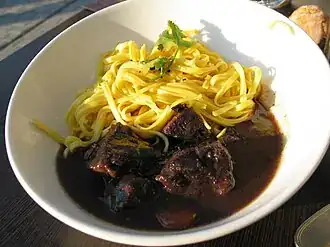
Boeuf Bourguignon
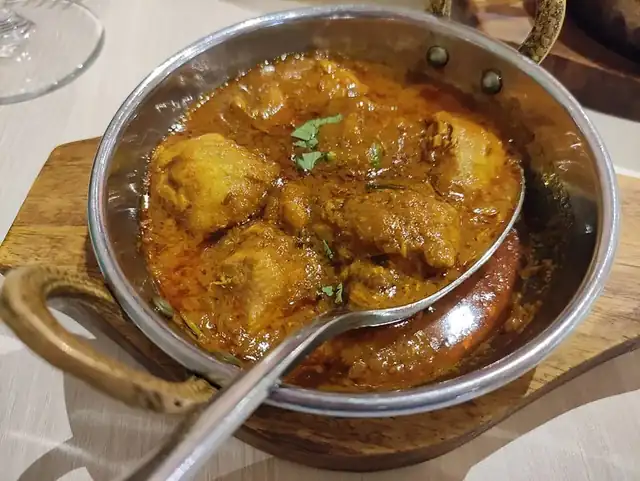
Curry: Why One Word Covers So Many Different Dishes