What we eat is only part of the story of a meal. The setting, the way food is served, and the habits around the table can be just as revealing. The guide below follows the subject in more detail.
In this story
OverviewPre-industrial Old WorldUnited KingdomUnited StatesOn the goFilling stationsCuisineOverview
Fast food is a type of mass-produced food designed for commercial resale, with a strong priority placed on speed of service. Fast food is a commercial term, limited to food sold in a restaurant or store with frozen, preheated or precooked ingredients and served in packaging for take-out or takeaway. Fast food was created as a commercial strategy to accommodate large numbers of busy commuters, travelers and wage workers. In 2018, the fast-food industry was worth an estimated $570 billion globally.
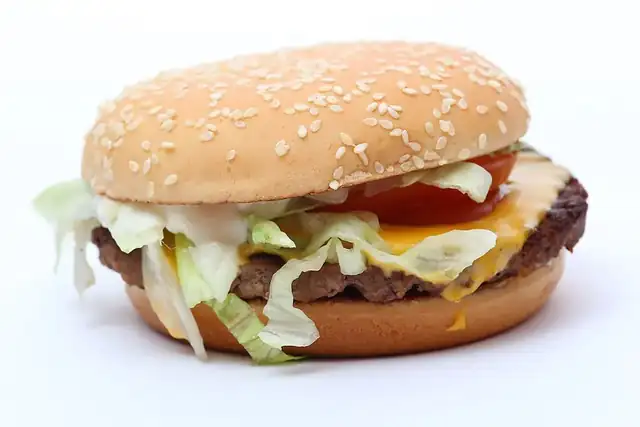
The fastest form of fast food consists of pre-cooked meals which reduce waiting periods to mere seconds. Other fast-food outlets, primarily hamburger outlets such as McDonald's and Burger King, use mass-produced, pre-prepared ingredients (bagged buns and condiments, frozen beef patties, vegetables which are pre-washed, pre-sliced, or both; etc.) and cook the meat and french fries fresh, before assembling to order.
Pre-industrial Old World
In the cities of Roman antiquity, much of the urban population living in insulae, multi-story apartment blocks, depended on food vendors for many of their meals; the Forum itself served as a marketplace where Romans could purchase baked goods and cured meats. In the mornings, bread soaked in wine was eaten as a quick snack and cooked vegetables and stews later in popina, a simple type of eating establishment. In Asia, 12th-century Chinese ate fried dough, soups and stuffed buns, all of which still exist as contemporary snack food. Their Baghdadi contemporaries supplemented home-cooked meals with processed legumes, purchased starches, and even ready-to-eat meats.
During the Middle Ages, large towns and major urban areas such as London and Paris supported numerous vendors that sold dishes such as pies, pasties, flans, waffles, wafers, pancakes and cooked meats. As in Roman cities during antiquity, many of these establishments catered to those who did not have means to cook their own food, particularly single households. Unlike richer town dwellers, many often could not afford housing with kitchen facilities and thus relied on fast food. Travelers such as pilgrims en route to a holy site, were among the customers.
United Kingdom
In areas with access to coastal or tidal waters, fast food frequently included local shellfish or seafood, such as oysters or, as in London, eels. Often this seafood was cooked directly on the quay or close by. The development of trawler fishing in the mid-nineteenth century led to the development of a British favourite, fish and chips, and the first shop in 1860.
A blue plaque at Oldham's Tommyfield Market marks the origin of the fish and chip shop and fast food industries, with the first chips being fried in the area in the 1860s. As a cheap fast food served in a wrapper, fish and chips became a stock meal among the Victorian working classes. Via the Industrial Revolution, the fish and chip business expanded rapidly in Britain during the 19th century to satisfy the needs of the growing industrial population. By 1910, there were more than 25,000 fish and chip shops across the UK, and in the 1920s there were more than 35,000 shops. Harry Ramsden's fast food restaurant chain opened its first fish and chip shop in Guiseley, West Yorkshire in 1928.
United States
As automobiles became popular and more affordable following World War I, drive-in restaurants were introduced. The American company White Castle, founded by Billy Ingram and Walter Anderson in Wichita, Kansas in 1921, is generally credited with opening the first fast food outlet and first hamburger chain, selling hamburgers for five cents each. Walter Anderson had built the first White Castle restaurant in Wichita in 1916, introducing the limited menu, high-volume, low-cost, high-speed hamburger restaurant. Among its innovations, the company allowed customers to see the food being prepared. White Castle was successful from its inception and spawned numerous competitors.
Franchising was introduced in 1921 by A&W Root Beer, which franchised its distinctive syrup. Howard Johnson's first franchised the restaurant concept in the mid-1930s, formally standardizing menus, signage and advertising.
On the go
Fast food outlets are take-away or take-out providers that promise quick service. Such fast food outlets often come with a "drive-through" service that lets customers order and pick up food from their vehicles. Others have indoor or outdoor seating areas where customers can eat on-site. The boom in IT services has allowed customers to order food from their homes through their smartphone apps in recent times.
Nearly from its inception, fast food has been designed to be eaten "on the go," often does not require traditional cutlery, and is eaten as a finger food. Common menu items at fast food outlets include fish and chips, sandwiches, pitas, hamburgers, fried chicken, french fries, onion rings, chicken nuggets, tacos, pizza, hot dogs, and ice cream, though many fast food restaurants offer "slower" foods like chili, mashed potatoes, and salads.
Filling stations
Convenience stores located within many petrol/gas stations sell pre-packaged sandwiches, doughnuts, and hot food. Many gas stations in the United States and Europe also sell frozen foods, and have microwave ovens on the premises in which to prepare them. Petrol stations in Australia sell foods such as hot pies, sandwiches, and chocolate bars, which are easy for a customer to access while on their journey. Petrol stations are places that are often open long hours and are open before and after shop trading hours, therefore, it makes it easy to access for consumers.
Cuisine
Modern commercial fast food is often ultra-processed food and prepared in an industrial fashion, i.e., on a large scale with standard ingredients and standardized cooking and production methods. It is usually rapidly served in cartons or bags or in plastic wrapping, in a fashion that minimizes cost. In most fast food operations, menu items are generally made from processed ingredients prepared at a central supply facility and then shipped to individual outlets where they are reheated, cooked (usually by microwave or deep frying) or assembled in a short amount of time. This process ensures a consistent level of product quality. It is key to being able to deliver the order quickly to the customer and eliminate labor and equipment costs in the individual stores.
Because of commercial emphasis on quickness, uniformity and low cost, fast food products are often made with ingredients formulated to achieve a certain flavor or consistency and to preserve freshness.
More to savor

South Indian Millet Swallow (Mudde)
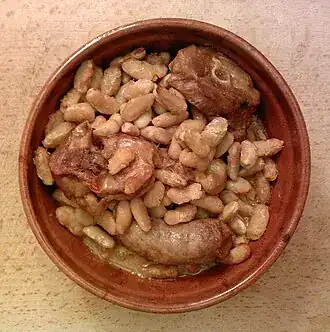
Cassoulet
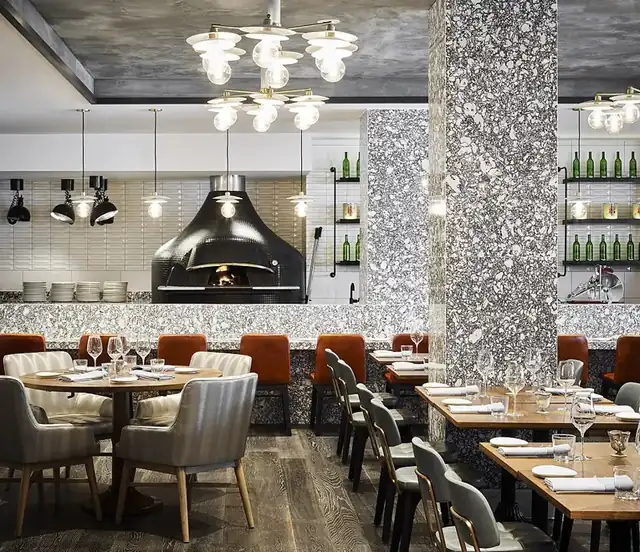
Restaurants: How Eating Out Became Its Own Food Story