Use the regional background below as a starting point for exploring the food, rather than expecting one dish to represent every household. Food traditions differ within a country and continue to change through travel, migration, and everyday cooking.
In this story
OverviewContemporary cuisineNational cuisineRegional cuisineFoods and ingredientsBreakfastLunchOverview
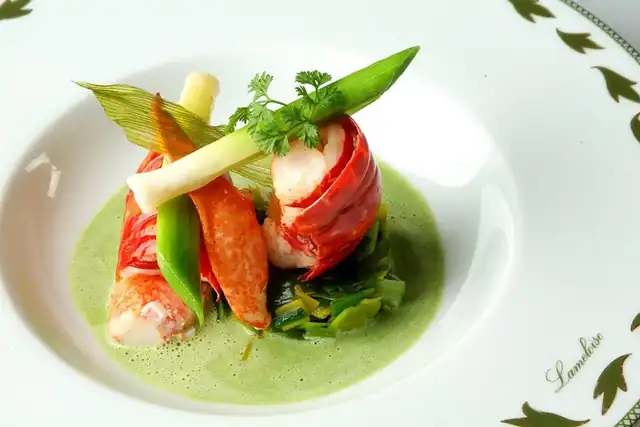
French cuisine is the cooking traditions and practices of France. In the 14th century, Guillaume Tirel, a court chef known as "Taillevent", wrote Le Viandier, one of the earliest recipe collections of medieval France. In the 17th and 18th centuries, chefs François Pierre La Varenne and Marie-Antoine Carême spearheaded movements that shifted French cooking away from its foreign influences such as from Italian cuisine and developed France's own indigenous style.
Cheese and wine are a major part of the cuisine. They play different roles regionally and nationally, with many variations and appellation d'origine contrôlée (AOC) (regulated appellation) laws.
Culinary tourism and the Guide Michelin helped to acquaint commoners with the cuisine bourgeoise of the urban elites and the peasant cuisine of the French countryside starting in the 20th century. Many dishes that were once regional have proliferated in variations across the country.
Knowledge of French cooking has contributed significantly to Western cuisines. Its criteria are used widely in Western cookery school boards and culinary education. In November 2010, French gastronomy was added by the UNESCO to its lists of the world's "intangible cultural heritage".
Contemporary cuisine
French cuisine continues to change and adapt. In the contemporary period. "La Bistronomie" describing a fusion of bistro and haute cuisine emerged alongside new popular foods such as the French taco, new styles of food including food trucks, growing interest in vegetarian food and increased vegetarian options, and a public interest in simpler dining options. These changes are alongside the incorporation and mainstreaming of dishes from immigrant communities in part shaped by immigration and global exchange.
Culinary influences are especially strong from across the Francophone world and beyond, including North African cuisines (notably couscous, which is often cited as one of modern France’s most widely consumed dishes), Lebanese cuisine (with foods like falafel becoming widely popular), Southeast Asian traditions from countries such as Vietnam and Cambodia (including pho and banh mi), and a growing presence of African cuisines and spices in everyday French cooking. This transformation is tied to the French restaurant workforce with immigrants playing a major role in French commercial kitchens. Estimates suggest roughly twenty-five percent of chefs in France are immigrants, and in Paris about half of chefs are immigrants. France also continues to attract international chefs to train, who either stay in France or return to their home countries after learning French techniques.
National cuisine
There are many dishes that are considered part of French national cuisine today.
A meal often consists of three courses, hors d'œuvre or entrée (introductory course, sometimes soup), plat principal (main course), fromage (cheese course) or dessert, sometimes with a salad offered before the cheese or dessert.
The notion of a French national cuisine is understood as a set of foods that all people eat and have strong opinions about, regardless of class. Those who are poorer still eat the same foods as the rich, albeit less frequently.
Hors d'œuvre
Plat principal
Pâtisserie
Dessert
Regional cuisine
French regional cuisine is characterized by its extreme diversity and style. Traditionally, each region of France has its own distinctive cuisine.
Foods and ingredients
French regional cuisines use locally grown vegetables, such as pomme de terre (potato), blé (wheat), haricots verts (a type of French green bean), carotte (carrot), poireau (leek), navet (turnip), aubergine (eggplant), courgette (zucchini), and échalotte (shallot).
French regional cuisines use locally grown fungi, such as truffe (truffle), champignon de Paris (button mushroom), chanterelle ou girolle (chanterelle), pleurote (en huître) (oyster mushrooms), and cèpes (porcini).
Common fruits include oranges, tomatoes, tangerines, peaches, apricots, apples, pears, plums, cherries, strawberries, raspberries, redcurrants, blackberries, grapes, grapefruit, and blackcurrants.
Varieties of meat consumed include poulet (chicken), pigeon (squab), canard (duck), oie (goose, the source of foie gras), bœuf (beef), veau (veal), porc (pork), agneau (lamb), mouton (mutton), caille (quail), cheval (horse), grenouille (frog), and escargot (snails). Commonly consumed fish and seafood include cod, canned sardines, fresh sardines, canned tuna, fresh tuna, salmon, trout, mussels, herring, oysters, shrimp and calamari.
Breakfast
Le petit déjeuner (breakfast) is traditionally a quick meal consisting of tartines (slices) of French bread with butter and honey or jam (sometimes brioche), along with café au lait (also called café crème), or black coffee, or tea and rarely hot chicory. Children often drink hot chocolate in bowls or cups along with their breakfasts. Croissants, pain aux raisins or pain au chocolat (also named chocolatine in the south-west of France) are mostly included as a weekend treat. Breakfast of some kind is always served in cafés opening early in the day.
There are also savoury dishes for breakfast. An example is le petit déjeuner gaulois or petit déjeuner fermier with the famous long narrow bread slices topped with soft white cheese or boiled ham, called mouillettes, which is dipped in a soft-boiled egg and some fruit juice and hot drink.
Another variation called le petit déjeuner chasseur, meant to be very hearty, is served with pâté and other charcuterie products. A more classy version is called le petit déjeuner du voyageur, where delicatessens serve gizzard, bacon, salmon, omelet, or croque monsieur, with or without soft-boiled egg and always with the traditional coffee/tea/chocolate along fruits or fruit juice. When the egg is cooked sunny-side over the croque-monsieur, it is called a croque-madame.
Lunch
Le déjeuner (lunch) is a two-hour mid-day meal or a one-hour lunch break. In some smaller towns and in the south of France, the two-hour lunch may still be customary. Sunday lunches are often longer and are taken with the family. Restaurants normally open for lunch at noon and close at 2:30 pm. Some restaurants are closed on Monday during lunch hours.
In large cities, a majority of working people and students eat their lunch at a corporate or school cafeteria, which normally serves complete meals as described above; it is not usual for students to bring their own lunch to eat. For companies that do not operate a cafeteria, it is mandatory for employees to be given lunch vouchers as part of their employee benefits. These can be used in most restaurants, supermarkets and traiteurs; however, workers having lunch in this way typically do not eat all three courses of a traditional lunch due to price and time constraints. In smaller cities and towns, some working people leave their workplaces to return home for lunch.
An alternative, especially among blue-collar workers, is eating sandwiches followed by a dessert; both dishes can be found ready-made at bakeries and supermarkets at budget prices.
More to savor
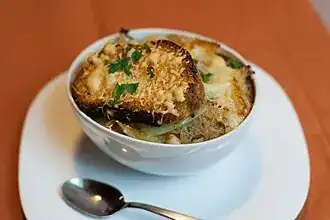
French Onion Soup

Simple Tarragon Quiche
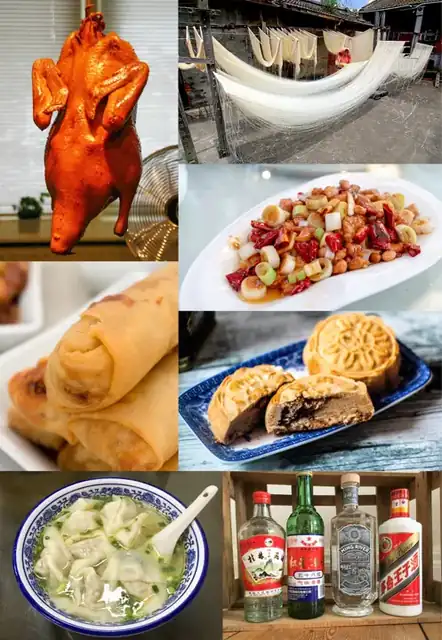
Beyond One Menu: Exploring China's Many Food Traditions