The dish is a starting point for exploring a wider food story. The guide below looks more closely at its background and different forms. When you want to cook, visit the recipe collection for ingredient quantities and step-by-step methods.
Overview
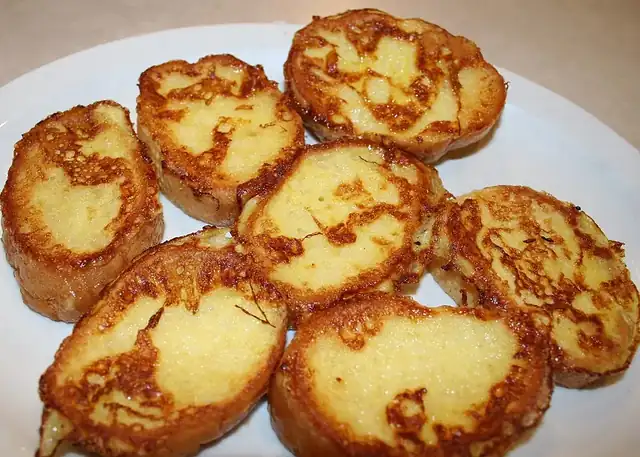
French toast is a dish of sliced bread soaked in beaten eggs and often milk or cream, then pan-fried. Alternative names and variants include eggy bread, Bombay toast, gypsy toast, and poor knights (of Windsor).
When French toast is served as a sweet dish, sugar, vanilla, and cinnamon are also commonly added before pan-frying, and then it may be topped with sugar (often powdered sugar), butter, fruit, or syrup. When it is a savoury dish, it is generally fried with a pinch of salt or pepper, and it can then be served with a sauce such as ketchup or mayonnaise.
Names
This dish occurs in various forms and under different names in many places, but this article calls it "French toast" for convenience.
French
The usual French name is pain perdu , reflecting its use of stale or otherwise "lost" bread. It may also be called pain doré in Canada.
German
An Austrian and Bavarian term is Pofesen because the shape of the dish is reminiscent of medieval knights' shields from the city of Pavia.
Hungarian
In Hungary, it is commonly called bundáskenyér .
Dutch
In the Netherlands and Flanders, Belgium, it is called wentelteefjes, first used in 1623, from wentel ("turn") + teefjes, diminutive plural of teef ("pastry"). A common, but unlikely belief is that teef means bitch (female dog) here. It is also popularly believed to be a bastardization of wentel-'t-even(tjes) ("turn it for a (little) bit"). In Flanders, it is also known as verloren brood, a translation of the French pain perdu ("lost bread"), or gewonnen brood ("reclaimed bread").
Preparation
Slices of bread are soaked or dipped in a mixture of beaten eggs, often whisked with milk or cream. Sugar, cinnamon, nutmeg, and vanilla may be added to the mixture. The bread is then fried in butter or olive oil until browned and cooked through. Day-old bread is often used, both for its thrift and because it will soak up more egg mixture without falling apart.
The cooked slices may be served with sugar or sweet toppings such as caramel, ice cream, jam, honey, fruit, or maple syrup.
Variations
There are many variations. The dipping mixture might not include eggs and the bread may be soaked in wine, rosewater, or orange juice, either before or after cooking.
Asia
In Armenia, beeshee or bishi (Բիշի) is a thin and crispy breakfast food. It is typically topped with sugar, simple syrup, or honey. In Georgia, kikliko is a popular savoury dish served at brunch or breakfast dish. It may include cheese.
In India, Bombay toast or sweet French bread is sold on the streets of Mumbai by hawkers and vendors. French toast in India is usually an unsweetened dish with no milk in the batter. The egg-soaked bread is fried and may be flavoured with salt, fried onions, green chilis, cilantro leaves, and other savory ingredients. It is often served with tomato ketchup (often chili-spiced ketchup).Hong Kong–style French toast is two slices of bread filled with peanut butter or fruit jam, dipped in beaten egg, then fried. It is served with butter and topped with condensed milk, golden syrup or honey. It is a typical offering in cha chaan teng (Hong Kong–style diners or teahouses).
Other fillings are meat floss, kaya jam, ham, or beef satay.Through the years, cha chaan tengs and tea stalls have developed more elaborate variations of Hong Kong–style French toast. Modern versions may use Nutella, custard, taro and black sesame as toppings, as well as fillings such as red bean paste, Ovaltine and pork floss, and salted-egg "Golden Lava".
French toast is a familiar menu item in the hawker centres of Singapore, where it is often part of a breakfast set with soft-boiled eggs or coconut jam (kaya).
Western
In France, pain perdu has a wide range of regional variations. In Germany, Arme Ritter or Pofesen were known since at least the 14th century (mentioned in Deutsches Wörterbuch (The German Dictionary) by the Brothers Grimm). In the UK and Ireland, it is also known as eggy bread or occasionally Gypsy toast, a name that dates back to the 14th and 15th centuries. It was also called pamperdy or poor knight's pudding. Eggy bread can be served as a sweet or savoury dish, and is often served with bacon when savoury. The other names refer to the sweet version. A commercial product known as French toast is sold in packets in supermarkets but this typically contains no egg and is more similar to Melba toast.
Torrija is a similar recipe traditionally prepared in Spain for Lent and Holy Week. It is usually made by soaking stale bread in milk or wine with honey and spices. It is dipped in beaten egg and fried with olive oil. This technique breaks down the fibres of the bread and results in a pastry with a crisp outside and smooth inside. It is often sprinkled with cinnamon as a final touch. Torrijas or torrejas were first mentioned by the Spanish composer, poet and playwright Juan del Encina (1468–1533) in his Cancionero, published in 1496. "Anda acá pastor" has the following verse:
In the Netherlands, French toast is called wentelteefjes, verloren brood , or gewonnen brood . It is a sweet breakfast dish that can also be eaten as an afternoon treat or evening dessert. The Dutch version of this dish often uses sugar with cinnamon instead of plain sugar. Wentelteefjes are often associated with childhood, where a grandmother provides her grandchildren with a luxurious special sweet breakfast on special occasions.
More to savor
Nigerian Custard

English Breakfast
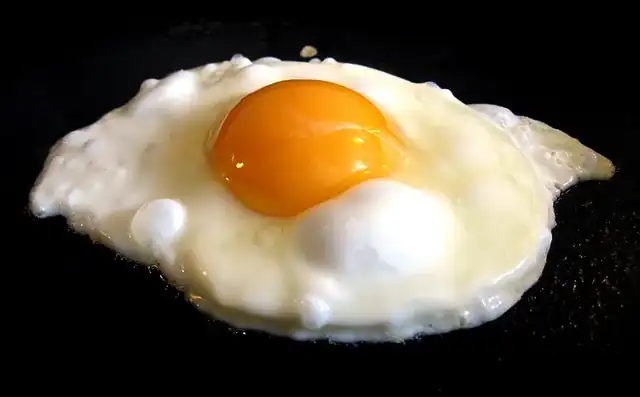
Fried Eggs: The Small Panful That Changes a Meal